Showing posts with label gothic. Show all posts

Friday, September 25, 2026

Book Blitz & Giveaway: Hidden Words by Christine Roy

Hidden Words by Christine Roy

Publication date: September 22, 2026

Genres: Adult, Gothic, Mystery

A Novel by Award-Winning Author Christine Roy

Some secrets don’t stay buried. They wait for the right mind to hear them.

In 1994, on the rocky shores of Cape Ann, Massachusetts, Ben Barrows begins his senior year at Masters’ Preparatory like a dead man walking, half his friendships already over, just not yet buried. Then Dana Kirkland arrives: a new student, a rival dancer to his powerful ex-girlfriend, and the one person who might save him. Together, Ben and Dana try to hold on to love against a tidal wave of pain and treachery neither of them saw coming.

In the present, Joey Barrows is drowning in grief. As he crosses the graduation stage, a terrifying gift awakens, the unspoken words of everyone around him, pouring uninvited into his mind. When Joey discovers his distant, unstable father shares this same curse, the door to a devastating past swings open, releasing secrets, obsession, and ghosts that refuse to stay silent.

Told across two timelines, Hidden Words is a gothic, speculative mystery about the inheritance of trauma — and the terrible cost of truths left unspoken.

Perfect for fans of We Were Liars, Black Swan, and The Turnout.

Hidden Words deals with mature themes including trauma, family abuse, and sensitive interpersonal relationships. Recommended for mature young adult and adult readers.

Goodreads / Amazon


EXCERPT:

Raising his head, he approached the distinguished, black-gowned dean. The ringing in his ears pitched higher. With cold dread sluicing through his veins, he shook the dean’s hand. His mind crackling with a storm of energy, he looked the man straight in the eyes and took his diploma.

Guess scholarship kid didn’t waste our money.

“I’m sorry, Sir. What?” He squinted up at the unsmiling man. A distorted hum circled around him as the man’s words echoed in his head—clear, yet unspoken, not the shadowy wisps of noise he’d experienced before.

“Keep it moving, Barrows.”

“It’s just that I…” Joey stammered, his breath ragged. Shame bubbled up through the scars on his body like oil from the ground. He gaped at the dean’s stone face. “I heard you.” The words slipped from his lips.

“Christ, just move Barrows.”

I’ve had enough of your pathetic sad-boy act.

Joey nodded, stomach twisting. His thoughts raced and twisted in his head. It wasn’t real. It couldn’t be. He wasn’t psychic; nobody was. Withering beneath the dean’s glare, he flicked his tassel to the left and stumbled to the end of the stage. Desperate, he scanned the crowd, fairytale hope rising in his mind.

Maybe he was there.

Not likely.

Ben Barrows worked and hid. A son’s graduation didn’t fall into either of those categories, especially since these were the halls of Ben’s past. Traces of that Ben, shining and connected, existed in pictures behind glass cases like an extinct museum specimen.

They looked so similar, with their dark hair, wide-set green eyes, and lanky frames.

But that Ben was a ghost.


GIVEAWAY! GIVEAWAY! GIVEAWAY!


Hidden Words Blitz


Tuesday, June 30, 2026

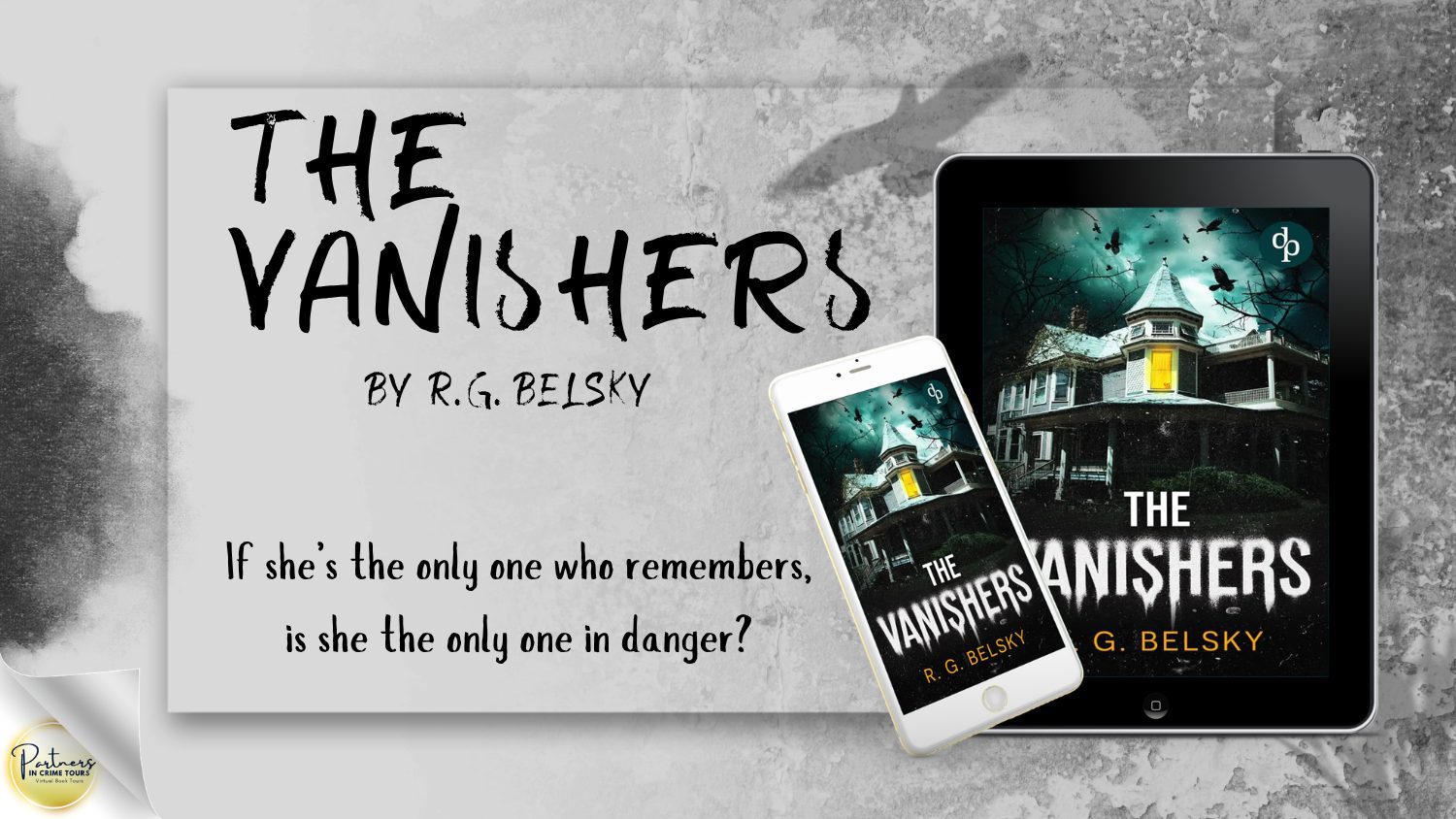
Virtual Book Tour & Giveaway: The Vanishers by R.G. Belsky

The Vanishers by R. G. Belsky Banner

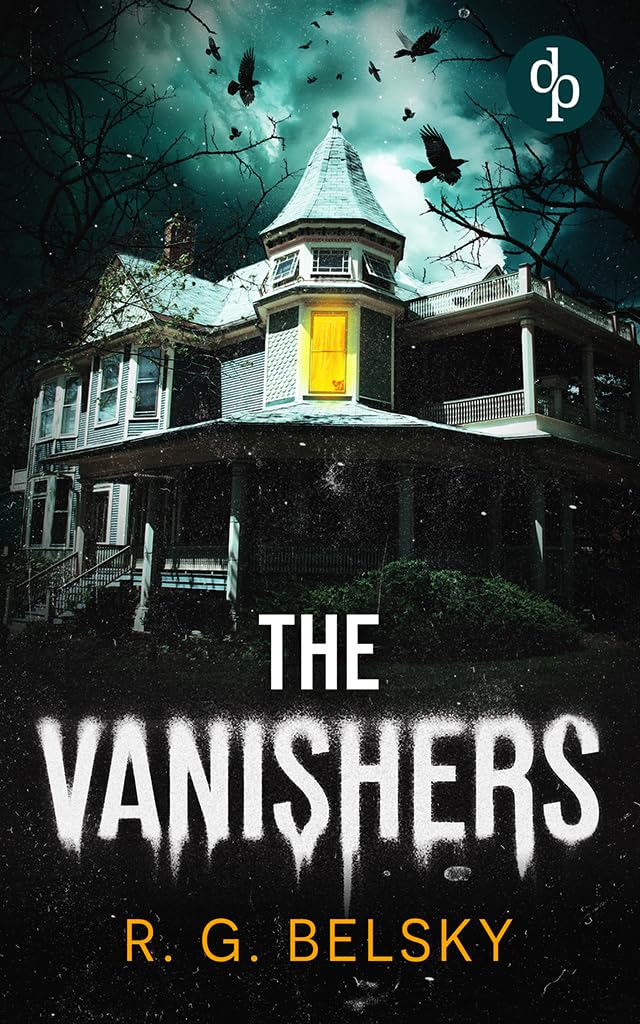
THE VANISHERS

by R. G. Belsky

June 15 - July 10, 2026 Virtual Book Tour

Synopsis:

The Vanishers by R. G. Belsky

Megan Foley knows she saw the little boy. So why does everyone at the perfect seaside house insist he never existed? The house was perfect. That was its first lie.

When Megan and her husband Patrick accept an invitation to spend the summer at a luxurious house share in Stone Beach, Connecticut, everything seems too good to be true. The rent is absurdly low. The host, Mrs. Monahan, is attentive to the point of unease. The other guests are pleasant — until they aren't.

One day, Megan sees a boy, Tommy, playing… and the next, Tommy is simply gone. Not moved. Not spoken of. Erased, as though he never existed. All the other guests at the house look at Megan blankly when she asks.

One by one, the guests succumb to long hours in front of the television in a glassy trance. Patrick grows cold and distant. Something stirs in the attic.

Megan alone seems immune — but for how long? As she begins to doubt herself and the house tightens its hold, she must confront the terrifying truth about Mrs. Monahan, the attic room, and the price of a perfect summer.

A chilling gothic thriller for fans of atmospheric domestic horror — available in Kindle Unlimited.

Book Details:

Genre: Paranormal Gothic Thriller
Published by: dp DIGITAL PUBLISHERS
Publication Date: May 7, 2026
Number of Pages: 298
ISBN: 978-1918343335
Book Links: Amazon | KindleUnlimited | Goodreads | dp DIGITAL PUBLISHERS

Read an excerpt from The Vanishers:

PROLOGUE

Hudson Lake, Michigan

I know everyone in this diner is looking at me like I’m strange.

Well, I’m sure used to that by now. It wasn’t always that way, of course. I mean I’m blonde-haired, just turned 30 and once – a million years or so ago before the terrible times happened – people said I was pretty. But now I realize that I look old beyond my years. I’ve lost a lot of weight, my face is pale and gaunt and I’m trembling noticeably right now even though it is the first real warm day of spring.

I make my way unsteadily over to a stool at the diner’s counter and sit there quietly, without talking, even when a guy comes over and asks for my order.

“What’ll it be, ma’am?” he smiles.

I stare at him with a confused look on my face. Nothing people say these days - even simple questions like that - seem to make sense to me anymore.

“Ma’am,” he repeats.

“Pardon?”

“My name is Danny. Danny Heller. I own this place. What do you want?”

I think about if for a second, then say: “Do you think I could have some tea?”

“Tea, sure.”

He walks over to the kitchen area, pours a cup and brings it back to me.

“How about something to eat?” he asks. “A sandwich. Some soup. Maybe a nice piece of pie. We got some nice pies today. Apple. Cherry. Lemon meringue.”

“Lemon meringue?”

“Sure. Want a piece?”

I nod. “Yes, that would be nice.”

Danny Heller cuts an extra large slice of the pie, places it onto a plate and carries it back to where I am sitting. I begin eating. Silently and without any emotion. Just like I do everything else now.

“Are you from around here?” he asks.

“No, not from around here.”

What’s your name?

“Uh, I’m Megan…

“Well, I’m glad to meet you, Megan. Are you just visiting around these parts?”

“I’m…,” I hesitate, because it’s painful to say the words., “I’m…looking for a vacation house.”

“Hey we’ve got some good ones. The lake this time of year is one of the prettiest spots in all of Michigan. Or anywhere else, for that matter. Have you looked at many houses?”

“Not here. Other places.”

“You’ve been traveling then?”

“Yes, I’ve been traveling quite a bit.”

The truth is I have been traveling for nearly a year. I started back east, moving from resort town to resort town along the New England coast. When fall came, I started moving down along the coast toward the winter resorts. Miami Beach. The Gold Coast. The Gulf Shore. Then, with the advent of spring, I had come north and inland to look at lake areas. Ohio. Minnesota. And now Michigan.

In all the places, I’ve done the same thing. Gone through ads for house rentals. Checked with real estate brokers. Driven aimlessly around shore areas looking.

Always looking.

Looking for the house.

The house I can never forget.

The house of my nightmares.

“We have some local house listings on that bulletin board over there,” Danny Heller says, pointing to a wall at the end of the counter. “People with a place to rent put stuff up there. Maybe you’ll find something you want.”

I get up from my stool and walk over to the bulletin board.

Looking through the ads posted on the bulletin board without really expecting to find anything.

But then I see it.

And I scream!

I scream so loudly that everyone in the diner stops eating and looks at me.

It’s a scream that keeps gathering momentum as it goes on like a runaway train, terrifying everyone there.

“What’s wrong?” Danny says, rushing over to where I’m standing by the bulletin board.

I point to a picture of a house in one of the ads.

“It’s here,” I whisper.

“What?”

“The house.”

And it is.

The house I’ve been looking for.

The house from Pleasant Street.

“I don’t understand,” Danny is saying.

“It’s the house,” I sob. “Oh, my God, it really is the same house…”

***

Excerpt from The Vanishers by R. G. Belsky. Copyright 2026 by R. G. Belsky. Reproduced with permission from R. G. Belsky. All rights reserved.


Author Bio:

R. G. Belsky

R.G. Belsky is an award-winning author of crime fiction and a journalist in New York City. His newest mystery, THE VANISHERS, was published by dp DIGITAL PUBLISHERS. Belsky has published 26 novels. He also writes thrillers under the name Dana Perry. And he is a contributing writer for The Big Thrill magazine and BookTrib.

Catch Up With R. G. Belsky:

www.RGBelsky.com
Amazon Author Profile
Goodreads
BookBub - @dickb79983
Instagram - @dickbelsky
Threads - @dickbelsky
X - @DickBel
Facebook - @RGBelsky


Review:

5 stars!

Cancel your plans, grab this book! 

The Vanishers is a new thriller by R.G. Belsky, and you’re going to want to cancel any other plans you have once you crack this book open; it’s an absolutely gripping page-turner! With its engaging and sympathetic main character and riveting plot, you’re not going to want any distractions until you get to the bottom of this mystery. 

Megan and Patrick Foley are looking for a summer rental on the shore: a place to get away from the stress of their jobs and the city, and to devote time to each other and focus on their marriage that has become full of daily conflict. They find the perfect place on Pleasant Street in Stone Beach, Connecticut: a beautiful old home with plenty of spacious bedrooms for several summer tenants, right on the beach, and at an unbelievably low price. The older woman who owns the place, Mrs. Monahan, is pleasant, too, and eager to share her home with others for the season. Her husband, who is an invalid, stays secluded in his room on the top floor of the house, and the other guests, including the family with the two young boys, all seem nice. Sure, the boys argue, like brothers tend to do, especially when the younger boy’s Nintendo Switch goes missing, but the next day, when the younger brother doesn’t appear, everyone in the house claims there was ever only one child! Even Patrick is adamant he never saw another boy. Now Megan is on a mission to find out what happened to him and why everyone denies he ever existed, or find a psychiatrist to treat her delusion quick, fast, and in a hurry. 

What a page-turner! Megan Foley is the epitome of the typical young career woman balancing life with a spouse who is also working to succeed in his field. Patrick is a bit overbearing, ready to proclaim how Megan should do everything his way, often getting his way as she gives in to his demands. The goal of closing the gap between them as a couple is quickly disrupted when she is the only one who remembers the younger Beecham son, and all evidence of his ever having existed amazingly evaporates as well. The tension builds as Megan confronts Mrs. Monahan and seeks help from an investigator of the unexplainable. The rising suspense of the puzzling events kept me glued to the story from start to finish. 

I recommend THE VANISHERS to readers of mysteries, thrillers, and suspense.


Tour Participants:

Click through the other tour stops for can’t-miss reviews, insider interviews, exclusive guest posts, and more chances to win!

Click here to view the Tour Schedule


The Only Thing Vanishing Here Is Your TBR Time

This giveaway is hosted by Partners in Crime Tours for R. G. Belsky. See the widget for entry terms and conditions. Void where prohibited.
THE VANISHERS by R. G. Belsky | Gift Card

Can't see the giveaway? Click Here!

Get More Great Reads at Partners In Crime Tours

Friday, June 12, 2026

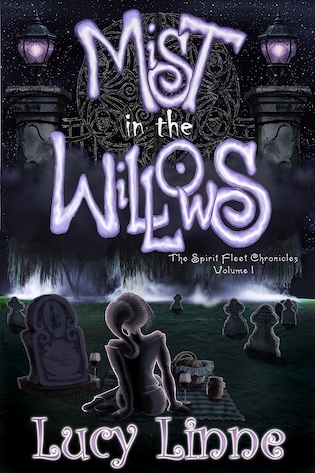
Book Blitz: Mist in the Willows (Spirit Fleet Chronicles, #1) by Lucy Linne

Mist In The Willows
Lucy Linne
(Spirit Fleet Chronicles, #1)
Publication date: August 25, 2025
Genres: Adult, Gothic, Horror, Urban Fantasy

Discharged unexpectedly from the British military at the peak of her career, Jade Palmer must find a way to rebuild her life. Haunted by strange nightmares and fragments of her own fractured memories, Jade finds herself thrust among unfriendly family and unfamiliar friends. Her only comfort is in the cobbled streets, quaint cottages and winding river paths that hold the happy echoes of her childhood.

But in the local cemetery, older than living memory, a strange mist rises among the willows in the depths of the night… and with it, a vengeful entity that seems to stalk Jade’s every footstep with terrifying purpose.

Alongside her faithful dog, Cannelloni, and wild-child sister, Leela, Jade must fight once more—braving a tangled journey through ancient supernatural lore, and the depths of her own hubris, to protect those she loves.

For the dead have truths to tell… and their retribution comes as cold as the grave.

Mist in the Willows, the first entry in the Spirit Fleet Chronicles, is a chilling and cozy gothic novel about loss, cupcakes, annoying family, mysterious steampunk strangers, and the ways in which violence may haunt us all.

Goodreads / Amazon / Barnes & Noble / Kobo

—

CHAPTER 1:

The first time I heard the chilling whisper calling my name, it came from Grandad’s old analogue radio.

I was unpacking the five sad-looking boxes containing all my worldly belongings and didn’t pay much attention. Dad stored them in his basement, and spiders were crawling out of every corner.

When I picked up my phone to check for messages, a mega-arachnid scuttled on eight hairy legs along my fingers. It had insidiously blended in with the black case of my mobile and became invisible. Now it took up most of the screen. I dropped my phone on the coffee table and spotted its mate, the same incredible size, scampering across the floor and under the couch. At least Grandad went to bed early and didn’t see this infestation I’d brought to his cherished houseboat.

I ran from the lounge to the open plan kitchen and grabbed a glass to trap the intruders.

As I passed by, the radio on the windowsill abruptly switched to a hoarse faltering static.

The music returned as I shook the glass out of the barge door, tossing the eight-legged giant, into the grass by the river path. The other one, nowhere to be found. I regretted trying to trap and release them. I would have rather squashed them with my hiking boot. But cleaning bug goo off the floor is a task I will avoid where possible. A flamethrower would be ideal but I’m out of those since I’m back home. So, the spider got to live another day.

As I rinsed that glass to put it away, I noticed it.

Wait a minute? What’s going on with the radio?

Standing beside the little radio, where it sat since my childhood, gathering dust on the windowsill, I listened to the static.

It had a quality about it that I found almost obscene. It sounded alive, fluctuating from deep cavernous whispers to a strange whistling. I fled the kitchen when it pitched that abominable screech of steak knives against dinner plates.

The static immediately faded away, returning to Grandad’s favourite sixties rock radio station. Back in the lounge, I punched a pile of empty boxes flat to bin them. Not that I wasn’t glad the static stopped. But something about the way it had switched so fast bothered me, as if it knew I had moved away from the radio.

Moments later I returned to the kitchen. The music shifted to static in an instant. I stood next to Grandad’s ancient kettle, plugging in my coffee maker, a survivor since my student years in the dorms.

How could it be so loud and not wake up Alan?

Its pulsing tones surged, like the call of a bottomless pit, then lulled to a sinister hum at the very edge of hearing. Every time it came, I cringed, as if plunging into neck deep water with ice cubes bobbing all around me.

Before I knew it, I had crossed the room and stood with one hand on my dog’s collar.

“You don’t like it either, huh? Good boy,” I said, as Cannelloni sat back down among the window seat cushions. The static melted away behind me, the music replacing it. Cannelloni tucked his head in his paws again with a huff.

I glanced back at the old radio. Had it sounded a bit like whispers in some guttural language? Surely, I was over thinking it. It could be nothing but static.

I headed for the desk to start my Wi-Fi set up, hoping to stream a movie and chill after the gruelling day, moving in with Grandad. And most importantly, to make sure her messages would come through on a stronger signal.

I reached and patted my cargos’ pocket, the little one with the zip on my hip. It was still there: I felt the round shape of her compact mirror. The only thing I have of her, until we meet again.

I felt better. There are good things in the world, and good days ahead.

As I pulled up the lid of my laptop, in the split second before the dark screen lit up, your face flashed at me.

It’s only been happening in the last few years or so, that my reflection startles me, looking like you. I’ve always had your impossibly thick and straight, dirty blonde hair. And your bushy brows over cobalt blue eyes. But most of all, in my late thirties, I’m now your age. The way I remember you. You would be much older today but if we could somehow meet, across death and time, both aged 38, we’d look like twins. Anyway, it only lasted a fraction of a second, and then the desktop lit up and I was looking for a movie right away.

Ten minutes later, I glanced suspiciously at the radio. Nothing.

Twenty minutes later, nothing.

Halfway through an outbreak of a superbly gruesome zombie apocalypse, I still couldn’t stop thinking about the static. Was I causing it? It only happened when I neared the radio.

Run a test?

I hesitated. So many other things to worry about at this moment. Why did I even care if the songs were interrupted a few times?

Because of how freakin weird this noise sounded.

I paused the movie, resigned to my curiosity. I edged along the back of the loveseat towards the kitchen. The music staggered as I reached the counter. Just to pretend to myself I didn’t come to test the radio, I reached out and grabbed a handful of cookies from the doggie jar.

The static soared.

Sounded like a cold gust whistling savagely out of a black chasm. Then dulled to the throaty whisper of an unsettling breeze through dead leaves. That did it. I got the hell out of the kitchen.

Joining Cannelloni at the window seat, I felt an unreasonable amount of relief that the music returned on the radio. Cannelloni thought so too. He gave such a profound growl he even startled me a bit. He bared his teeth at the kitchen. Not like him at all.

“Don’t worry, just a funny noise!” I said, letting him slurp the cookies on the palm of my hand. My gaze wandered back to the spot I had been standing.

A funny noise that comes only when I’m close to the radio. But how close, exactly?

I stood up, arms crossed and edged to the back of the couch marking the end of the lounge, not quite entering the kitchen.

“Ok Cannelloni let’s see, one step. Two steps, three…”

The music faltered. I stopped moving.

I leaned back as far as I could go without shifting my feet. The music flowed. I chuckled.

Not because I wasn’t scared. More like, because I was getting too scared.

Then I leaned forward.

The music faltered.

I tried to hold my balance, bent as far as I could reach like some demented yoga teacher who forgot which warrior pose they were demonstrating. A sudden fear, out of nowhere.

Rivulets of crimson streaking dry sand. Something solid in the blood. Glistening strips of sinew. Twitching on the red mud. Not again!

The gaps in the music, for some reason, flashed images from my nightmares in my mind.

I straightened up. This wasn’t funny anymore.

I’m good at pushing the memory of the nightmares away during the day and focusing on my work and everything else I have to worry about. This bloody radio thing was getting on my nerves.

I jumped with a yelp as a sharp pinch came from behind my left knee.

“Cannelloni! What are you doing?”

The dog had bitten hard into my trouser leg and was pulling at it. As if he wanted me to leave the kitchen.

“Aren’t you clever,” I said, disentangling myself and coming to sit with him by the window seat. “It’s ok, I’m staying here, you can snooze again!” I scratched under his ears until he turned around full circle on his cushions and plopped in the comfiest spot.

At least I know. It’s about four steps into the kitchen.

That would mean I can’t reach the counter without setting off the weird.

But I was done experimenting. Hated the way the static made me feel, and what it did to my dog too.

This boy, the only good thing about this new, civilian life, was normally a big bundle of cuddles. At the moment he looked perturbed, ears twitching. Cannelloni’s natural state was passed out, belly up, and fast asleep on his giant plushie bed. Ever since I brought him here from the shelter after Easter, he acted as if Grandad ’s houseboat has always been his rightful kingdom, where he reigned supreme and absolute. Yet now he kept sitting up, fretting, scanning the room with anxious eyes. Tiny whimpers squeaking at the back of his throat. I sensed danger too. But I couldn’t understand why.

I cast my gaze around the empty room.

I felt watched.

The dark water of the Thames sparkled under the moonlit sky from every side of the semi-circular cabin. I hated the glass, U shaped wall of the main cabin, but that’s what you get when living in a wide beam Dutch barge. The lounge was basically an open balcony. Anyone could be watching me from the dark river paths on either side of the banks, and I had zero visibility at night. Meanwhile, I lived and breathed in full view, unless I went to hide in my cabin at the back of the houseboat.

I went around lowering the window blinds post-haste.

Better. Only the kitchen window remained. I hesitated. I wanted to close those blinds too, but that would get me in the vicinity of the radio.

Pressing my hand to my brow, I felt sweat droplets at the root of my hair.

I took two steps forward. I was nearing the invisible mark I’d noted mentally, on the kitchen floor.

Two steps more. The music was faltering. Maybe if I went really fast it wouldn’t happen.

I dashed to the cord hanging at the casement, leaning in, real quick, my hand reaching out to the blind. The static came loud.

Flustered, I backed into the lounge again, and the songs came back on.

I sat down onto the couch, feeling like a coward.

The radio on the sill kept singing its quiet and perpetual song.

Grandad never changes station or switches the music off. He turns the sound up when he is around, which isn’t often. He doesn’t think the kitchen is a man’s place, he only comes to fill the water can when he looks after Grandma’s flowerpots. He treasures her little terrace garden in the front of the barge. He lowers the volume when he heads for his berth to watch his shows, the music from the radio playing quietly through the days and nights in the main cabin.

I wanted to close the kitchen shades but an irrational fear of going near the radio pinned me to the spot.

“Don’t be a twat, this happens all the time. People moving around a device can mess up the signal. Just fucking go,” I thought.

I moved to the window directly and lowered the blinds to the sound of loud static. It seemed eerily similar to fast, angry whispers.

And this time I could not deny it.

The radio called my name.

Jade… JADE!

OK, I hadn’t imagined that.

I ran back to the lounge to grab Cannelloni by the collar. He growled at the radio, irritated. I led him to my berth, shutting the door. We never went near the kitchen for the rest of that night.

Quite annoying, because the Wi-Fi signal is terrible in my cabin, so I had to go stand at the door every ten minutes to check for her messages.

None came.

Seemed ungrateful to complain. Grandma’s bedroom: Hands down the biggest room I had ever called my own. Walk in wardrobe. En suite bathroom. A recliner armchair, proper Victorian style. Fancy letter writing desk, with the miniature drawers to put in useless shit like ink bottles. Good to store the USB cables I keep losing. Queen bed. Four memory foam pillows. An army of multi shaped squishy cushions on a crochet throw. Fluffy duvet and matching dog blanket for Cannelloni (that’s store bought, I got it so my dog feels like he fits in). Lush. But still, I couldn’t chill enough to finish my movie.

I kept thinking about the radio saying my name.

In the cosy safety of my berth, it all seemed ridiculous. Of course, the radio didn’t say my name.

Probably someone spoke from outside, maybe someone else called Jade. Walking past with a friend.

I pressed play in my movie for the umpteenth time, getting comfy on the bed.

Lost cause. I couldn’t pay attention. Not even when the hordes of undead swarmed down the streets towards the hapless group of survivors hiding in the rubble. I was absolutely unable to stop wondering who had called my name outside the boat, in the dark.

That voice spoke to me.

Unwelcome memories from a few of hours earlier made my teeth grind as my jaw tightened.

“You’re staying with Alan then? How you gonna get yourself a nice man if you’re living with your Grandfather?” Their old man cackles, phlegmy snarling that ended in ugly coughs, had resounded across the river. Grandad ‘s friends sailed by leisurely, at a speed easy for him to jump over from their boat on to our deck. They wiped sweaty foreheads with beefy hands and stared at me while Grandad hopped on board.

“I’m not looking for nice,” I said, and watched their confusion halt their sneers. They’d thought I’d say I’m not looking for a man. All three of them took a gulp of their cans of lager, manspreading their knees a little wider as their boat bench creaked under their weight.

“What you looking for then?”

“None of your business.”

“Don’t be a smart ass,” Grandad told me under his breath, as he waved goodbye to the six seater rental sailing on. His friends don’t own a boat. And they take up two seats each.

“You look after your Grandfather now!” one of them called back to me.

“I will.” But I won’t be doing the kind of looking after that you lot expect of me.

“Your Grandma kept the Lady Thomasine spotless!” said another, looking over his shoulder.

“She had cinnamon buns hot from the oven every morning!” called the third over the growing distance between the boats.

Which meant that Alan had already complained to them about me. I only just moved in today for fuck’s sake.

“Grandad, can you please not discuss me with your friends?” I said. All I got in return, was a scowl in the direction of his laundry basket, parked in front of the washing machine. And a loud slam of his cabin door.

As if.

“Adults wash their own clothes,” I called after him. “And the bakery in the village has excellent cinnamon buns.”

Distant calls from the river bend reached me, and more guffawing. Something along the lines of ‘get in that kitchen, woman!’

I was used to their banter devolving, from barely friendly to openly woman-bashing, in T minus half a can of lager; I didn’t reply.

“They don’t mean anything, just joking!” shouted another one of them, as I turned around to look at them. Their shoulders were shaking from laughter; they found the women in the kitchen comment hilarious.

“Watch out for my high school mate Caden at the Lock today,” I called back.

“Why, you gonna marry the new Lock keeper?”

“No. His wife’s with the Port of London Authority, she has the power to breathalyse those suspected of boating under the influence.” I grinned as they choked on their snorts. “Have a nice evening now.” As they glowered wordlessly at me, I slammed the deck door behind me.

I generally never met Grandad’s friends, apart from on their river pub crawl weekends, when they picked him up and dropped him off. It’s an aspect of life back home, that I’m not looking forward to: seeing the three bigots Alan calls my ‘uncles’. Since I was a girl, they spent every moment of our brief weekly meetings cracking jokes at me, because apparently, I’m doing girlhood wrong.

I’m great at fixing the plumbing and maintaining the generator around the boat, every time I visited. Who cares if I don’t know how to operate the oven; when shit kept breaking after Alan tried to repair them three and four times over, Grandma called me; and I got the job done. Grandad hated it. Called me an odd ball ever since I was young. When I grew up, he and his friends took the piss every time I pulled out my toolbox. Which, incidentally, is bigger than any of theirs.

So, it had to be them, they probably came for a walk down the river path, calling my name outside the boat in the night. Stupid of me to buy it.

I turned to sleep, a tight knot in my stomach. Grandad’s friends are arseholes.

Not the best first night back home.

But I guess this is not really home. Just where I stay for now.

Cannelloni’s soft fur felt warm against my side, as he plopped down and curled up with a happy blink.

“Our first real night together, huh? I’m so glad to have you, boy,” I said, throwing an arm around him. The way he acted towards me with complete trust, as if we’d known each other out whole lives; it was amazing.

But as the dog fell fast asleep, I stayed wide awake in the dark. So, you see, Mum, it’s not been fun moving in with Grandad.

***

Jade paused and took a sip from her beer bottle. Her short ponytail waved in the breeze and brushed against the tombstone. The sun hung heavy on the horizon. Darkness draped more than half the graveyard. The thousand-year-old church, nestled among the graves and willow trees, cast a long and wide shadow over the grounds. The gust that blew from those darker tombs under its shadow, brought a chill to where Jade sat. She hugged her knees and shivered.

The golden disc of the sun vanished behind the treetops. As the world darkened around her and the evening birdsong gave away to silence, her blue eyes were vague, lost in thought.

The screen of her phone flashed, and she snatched it up. She looked at the message, but it wasn’t the one she wanted. She rolled her eyes.

“Leela won’t quit,” she muttered and threw the phone on the grass beside her again.

She turned to the grave and looked at the violin carved there. “Only thing I’m glad about is getting to chat with you whenever I like, now, Mum. I missed this when I had to be away all the time. But the shitty thing is I’ve never had a real, grownup civilian job in my life. I need one, to afford a place of my own. Clearing Grandad’s friends’ laptops from viruses is not going to get me a deposit for a flat.”

Taking another sip of her beer, she gazed at the tall-stemmed glass that stood, untouched, at the step of the gravestone, full to the brim with red wine.

“Sorry for the cheap bubbly, Mum, I can’t afford your posh vino at the moment. I’ll bring you better soon. Everything’s gone to hell right now. I never planned to retire from the Corps, but those nightmares! They just fucked everything up. Got a diagnonsense now. No more tours for me. And typical Dad, he refused to let me stay with them. What a great way to welcome me home at the airport! At least he said he will pay for therapy to sort out the nightmares. But only because I’ll never hold down a job if I can’t sleep through the night. Not that he cares, other than making sure I’ll never again ask him to stay in my childhood bedroom. She’s turned it into a jewellery crafts studio.” Jade rolled her eyes and chuckled. “I honestly don’t mind living on the boat. Really. Easier to get here from the mooring on my bike. Just hope that weird stuff with the radio will stop so I can get some work done and get some money saved. To move out as soon as possible.”

She finished her beer in one last sip. Blond locks had come loose from her ponytail and fallen over her face as she put her bottle away in her backpack. The tips of her hair were sun-bleached to almost white by nearly two decades in the desert sun; in contrast to her once fair skin, now tanned to a deep bronze.

Movement among the distant graves made her look up. Someone had crossed the cemetery gates in the twilight. Jade instinctively hid behind her mother’s tombstone and watched him follow the winding path among the tombs.

“That’s a bit late for visiting this place,” she muttered. She waited to see which grave he would visit, ready to make a mental note of its location and check the tombstone later on. He looked young, even hunched as he was, with his face in the shadows; his gait was light and his pace swift. Jade guessed someone that age was probably not here for a partner; more likely, like herself, for his mum or dad…

Her curiosity slowly turned into a frown of surprise. He’d kept going. He crossed the path into the grove of the willows. And still he walked on.

“Why that way, that side is the old burial ground.” She crouched deeper and leaned to peer from the other side of her mother’s tombstone. He crossed to the pitch-black darkness at the back of the old church. No matter how hard she tried, she couldn’t see any details of his face or clothing; it was too dark on that side. The ancient burial ground was off the path and the light of the lampposts didn’t reach it. Only the dim pearly starlight granted some shapes to the vista of mossy headstones crumbling there. No one had been buried there in the last two hundred years; the latest dates on those stones were in the eighteen hundreds. No fresh flower bouquets were left on those graves, and moss grew on the stone unchecked, deepening the cracks and eating away at the skull symbols etched there. No one ever cleared away the ivy growing over those names.

Why would anyone go there?

A clink of glass alerted her that she had almost knocked over the wine sitting at the front of the tombstone. Jade lost all interest in the stranger.

“Sorry Mum.” Making sure the wine was safe, Jade picked up her phone once again.

“No new messages.”

She sighed.

“I keep re-reading the old messages: No dates yet, but everything is short notice. People get told to pack at noon and fly out before sunset. It could happen any minute. I know it will be my turn soon. Ami wrote that three days ago. I replied: I miss you. I can’t believe it’s taking so long. It looks like chaos over there, it’s on the news every day. Are you ok. One day later, without getting a reply, I texted again: I haven’t heard your actual voice in four weeks. I can’t stand it.” She paused.

“That text was so embarrassing,” Jade muttered. “Throwing my own pity party while I’m back home, and meanwhile she is in the desert, her deployment extended and she’s dealing with the madness of the evacuation. I wish I had deleted it.” She bit her lip.

“Thirty-two hours later, came a reply: I know, I miss you too. Don’t worry about me, I’m fine. I just never imagined anything like this. How are you? How is Cannelloni? Is he settling in? Happy to have a new family?”

A chuckle. Then Jade got serious again looking at her screen.

“That’s the last I’ve heard from her. I replied: Cannelloni ‘s the best! He’s with Grandad for a few weeks already, I dropped him off first. You’d think he’s been living on the boat all his life! Grandad sent me photos. I wrote this on the last days of packing back on the base,” Jade murmured wistfully. “That dog is so cute I’m actually looking forward to moving day so I can see him. I guess your plan worked. I’m not 100% devastated to be leaving. There’s this teeny, tiny part of me that can’t help being happy. So damn happy about a stupid dog.”

Jade sighed.

“There’s been no reply since.” She fidgeted with the phone in her hands. “I’ve been sending her photos of Cannelloni nonstop since I arrived at the boat, but they haven’t been delivered. I wish I could tell her how awesome he is! I was worried he’d have forgotten me over the few weeks I had to leave him with Grandad and go back to base to pack and check out of the accommodation. But he remembered me right away! Fell in my arms like we are best friends. Maybe he’ll always know I’m the human who came and took him out of the dog charity, I guess. Maybe that’s why he likes me so well. I’m so glad I got him, Mum. These feel like the worst days of my life and yet he makes me smile all the time. Ami was so right telling me to get a dog.”

The night chill made her shudder.

“I think I’ll head home, Mum. Love you always.” She picked up the glass and poured the wine slowly on the grass covering the grave. She finished the silent goodbye by brushing a kiss on her own fingertips and pressing them for a heartbeat on the stone, where the name Evelyn could just be discerned carved in silver against the darkness.

“See you soon, Mum.”

Jade stood.

“Hang on, hang on. Where the hell did he go?”

She was alone in the cemetery. The stranger was no longer among the Celtic crosses and gothic inscriptions of the ancient tombs, nor had he come back down the path.

“There’s nowhere to go from that side,” Jade said, puzzled. She scanned the ivy-covered wall surrounding the churchyard. It was too tall to climb over. And yet the man had somehow managed to get out.

“Ok Mum, I think next time I’ll bring a ginger beer. Clearly, alcohol doesn’t go well with late evening chats in the cemetery.”

She scanned the darkness one last time.

The only thing moving where the stranger had been was a veil of pearly white mist, flowing over the grass like wisps of coiling tongues licking the gravestones.

She shrugged.

“Whatever. Bye, Mum.”

She walked briskly down the solitary path and through the cemetery gates, where her bike stood tied to a railing. Just like Jade’s trainers and backpack, the bike was well used, but pristinely clean. She welcomed the sounds of laughter and clinking cutlery that came from the garden of the village pub down the road. It was always too quiet inside the cemetery, once you crossed through those gates.

She’d often wondered how the ancient stone wall around the churchyard blocked all auditory evidence of life—no voices at all, even though the riverside path was often busy with couples or families deep in conversation as they strolled by the Thames. No crunching of footfalls, no dogs barking, no bubbling cavitation of boats zooming past, no music, no clicking of bicycles’ wheels—but the burble and swoosh of the river was ever present. It made the cemetery feel like an isolated world of its own.

Like it somehow cancelled out all living sound.


Author Bio:

Doodler. Living in a perpetual state of Halloween. Fueled by chocolate. Boxer. Unapologetic introvert. Adopted by three cats and a cat-sized dog. Purple everything. Psychology student. Goth. Can be bribed with artsy, hard cover notebooks. Ghost friendly. Will be summoned by freshly brewed coffee. Suspiciously familiar with Greco-Roman mythology, and several dead languages commonly used for demon summoning. Wall-frames maps. Devout observer of cupcake o’clock. Feminist Motto: Skulls, Bats and Witches’ Hats. Spinning while audiobooking. All you need is fluffy socks and a pint of nice-cream. Frequently channels Disney Villains. Names her house spiders. Owner of a pet GAMER, whom she’s kept in his man cave, on a diet of pizza and horror movies, for well over two decades.

Website / Gooodreads / Facebook / Instagram / TikTok


GIVEAWAY! GIVEAWAY! GIVEAWAY!


Mist In The Willows Blitz


Monday, April 03, 2023

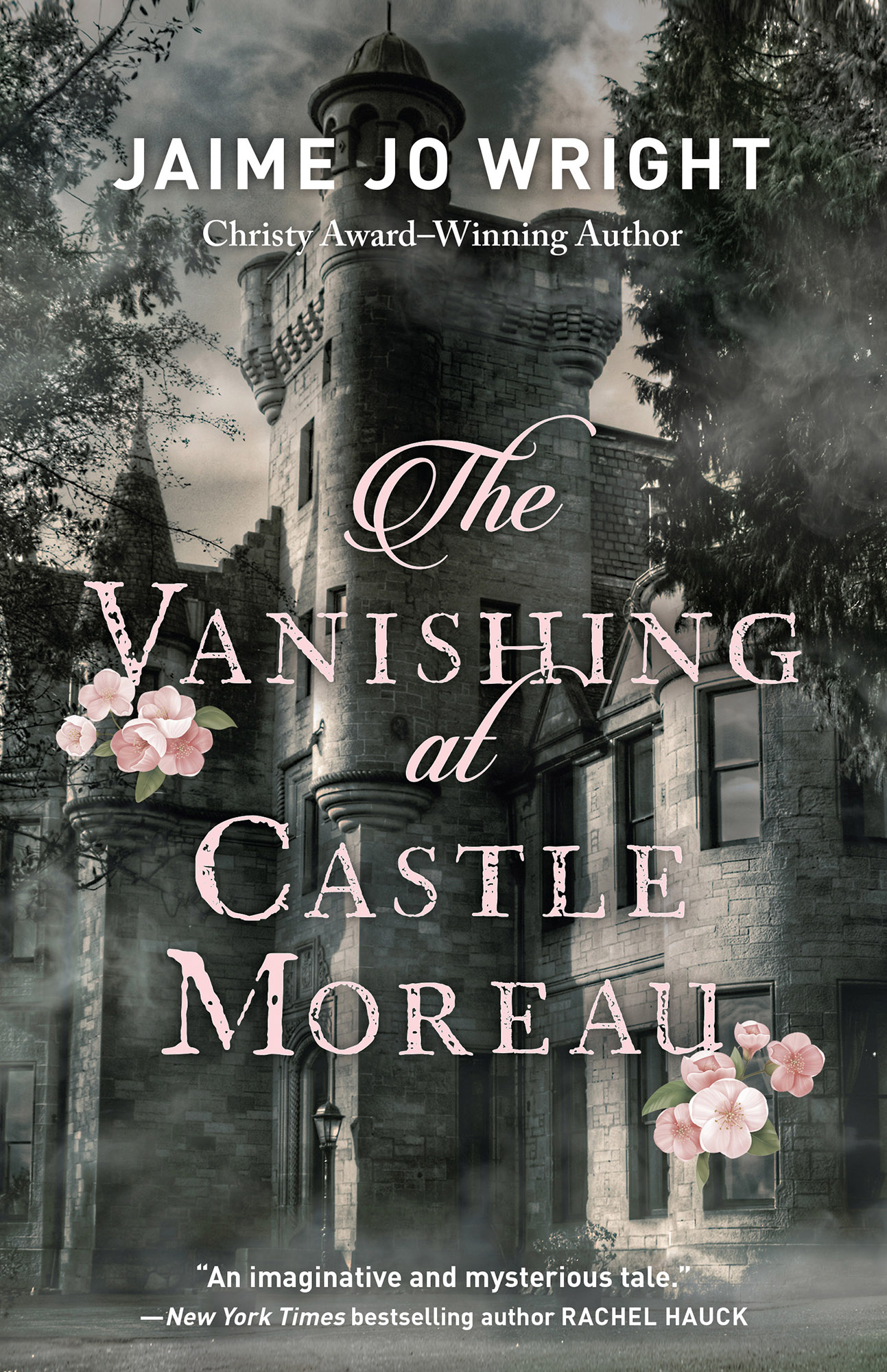
Virtual Book Tour & Giveaway: The Vanishing at Castle Moreau by Jaime Jo Wright

The Vanishing at Castle Moreau by Jaime Jo Wright Banner

The Vanishing at Castle Moreau

by Jaime Jo Wright

April 3-28, 2023 Virtual Book Tour

Synopsis:

The Vanishing at Castle Moreau by Jaime Jo Wright

A haunting legend. An ominous curse. A search for a secret buried deep within the castle walls.

In 1870, orphaned Daisy François takes a position as housemaid at a Wisconsin castle to escape the horrors of her past life. There she finds a reclusive and eccentric Gothic authoress, who hides tales more harrowing than the ones in her novels. With women disappearing from the area and a legend that seems to parallel these eerie circumstances, Daisy is thrust into a web that threatens to steal her sanity, if not her life.

In the present day, Cleo Clemmons is hired by the grandson of an American aristocratic family to help his grandmother face her hoarding in the dilapidated Castle Moreau. But when Cleo uncovers more than just the woman's stash of collectibles, a century-old mystery of disappearance, insanity, and the dust of the old castle's curse threaten to rise again. This time to leave no one alive to tell the sordid tale.

Award-winning author Jaime Jo Wright seamlessly weaves a dual-time tale of two women who must do all they can to seek the light amidst the darkness shrouding Castle Moreau.

Praise for The Vanishing at Castle Moreau:

"An imaginative and mysterious tale."

New York Times bestselling author RACHEL HAUCK

"With real, flawed characters, who grapple with real-life struggles, readers will be drawn into this gripping suspense from the very first page. Good luck putting it down. I couldn't."

LYNETTE EASON, bestselling, award-winning author of the Extreme Measures series

"Wright pens another delightfully creepy tale where nothing is quite as it seems and characters seek freedom from nightmares both real and imagined."

Library Journal

"Wright captivates. A thrilling tale. . . . Readers won’t want to put this down."

Publishers Weekly

The Vanishing at Castle Moreau Trailer:

Book Details:

Genre: Dual time Suspense/Thriller
Published by: Bethany House Publishers
Publication Date: April 2023
Number of Pages: 384
ISBN: 9780764238345
Book Links: Amazon | Barnes & Noble | BookShop.org | Goodreads | Baker Book House

Read an excerpt:

The one who rescues,
who loves,
and who stands in the gap.
God knew I needed you.

The Girl

MAY 8, 1801

When I was a little girl, my father would often come to my bedside after my screams wakened him in the night. He would smooth back my damp ringlets, the mere feel of his callused and strong hand inspiring an instantaneous calm.

“What is it, little one?” he would ask me.

Every night, the same question. Every night, I would give the same answer.

“It is her again, Papa.”

“Her?” He would tilt his head, giving credence to my words and refraining from scolding or mockery.

“Yes.” I would nod, my head brushing the clean cotton of my pillowcase. “The woman with the crooked hand.”

“Crooked hand, hmm?” His query only increased my adamant insistence.

“Yes. She has a nub with two fingers.” A tear would often trail down my six-­year-­old cheek.

My father would smile with a soothing calm. “You are dreaming again, mon chéri.”

“No. She was here.” He must believe me!

“Shhh.” Another gentle stroke of his hand across my forehead. “She is the voice of the mistress of your dreams. We all have one, you know. Only yours needs extra-special care because she isn’t beautiful like the rest. She is the one who brings the nightmares, but she doesn’t mean to harm you. She is only doing her best with what she has been given, and what she has been given are her own horrors.”

“Her hand?” I would reply, even though we repeated this explanation many nights in a row.

“Yes,” my father would nod. “Her hand is a reflection of the ugliness in her stories. Stories she tells to you at night when all is quiet and your eyes are closed.”

“But they were open,” I would insist.

“No. You only think they were open.”

“I am afraid of the ghost, Papa,” I urge.

His eyes smile. “Oui. And yet there are no spirits to haunt you. Only the dream mistress. Shoo her away and she will flee. She is a mist. She is not real. See?” And he would wave his hand in the air. “Shoo, mistress. Away and be gone!”

We would survey the dark bedroom then, and, seeing nothing, my father would lean over and press his lips to my cheek. “Now sleep. I will send your mother’s dream mistress to you. Her imaginings are pleasant ones.”

“Thank you,” I would whisper.

Another kiss. The bed would rise a bit as he lifted his weight from the mattress. His nightshirt would hang around his shins, and he would pause at the doorway of my room where I slept. An only child, in a home filled with the fineries of a Frenchman’s success of trade. “Sleep, mon chéri.”

“Yes, Papa.”

The door would close.

My eyes would stay open.

I would stare at the woman with the crooked hand, who hovered in the shadows where the door had just closed. I would stare at her and know what my father never would.

She existed.

She was not a dream.

one

Daisy François
APRIL 1870

The castle cast its hypnotic pull over any passerby who happened along to find it, tucked deep in the woods in a place where no one would build a castle, let alone live in one. It served no purpose there. No strategy of war, no boast of wealth, no respite for a tired soul. Instead, it simply existed. Tugging. Coercing. Entrapping. Its two turrets mimicked bookends, and if removed, one would fear the entire castle would collapse like a row of standing volumes. Windows covered the façade above a stone archway, which drew her eyes to the heavy wooden door with its iron hinges, the bushes along the foundation, and the stone steps leading to the mouth of the edifice. Beyond it was a small orchard of apple trees, their tiny pink blossoms serving as a delicate backdrop for the magnificent property.

Castle Moreau.

Home to an orphan. Or it would be.

Daisy clutched the handles of her carpetbag until her knuckles were sure to be white beneath her threadbare gloves. She stood in the castle’s shadow, staring at its immense size. Who had built such an imposing thing? Here, in the northern territory, where America boasted its own mansions but still rejected any mimicking of the old country. Castles were supposed to stare over their fiefdoms, house lords and ladies, gentry, noblemen, and summon the days of yore when knights rescued fair maidens. Castles were not supposed to center themselves inside a forest, on the shore of a lake, a mile from the nearest town.

This made Castle Moreau a mystery. No one knew why Tobias Moreau had built it decades before. Today the castle held but one occupant: Tobias’s daughter, Ora Moreau, who was eighty-­six years old. She was rarely ever seen, and even more rarely, ever heard from. Still, Ora’s words had graced most households in the region, printed between the covers of books with embossed golden titles. Her horror stories had thrilled many readers, and over the years, the books helped in making an enigma of the reclusive old woman.

When the newspaper had advertised a need for a housemaid—­preferably one without a home or ties to distract her from her duties—­it was sheer coincidence that Daisy had seen it, even more of a coincidence that she fit the requirements. And so it was a surprise she was hired after only a brief letter inquiring after the position.

Now she stood before the castle, her pulse thrumming with the question why? Why had she accepted the position? Why would she allow herself to be swallowed up by this castle? The stories were bold, active. Women disappeared here. It was said that Castle Moreau was a place that consumed the vulnerable. Welcoming them in but never giving them back.

Daisy stiffened her shoulders. Swallowed. Tilted her chin upward in determination. She had marched into hell before—­many times, in fact. Castle Moreau couldn’t possibly be much worse than that.

Cleo Clemmons
TWO YEARS BEFORE PRESENT DAY

They had buried most souvenirs of the dead with the traditions of old, and yet what a person didn’t understand before death, they would certainly comprehend after. The need for that ribbon-­tied lock of hair, the memento mori photograph of the deceased, a bone fragment, a capsule of the loved one’s ashes—­morbid to those who had not lost, but understandable to those who had.

Needing to touch the tangible was a fatal flaw in humanity. Faith comforted only so far until the gasping panic overcame the grieving like a tsunami, stealing oxygen, with the only cure being something tangible. Something to touch. To hold. To be held. It was in these times the symbolism attached to an item became pivotal to the grieving. A lifeline of sorts.

For Cleo, it was a thumbprint. Her grandfather’s thumbprint. Inked after death, digitized into a .png file, uploaded to a jewelry maker, and etched into sterling silver. It hung around her neck, settling between her breasts, just left of her heart. No one would know it was there, and if they did, they wouldn’t ask. A person didn’t ask about what was held closest to another’s heart. That was information that must be offered, and Cleo had no intention of doing so. To anyone. Her grandfather was her memory alone—­the good and the bad. What he’d left behind in the form of Cleo’s broken insides were Cleo’s to disguise. Faith held her hand, or rather, she clenched hands with faith, but in the darkness, when no one was watching, Cleo fit her thumb to her grandfather’s print and attempted to feel the actual warmth of his hand, to infuse all the cracks and offer momentary refuge from the ache.

Funny how this was what she thought of. Now. With what was left of her world crashing down around her like shrapnel pieces, blazing lava-­orange and deadly.

“Pick up, pick up, pick up,” Cleo muttered into her phone, pressing it harder against her ear than she needed to. She huddled in the driver’s seat of her small car, all of her worldly possessions packed into the trunk and the back seat. She could hear the ringing on the other end. She owed it to Riley. One call. One last goodbye.

“Hey.”

“Riley!” Cleo stiffened in anticipation.

“. . . you’ve reached Riley . . .” the voice message continued, and Cleo laid her head back against the seat. The recording finished, and Cleo squeezed her eyes shut against the world outside of her car, against the darkness, the fear, the grief. This was goodbye. It had to be.

The voicemail beep was Cleo’s cue. She swallowed, then spoke, her words shivering with compressed emotion. What did a person say in a last farewell?

“Riley, it’s me. Cleo. I—” she bit her lip, tasting blood—“I-­I won’t be calling again. This is it. You know. It’s what I hoped would never happen. I am so, so sorry this happened to you! Just know I tried to protect you. But now—” her breath caught as tears clogged her throat—“this is the only way I can. Whatever happens now, just know I love you. I will always love you.” Desperation warred with practicality.

Shut off the phone.

There was no explaining this.

There never would be.

“Goodbye, Ladybug.” Cleo thumbed the end button, then threw the phone against the car’s dashboard. A guttural scream curled up her throat and split her ears as the inside of the vehicle absorbed the sound.

Then it was silent.

That dreadful, agonizing silence that came with the burgeoning, unknown abyss of a new start. Cleo stared at her phone lying on the passenger-­side floor. She lunged for it, fumbling with a tiny tool until she popped open the slot on its side. Pulling out the SIM card, Cleo bent it back and forth until it snapped. Determined, she pushed open the car door and stepped out.

The road was heavily wooded on both sides. Nature was her only observer.

She flung the broken SIM card into the ditch, marched to the front of the car, and wedged the phone under the front tire. She’d roll over it when she left, crush it, and leave nothing to be traced.

Cleo took a moment to look around her. Oak forest, heavy undergrowth of brush, wild rosebushes whose thorns would take your skin off, and a heap of dead trees and branches from the tornado that had ravaged these woods decades prior. The rotting wood was all that remained to tell the tale now, but it was so like her life. Rotting pieces that never went away. Ever.

She climbed back into the car and twisted the key, revving the engine to life. Cleo felt her grandfather’s thumbprint until it turned her skin hot with the memories. Memories of what had set into motion a series of frightful events. Events that were her responsibility to protect her sister from.

Goodbye, Ladybug.

There was no explaining in a voicemail to a twelve-­year-­old girl that her older sister was abandoning her in order to save her. Cleo knew from this moment on, Riley would play that message, and slowly resentment would seep in as she grew older. Resentment that Cleo had left and would never come back.

But she couldn’t go back. Not if she loved Riley. Sometimes love required the ultimate sacrifice. Sometimes love required death. Death to all they knew, all they had known. If Cleo disappeared, then Riley would be left alone. Riley would be safe. She could grow up as innocent as possible.

So long as Cleo Clemmons no longer existed.

***

Excerpt from The Vanishing at Castle Moreau by JAIME JO WRIGHT. Copyright 2023 by Jaime Sundsmo. Reproduced with permission from Bethany House Publishers. All rights reserved. No part of this publication may be reproduced, stored in a retrieval system, or transmitted in any form or by any means—­for example, electronic, photocopy, recording—­without the prior written permission of the publisher. The only exception is brief quotations in printed reviews.


Review:

5 stars!

A modern gothic suspense novel with fascinating multiple timelines set in the atmospheric Castle Moreau.
 

The Vanishing at Castle Moreau by author Jaime Jo Wright is the modern iteration of the gothic novel with much more depth than I ever imagined. With its multiple timelines, each narrated by an engaging heroine, I was totally absorbed by the well-crafted, atmospheric story. 

I’ve become such a huge fan of the dual (or, in this case, TRIPLE) timeline tale. I love getting the story of what is going on from two (or more) seemingly unconnected storylines that slowly wend their way toward each other and converge to reveal the big picture. In this book, there are three stories, separated by decades, to reconcile, and I had no trouble discriminating which story was which, and all are compelling tales. 

The descriptions of the castle and its occupants at the three points in time created an eerie, menacing atmosphere from the start. I couldn’t help thinking something frightening was just around a darkened corner or across a creaking floor, hidden and waiting for an opportunity to appear. The tension built as each girl narrated their story. 

Daisy and Cleo are extremely likable and engaging young women, both at Castle Moreau, escaping their pasts. The initial interactions with those living in the castle were strange —odd enough to send anyone running —but they are both strong and strongly motivated to remain. Both have a curious nature and are determined to suss out the mystery of the women who vanished after arriving at Castle Moreau. The plot progresses with interesting twists and turns, including Cleo’s struggle with alcohol, and I was surprised and satisfied with the story’s resolution. 

With its fascinating multiple timelines, appealing heroines, atmospheric setting, and intriguing mystery, I recommend THE VANISHING AT CASTLE MOREAU to readers of suspense and thrillers who enjoy a touch of romance in their stories.


Author Bio:

Jaime Jo Wright

Jaime Jo Wright is the author of six novels, including Christy Award winner The House on Foster Hill and Carol Award winner The Reckoning at Gossamer Pond. She's also the Publishers Weekly and ECPA bestselling author of two novellas. Jaime lives in Wisconsin with her cat named Foo; her husband, Cap'n Hook; and their littles, Peter Pan and CoCo.

To learn more, visit Jamie at:
www.jaimewrightbooks.com (& check out her Podcast - MadLit Musings!)
Goodreads
BookBub - @JaimeJoWright
Instagram - @JaimeJoWright
Twitter - @JaimeJoWright
Facebook - @JaimeJoWright


Tour Participants:

Visit these other great hosts on this tour for more great reviews, interviews, guest posts, and giveaway entries!


JOIN IN ON THE GIVEAWAY:

This is a giveaway hosted by Partners in Crime Tours for Jaime Jo Wright and Bethany House Publishers. See the widget for entry terms and conditions. Void where prohibited.


Get More Great Reads at Partners In Crime Tours


Thursday, July 28, 2022

What Souls Are Made Of: A Wuthering Heights Remix by Tasha Suri, Narrated by Becca Hirani and Alex Williams

What Souls Are Made Of: A Wuthering Heights RemixWhat Souls Are Made Of: A Wuthering Heights Remix by Tasha Suri
My rating: 5 of 5 stars

A fresh reimagining of the story behind one of the most renowned couples in literature.

Author Tasha Suri takes the literary classic, Wuthering Heights, and reimagines the backstory of Heathcliff, Catherine, and her family, breathing new life into this polarizing tale of gothic trauma. The story is set when Heathcliff has fled The Heights, and Cathy has been left behind to agonize over where he's gone and what's happened to him. Events from the original tale are recounted and take on new life and meaning with the telling. Suri's story is presented from Catherine's and Heathcliff's points of view, giving an understandable heft to the reasons for their sometimes-murky relationship in the original. If you were left wanting after reading Brontë's story, this envisioning might give you some satisfaction.

Suri explores the shadowy details of the period Heathcliff is absent from The Heights, later revealed in the original story to be when he is amassing his fortune. The story follows him to Liverpool and into the seamy underbelly of the port city, where poverty and press gangs are all-encompassing. The author weaves the results of Britain's colonial history in India on its people into the story as Heathcliff comes to understand who he is. At the same time, Catherine also comes to realize her own hidden heritage as she and her brother, Hindley, attempt to lay the ghosts of their father's past wrongdoings.

The audiobook version is voiced by Becca Hirani as Catherine and Alex Williams as Heathcliff. They breathe life into these characters, imbuing each with a personality that gives the listener a fresh new perspective on what's driving their actions. The audiobook's cover is beautifully moody but depicts these two as older than they are during the story's events. As the story ends on a more hopeful note than the source materials, is this an additional nudge in the direction that things work out differently for them?

Touted as one of the greatest, most legendary love stories of all time, Wuthering Heights often eludes and disappoints modern young adult readers. Like many classic works, it has both its fans and foes. Depending on the reason for their dissatisfaction, Suri's version may very well ease some of the latter group into the former, with its updated dialogue and delivery, more revealing first-person points of view, and its fresh underpinning based on the main characters' secret, hidden ancestries.

I recommend What Souls Are Made Of to readers who enjoyed Wuthering Heights or wanted to but were left disappointed and those who enjoy YA historical fiction, especially that featuring a portrayal of the immigrant experience in 18th-century Britain.

I voluntarily reviewed this after receiving an Advanced Review Copy from the publisher through NetGalley.


View all my reviews