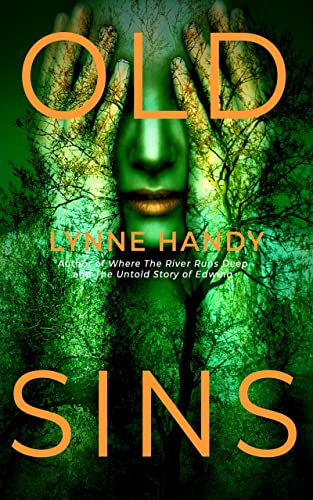
Battered by her archeologist lover’s betrayal, poet Maria Pell flees to an Irish village to study prehistoric people and write her next volume of poetry, but her sanctuary is invaded first by her moody cousin and then by her Togolese lover who unexpectedly show up on her doorstep. When the discovery of a girl’s body on a rocky shore reawakens Maria’s devastating childhood memory of finding a dead baby floating in a stream, her days become haunted by this child’s death. As teenage girls disappear, villagers are terrified that sex-traffickers are targeting their community. With crimes to be solved, both past and present, Maria risks her life to bring the perpetrators to justice.
"The story is ingenious and unpredictable . . . "
"A dynamic, roller coaster ride of plot twists and turns. . . a truly mesmerizing and moving, mystery thriller that will stump the audience until the secrets are revealed."
PROLOGUE
In the summer of 1988 when I was ten, I found a baby girl caught in the cattails of a stream running through my parents’ property. At first, I thought she was another baby Moses waiting to be discovered in the bulrushes. It was when I knelt to free her from the fronds that I saw her ashen face, her vacant eyes, and knew she was dead.
I see it all in slow motion now: I, in a yellow sundress, scrambling to my feet, knowing something was horribly wrong that a baby had been thrown in the creek. I ran toward my house crying, “There’s a dead baby in the creek!”
My academician father was sitting in the porch swing, reading a newspaper. He threw it down and came running. The kitchen door banged behind my mother. “John? What is it?”
I ran to her and pressed my face against her chest.“It’s a dead baby,” I sobbed.“She’s wearing a pink dress.”
“A pink dress?”
My mother folded her arms around me and stared after my father, who admonished her to stay where she was. I’m sure my mother looked at the baby afterward, but not on the day that I found her.
No one ever claimed her. No one ever admitted throwing her in the creek. The town called her Baby Doe. The coroner said she’d been alive when she went in the water. She had been a throwaway child. Until finding her, I had not known that children could be so unloved they would be discarded. I was so distressed that my parents sent me to a psychiatrist who told my mother that I had merged my psyche with that of the unwanted infant and feared no one would ever want me.
How many times during my childhood had my mother asked if I knew how much she and my father loved me? Taken literally, it was a difficult question to answer, so I had kept silent. How do you measure love? Fear of abandonment helped form the woman I became, and in some ways, I remained stuck emotionally in my tenth year.
CHAPTER ONE
Coomara, Ireland April 29, 2016
Bridget Vale was so faithful in her prayers that the nuns selected her as May Queen. On Sunday, she would reign over the village’s spring festival. Today was her thirteenth birthday, and my cousin Elizabeth and I remembered with a strawberry frosted cake, balloons, and a pair of gold earrings depicting St. Brigid’s eternal flame. Wearing her blue school uniform, Bridget danced on strong-muscled legs among the daffodils and tulips in my garden. Her gracefulness seeded a poem in my mind— toss of silk-spun hair, gypsy feet....
Bridget gripped the balloon strings with both hands so they could not fly away and become lodged in the stomachs of terns and sea turtles. Then catastrophe! In the middle of a pirouette, the sky darkened and a sea wind rushed in, batting the balloons against each other, swooping them up, ripping them from her hands. The pretty globes—pink, yellow, and blue—merged into the brew of clouds. I felt a sense of loss.
Before I could pursue the feeling, Iris, Bridget’s mother, called to me from the open kitchen window. “Maria, I’m done vacuuming. Do you want me to sweep the front porch?”
“There’s rain coming,” I answered. “It’ll wash the porch clean.”
Iris went to the back door. “Come in, Bridget. Time to go home.”
As the girl climbed the porch steps, I saw her aura, previously a healthy red, was now tinged with green—a loss of positive energy. “I’m sorry I lost the balloons, Ms. Pell,” she said sadly.
I patted her on the shoulder. “Couldn’t be helped. The wind came out of nowhere.”
Elizabeth, who had also seen the balloon mishap, sought to distract by asking Bridget to help box up the leftover cake. I paid Iris her weekly wage for cleaning the cottage, and mother and daughter prepared to go home.
“I’ll see you at Mass on Sunday,” Elizabeth said.
“I’m coming, too,” I said. “It’s not every day I get to see a queen coronated.”
As Bridget walked down the hill with her mother, I saw her aura had not changed and it worried me—perhaps something more was at work in her young mind than the loss of the balloons.
The ability to visualize auras was both a blessing and a curse; it was invasive: perhaps people minded having someone privy to the secrets of their well-being. I had not worked to develop the skill; it had come to me early, perhaps, a result of my self-imposed isolation as a child.
Most of the time, my mind was focused on the routines that comprised my life, and especially, my work. I could go days without consciously seeing haloes around people’s heads—either that or I did see them as a natural occurrence and did not notice, as one becomes used to floaters in the eye.
I looked at Elizabeth. Her aura was pink. She was running low on energy,
She sighed as she closed the window over the sink. “Too bad about the balloons, Maria. I hope they don’t end up in some creature’s stomach.”
“I hope so, too. Elizabeth, why don’t you lie down. You seem tired.”
“I may go sit in the garden.” Climbing the stairs to my study, I thought how capricious the weather was. Sunlight, one moment. Rain, the next. No wonder the ancient Celts found divinity in weather phenomena like thunder. So much of life was mystery.
As a poet, I loved mystery, for it tugged at my right brain, inviting possibilities. I’d been granted an eighteen-month leave of absence from my teaching position at Midwestern University in Indiana and was in Ireland on a Lewison Fellowship to study Celtic prehistory. Hopefully, the research would inspire a new book of poems.
The previous year, I had won the prestigious Innisfree Award for Footprints, a collection of poems based on the trek of a Celtic tribe from northern France to County Kildare in Ireland. Though I’d won several awards for feminist poetry, Footprints had earned the fellowship for me. Three years earlier, my research for Footprints had led me to County Kildare, west of Dublin. I had been overwhelmed by the beauty of the country’s landscape—forests and grass-covered hills, monolithic rocks heaved up from the soil, lakes and rivers carved out by long ago glaciers. Mists drifting in from the sea added to a sense of wonder. I felt the pull of history.
While I was in Kildare, Mathieu, my partner of twelve years, began an affair with one of his colleagues, a woman named Zara. All my life, I had been plagued by fear of rejection, and his betrayal sent me into a tailspin of despondency. The Lewison Fellowship allowed me to put an ocean between him and me, and to bury myself in work.
Pausing at the study window, I looked out onto the seaside village of Coomara, which dated to the early fifth century (BCE), when Ireland was carved into unstable tuatha, or kingdoms, with shifting boundaries dependent on the outcome of battles. Coomara, loosely translated as sea hound, was probably named for a Viking who came to settle long ago. A mile from my cottage, where the ruins of a thirteenth century castle hugged the ground, was my favorite place to linger. Closing my eyes, I could hear hoof-beats of an ancient army echoing from the earth. Easterly, lay a tumble of pale gray stones—once an abbey.
My five-room rented cottage came furnished and had been built on a promontory overlooking the Irish Sea, yet was within walking distance of the main part of town. Green-shingled, constructed of wood and stone, the house was painted hot pink. Gardens were walled in with a heavy oak gate in front, and a smaller gate in back leading to stone steps descending to the shore. Front and back porches were high enough that I could see into the garden of my neighbor and landlord, Brendan Calloway.
Brendan stood in his garden, looking out to sea. He was an odd sort and I didn’t quite trust him. When I rented the cottage, I made sure he handed over all the keys.
Tearing myself away from the window, I sat down at my desk and began sorting through photocopies of mythical stories I’d brought back from my recent bus trip to the Trinity College Library in Dublin, fifty miles north of Coomara. It was the myths that fueled my understanding of prehistoric people, who came in waves during the sixth century (BCE), and with whom, through my late maternal grandmother, I shared a genetic core.
I bent to my work, reading about Dagda, known as the Good God, not because he was particularly moral, but because he was skilled as a warrior, ruler, artisan, and magician. He possessed a cauldron with an inexhaustible supply of treasure for his followers and a gigantic club, which had to be hauled on wheels. Some scholars thought he was a storm god like Thor with his hammer. Others compared him to Hercules.
The wind that had taken Bridget’s balloons blew in through my open window and rustled a page on my wall calendar. Glancing up, I saw Elizabeth had penned in her tiny handwriting a reminder of Pearce Mulligan’s soiree on April 30. We’d both forgotten about it.
I went to the top of the stairs. “Elizabeth,” I called down. “Pearce Mulligan’s party is tomorrow evening.”
No reply. She must still be in the garden.
Pearce Mulligan was a bore, but I hoped to meet his reclusive poet mother, Margaret. Though I’d been in Ireland for six weeks, her path and mine had not crossed. The public librarian said Margaret had published only one chapbook. I’d read the library copy. Her verses were clever, based on rules of nature.
Rain was coming in my open bedroom window and I rushed to close it. Too many interruptions. My mind could not focus. Putting the notebooks aside, I went downstairs. Soaked to the skin, Elizabeth came in the back door, holding a wisp of pink latex in her hand.
“Part of a balloon,” she said, handing it to me. “I found it on top of the wall. At least, this didn’t kill some turtle.”
I held it in the palm of my hand, thinking it was shaped like a human ear. For some inexplicable reason, I was troubled.
***
The following evening, Elizabeth and I were about to leave on foot for Ravensclaw, the Mulligan family estate, when she was detained by a telephone call from her mother in Indiana. Not wanting to be late, I went ahead. Halfway to the Mulligan estate, I heard Elizabeth shout my name and turned to see her running up the hill.
“Maria! Something dreadful has happened to Bridget!”
My heart lurched. “What? What happened?”
Elizabeth grabbed my hand. “A local boy found her body on the rocks.”
“Her body?”
Bridget was dead? I felt as if I’d been kicked in the stomach. Yesterday, Bridget had danced with balloons in my garden. Had she fallen into the sea and drowned? Why had she gone down to the rocks? The village children were well aware of the danger. Signs were posted. Beware: Slippery Rocks.
“Where exactly was Bridget found?” I asked.
“Just below the park dock. A boy found her body when he went to arrange his father’s fishing nets.”
“And you learned about this how?”
“I was walking past the pub on my way to Ravensclaw when a garda officer pulled Iris and Freddy out of the pub to tell them. Iris...”
I could well imagine Iris’sr eaction. Years ago,she lost her first child, and now Bridget was dead. With anxious hearts, we hurried down the hill, reaching the edge of the village. As we neared St. Columba’s Catholic Church, Judy Moriarity, the priest’s gossipy housekeeper, darted out of the priory.
“Did you hear about the Vale girl?” she asked. “What do you think happened?”
She didn’t expect us to respond and we didn’t.
A mournful chant drifted upward, and I glanced toward the shore where people—possibly latter-day druids—had built a bonfire. They had heard about Bridget. Word of tragedy traveled fast in the village and its environs. On the other side of the street, Daniel Aherne, owner of a pub called Gaelic Earls, broke away from a group of men and waited for a car to pass. He hurried over and fell into step with us.
“Headed for the Vale cottage?” he asked.
“Yes,” I replied. “Maybe there’s something we can do to help.”
A loud, piercing cry tore through the darkness. I could not mistake the source—it was Iris. Elizabeth and I broke into a run. A crowd had gathered at the Vale cottage. The front door was flung open. Iris stood on the threshold, pounding her fists on her husband’s chest. Freddy Vale took her blows, tried to comfort her.
Two officers from An Garda Siochána, the Irish police force, stood on the porch. At their feet lay a stretcher holding a body covered with a white sheet.
Why have the garda brought the body to the cottage?
Iris’ despair tore through me as if it were my own. I closed my eyes, shrank against a tree trunk to find my bearings. Knowing I could be paralyzed by the strong emotion of others, Elizabeth grabbed my upper arm. I took several deep breaths and nodded, nearly recovered from the onslaught of Iris’s grief.
Iris scooped up her daughter’s corpse and ran into the house.
The officers stared at each other. “Here, here,” one said. “We must take the body to the morgue.”
Iris slammed the door. The lock snapped shut.
I turned to the officer nearest me. “Why did you bring the body here?”
“Mrs. Vale was with it there at the docks. She refused to let us touch her girl unless we promised to bring her to the house.”
Judy seared him with penetrating brown eyes. “You shouldn’t have listened to her. Now she’ll never give up her girl. She lost her first-born, you know.”
“We are Mrs. Vale’s friends,” I said. “Let us try to talk to her.”
The officers stepped aside and we climbed the steps to the porch. “Iris,” Elizabeth called out, “it’s Maria and Elizabeth. Please let us in.” Her hair a riotous mess, Iris threw open the door and lunged into Elizabeth’s arms. Bracing myself, I reached out to keep them both from falling. Iris smelled of whiskey.
“Not you, Mrs. Clatterfart,” Iris yelled at Judy. “I know the wickedness of your tongue.”
Judy’s kewpie doll mouth opened and closed. She stepped back.
I shut the door but didn’t lock it.
“We’re so sorry,” Elizabeth said. “Bridget was such a good girl. Your heart must be broken.”
Her words sent Iris into a paroxysm of weeping. Holding the grieving woman against my shoulder, I guided her into the kitchen where Freddy sat at the table staring numbly out the window, his large workman’s hands gripping a bottle of Powers whiskey. I extended my condolences to him and he mumbled something in return. Iris sat down, reached for Freddy’s bottle, and took a large swig. Then she returned to the front room and knelt in front of Bridget’s body.
When Iris laid her girl on the sofa, the sheet had slipped from Bridget’s face. Elizabeth and Iris dropped to their knees to recite the rosary. I moved closer to the dead girl to get a better look. My heart broke. Bridget’s dark lashes were fallen against white cheeks, no longer plump with the vigor of youth, but flat and bloodless. One of the earrings Elizabeth and I had given her hung from her left ear.
Her right ear lobe was torn—someone had ripped off the other earring. The torn balloon. A tendril of plankton graced her forehead. That detail thrust into my brain the image of the dead child, Baby Doe, whose body had floated in a stream and lodged in a stand of cattails. Feeling the onrush of panic that vision never failed to call up, I steadied myself on the back of a chair.
Not now.
I dragged myself back to the tragedy at hand. Behind me, Iris and Elizabeth were still praying. Steeling myself, I bent to study the wound on Bridget’s throat: deep, about a half-inch wide. Bridget had been strangled—a garrote of some type that cut into her skin and sliced through her right carotid artery. A garrote! An outrageous weapon to use on a defenseless girl.
I knew I shouldn’t touch Bridget, as the medical examiner had not seen her, but I did lift the blanket. Bridget was naked. Her small breasts lay vulnerable and still. I flinched, but continued my gaze downward to her sex, sparsely-haired. No bruising. Perhaps she hadn’t been violated. Her hands were fisted. Did she hold a clue to her murder?
“Holy Mother of God,” Elizabeth and Iris recited, “pray for us sinners...”
Freddy Vale came in and dropped to his knees to join the women in prayer. I uncurled Bridget’s fists and found cuts on the inside of her fingers. She had gripped the garrote at some point, in an effort to pull it away from her throat. What happened to you, little Bridget? What kind of maniac did this?
***
Excerpt from Old Sins by Lynne Handy. Copyright 2022 by Lynne Handy. Reproduced with permission from Lynne Handy. All rights reserved.
The eldest child in a farm family, I grew up in western Indiana where the tall corn drove me inward to create fantasy worlds. Books were my salvation. I was drawn to poetry in the beginning. Wordsworth and other poets taught me that metaphor, sound, and cadence made a good poem. From authors like Dickens, I learned that rhythmic sentences advanced plot. Hemingway taught me about verbs. Upon graduating from library school, I worked as a librarian in Illinois, Texas, and Michigan. In retirement, I co-founded Open Sky Poets, a collaboration of poets in the western suburbs of Chicago, and published poems and short stories in literary journals. I self-published three novels—two are mysteries. Current projects involve a mystery series with author Jake Westin, who, like Christie’s Miss Marple, somehow lands in the middle of murder investigations. I live in a blue, yellow, and brown house with a yucca plant out front and two wonderful rescue dogs.
Visit these other great hosts on this tour for more great reviews and giveaway entries!
 Halloween Parade Peril by Victoria Tait