Showing posts with label true crime. Show all posts

Tuesday, January 27, 2026

Virtual Book Tour & Giveaway: Craniofacial Anatomy and Forensic Identification by Gloria Nusse

Craniofacial Anatomy and Forensic Identification by Gloria Nusse Banner

CRANIOFACIAL ANATOMY AND FORENSIC IDENTIFICATION

by Gloria Nusse

January 12 - February 6, 2026 Virtual Book Tour

Synopsis:

Craniofacial Anatomy and Forensic Identification by Gloria Nusse

Our bodies record what happens to us physically throughout our lives. This is illustrated by the simple appearance of scars from injuries sustained years, and even decades ago. Evidence such as scars also tells us how we used our joints or may have injured them as children and adults. Our bodies conform to the environment in which we live, both outside and inside. By examining and observing these key clues, a forensic investigator can reveal the unique character that tells the story of a person’s life and death.

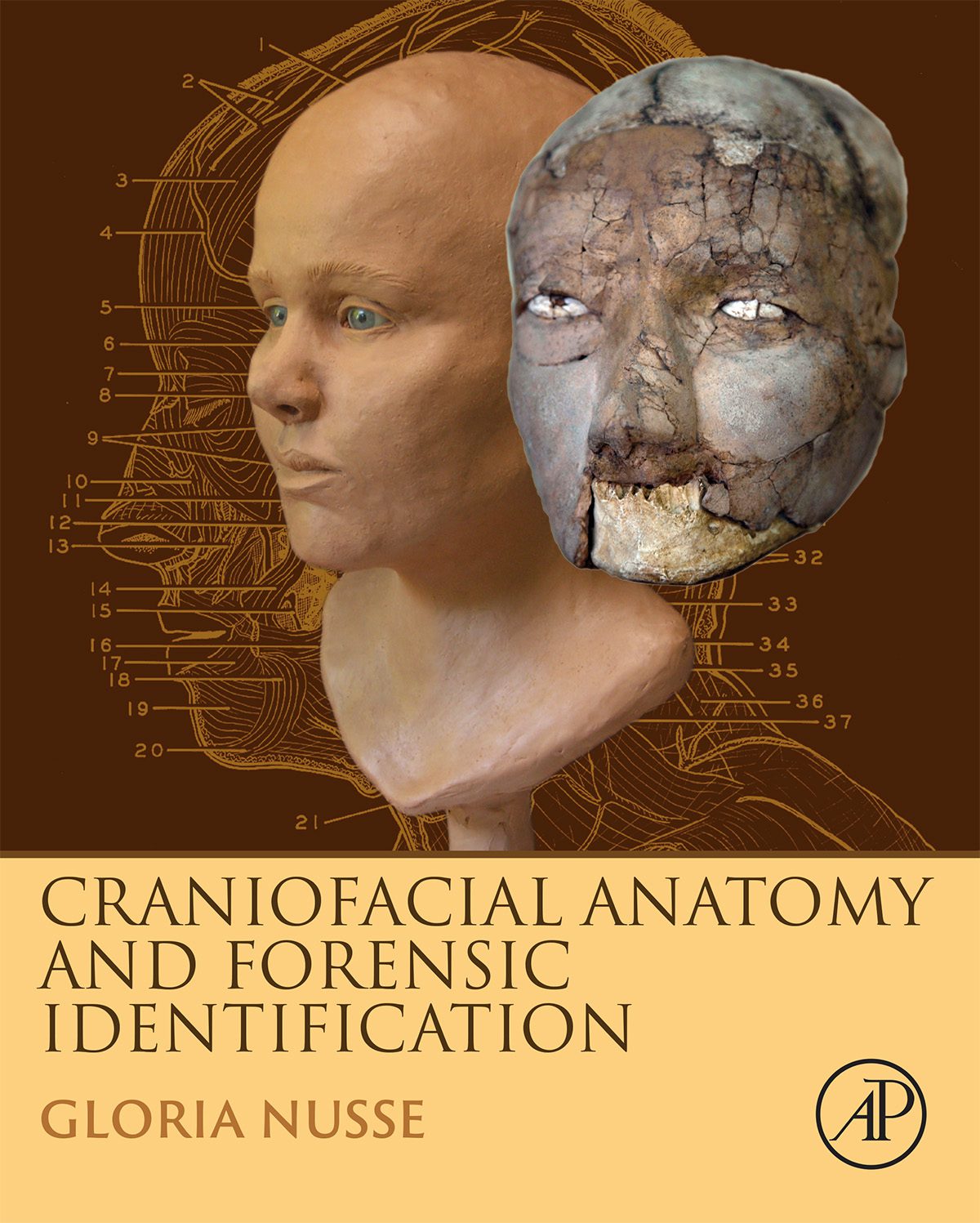
Craniofacial Anatomy and Forensic Identification is an atlas that covers all aspects of facial reconstruction and anatomy of the head and neck, such as facial expression and the anatomic basis for facial development, along with the effects of muscle movement. Written by a world-renowned forensic artist with decades of experience as a scientific illustrator as well as a portraitist, anthropologist, and lecturer in anatomy and biology, the author is as much a scientist as an artist.

  • Comprehensively addresses the history o facial reconstruction, facial development, muscle movements, and bone physiology used by forensic artists and forensic anthropologists
  • Demonstrates techniques in mold making and sculpting to bring the body to life
  • Includes images from cadaver labs and recent case studies
  • Provides detailed anatomy of vessels and nerves found in the face including the eyes
  • Details the muscles, ligaments and tissues down to the skull
  • Describes the changing face as it ages
  • Book Details:

    Genre: Non-Fiction, True Crime,
    Published by: Academic Press
    Publication Date: October 13, 2022
    Number of Pages: 302
    ISBN: 9780128092880 (ISBN10: 0128092882)
    Audience: Forensic Anthropologists, Forensic Artists, Medico-legal Professionals, Forensic Scientists. Graduate Students, Law Enforcement Agencies, and Legal Professionals. Anyone Working In The Field Of Facial Imaging.
    Book Links: Amazon | Kindle | Barnes & Noble | ThriftBooks | Goodreads | ScienceDirect | Walmart | Elsevier


    Review:

    5 stars!

    Fascinating dive into the structure and mechanics of the human body and how to use this information to recreate the identity of the deceased. 

    Not for the faint of heart nor the casual reader, Craniofacial Anatomy and Forensic Identification by Gloria Nusse is set to become the reference bible for those who work to recreate the faces of severely damaged or decomposed Jane and John Does. Both a science and an art, Nusse takes readers from the very basics of parts and principles to the advanced interpretation of skeletal clues to the production of plausible, recognizable likenesses for identification or historical reimaging. 

    Nusse presents interesting and eminently readable discussions of the skeletal, muscular, nervous, and integumental systems of the skull and neck, familiarizing readers with the proper terminology and language to be used in the rest of the text and essential in the field. The functions of each anatomical part, and whether or not and how they can be used to pinpoint the individual's physical appearance, age, gender, race, and even culture, are described in obviously necessary detail without overwhelming the reader. Side notes on the etymology of some anatomical names were an interesting and delightful bonus, as were references to past cases that highlighted specific aspects under discussion. 

    The text includes a generous number of clear anatomical photographs, side by side with black-and-white drawings with identifying labels for the same image. There were a couple of instances where some photos were a little small or somewhat obscured due to dark shadows, though. It was also difficult to refer to the images while reading the accompanying text on a different page in the ebook edition, so I recommend getting a physical copy of the book for this reason alone. 

    After the general discussion of anatomy, the author discloses how molds are produced from physical bones. In many instances, the skull is no longer intact or complete due to damage at the time of the individual's death or post-mortem, deterioration from burial or exposure, or even loss of pieces during storage by law enforcement agencies. The artist must fill in the missing segments, if possible, before making the initial mold, using clues provided by what is still available. I was particularly intrigued by the many aspects the artist must consider before reconstructing a skull, including the circumstances of the death, items found with the body, the nature of the setting or location where the individual was found, the time period, and the culture. The author's personal experiences crafting models that ultimately led to a successful identification were fascinating and very inspirational. 

    While the book covers the nuts and bolts and the step-by-step process of the author's work, it is as compelling as it is practical. Also, because of the book's nature, readers do not have to read each chapter in order but can skip to the areas they are most interested in or need as a refresher. The book would be great as a one-time deep dive or as a source to be consulted over and over again. 

    I recommend CRANIOFACIAL ANATOMY AND FORENSIC IDENTIFICATION to criminology/criminal justice students and practitioners, mystery and thriller writers wanting to expand their knowledge of this area, and readers who have enjoyed the works of authors such as Kathy Reichs or the Eve Duncan series by Iris Johansen and have been fascinated by their main characters' careers and want to get the real story behind the fiction.


    Author Bio:

    Gloria Nusse

    Gloria Nusse is a forensic artist, anatomist and anthropologist. She has aided in identification of unidentified remains and return 14 plus persons to their families. As well she has recreated the faces of ancient peoples of the Middle East, as well as recreations of the crystal skull for National Geographic among others. Her work has been featured on 48 Hours, Forensic Files, Dateline, National Geographic specials, Unsolved History and others. She worked as a scientific artist for over 35 years and has taught human dissection and anatomy at San Francisco State University for 12 years. ( currently Emeritus)

    She has authored and co-authored several journal articles and chapters for various publications. She was the invited speaker for the Chalmers Historical Address for the Association of Oral and Maxillary surgeons meeting in 2013.

    As well she has taught many workshops for professionals, including the FBI.

    Catch Up With Gloria Nusse:

    LinkedIn


    Tour Participants:

    Visit these other great hosts on this tour for more great reviews, interviews, guest posts, and opportunities to WIN in the giveaway!
    Click here to view the Tour Schedule


    Don't Miss Out! Enter Now for Your Chance to Win!

    This giveaway is hosted by Partners in Crime Tours for Gloria Nusse. See the widget for entry terms and conditions. Void where prohibited.
    Craniofacial Anatomy and Forensic Identification by Gloria Nusse | Gift Cards

    Can't see the giveaway? Click Here!

    Get More Great Reads at Partners In Crime Tours

    Saturday, May 10, 2025

    Virtual Book Tour & Giveaway: Vacations Can Be Murder: A True Crime Travel Guide to New England by Dawn M. Barclay

    VACATIONS CAN BE MURDER

    A TRUE CRIME TRAVEL GUIDE TO NEW ENGLAND

    by Dawn M Barclay

    April 28 - May 23, 2025 Virtual Book Tour

    Synopsis:

    Vacations Can Be Murder by Dawn M Barclay

    Vacations Can Be Murder


    As Close as You Can Get to True Crime While Still Breathing!

    For the true crime lover—finally, a travel guide from an award-winning travel journalist and suspense author that gives you the down and dirty on exactly where the major crimes occurred, and where the bodies are buried. For aficionados of paranormal, prison, and tombstone travel, there’s a goldmine of tourism suggestions for you here as well.

    Along with summaries of the major crimes committed in New England, you’ll discover where to find the best crime and ghost tours; which hotels and restaurants are former jails, courthouses, or harbor paranormal activity; where infamous criminals are/were jailed, and which venues and attractions might feed your fancy for murder and justice. Reading lists in each chapter will guide you to books expounding on the crimes discussed.. Best of all, suggested itineraries bring all the pieces together to help you traverse New England’s criminal landscape in an organized and entertaining way. Up for a true crime road trip? Let Vacations Can Be Murder be your ultimate travel guide.

    Praise for Vacations Can Be Murder:

    "The perfect reference book for the U. S. crime traveler. Barclay rounds up a collection of known and obscure crimes, arranged by geographic area, that features museums, cemeteries, hotels, prisons, and private properties. She even offers itineraries, murder tours, a location-specific list of true-crime books, victim resources, and some ghost stories. This travel guide is a gem. Be packed and ready before you start reading because you’ll want to go explore."
    ~ Katherine Ramsland, author of Darkest Waters, The Nutcracker Investigations, and How to Catch a Killer

    Vacations Can Be Murder Trailer:

    Book Details:

    Genre: True Crime, Travel
    Published by: Level Best Books
    Publication Date: March 25, 2025
    Number of Pages: 340
    Series: Vacations Can Be Murder, Book 1
    Book Links: Amazon | Goodreads

    Read an excerpt from Vacations Can Be Murder: A True Crime Lover’s Travel Guide to New England:

    This is from the Crime Summaries section of the Connecticut chapter. The actual addresses of these crimes are all included in the Itineraries section of the chapter.

    Hartford may be considered one of Connecticut’s most dangerous cities, but its suburbs have seen their fair share of crime over the years.

    The Hartford Witch Trials occurred between 1647-1663. In all of Connecticut, there were 43 trials and 16 executions, many in Hartford and three in Wethersfield. On May 26, 1647, Alice (Alse) Young of Windsor was the first to be executed. Servant girl Mary Johnson was the first to confess to witchcraft in Connecticut but was likely coerced by extensive torture. She was executed somewhere between 1648-1650 (reports vary).

    In 1839, The Amistad criminal and civil cases were tried at Old Statehouse in Hartford. The case revolved around a mutiny by, and subsequent charging of, 53 Mende African men, women, and children who had been captured and were being transported between Sierra Leone and Havana, Cuba aboard the ship to serve as slaves. The story was the subject of the Steven Spielberg film, Amistad. Several other Connecticut locations connected to the trial can be found at https://www.nps.gov/subjects/travelamistad/visit.htm.

    Joseph “Mad Dog” Taborsky was a murderer sentenced to death after a string of brutal robberies and murders in Hartford and West Hartford in the 1950s. He was sentenced twice to be executed for two different crimes, but the first conviction was overturned due to the mental competency of a witness, his brother Albert, testifying against him. (Albert was later declared insane.) In December 1956, a little over a year after his release from prison, Taborsky launched a 14-month murder spree that killed gas station attendant Edward Kurpewski and customer Daniel Janowski, package store owner Samuel Cohn, shoe store customers Bernard and Ruth Speyer, and pharmacy owner John M. “Jack” Rosenthal. The second conviction stuck, and he died in the electric chair in 1960, the last execution in Connecticut until that of Michael Bruce Ross in 2005.

    In 2004, Matthew Steven Johnson was convicted of the 2000 and 2001 slayings of three female sex workers he murdered—Rosali Jimenez (33), Aida Quinones (33), and Alesia Ford (37)—who were all found dead in the Asylum Hill neighborhood of Hartford. Each of the women had drugs in their system and were found with their bodies stomped upon, strewn with Johnson’s semen, and with their pants pulled down around one leg. Johnson was found guilty and sentenced to three consecutive 60-year sentences at the Cheshire Correctional Institution.

    Lazale Ashby became one of the youngest prisoners on Connecticut’s death row for kidnapping, raping, burglarizing, and murdering his neighbor Elizabeth Garcia in 2002, when he was just 18. He was suspected of another Hartford rape, as well.

    Ashby has actually been tried and sentenced three times for Garcia’s murder, the final time in 2023, when he confessed to the crime. Now that Connecticut has abolished the death penalty, he’s been sentenced to 46.5 years in prison. In addition, he was convicted and received a 25-year sentence for the 2003 fatal shooting of 22-year-old Nahshon Cohen of Manchester, whose body was found on a street in the city’s North End.

    Speaking of Manchester, in August of 2010, the city became the location of a mass shooting at a beer distribution company, Hartford Distributors. Disgruntled former employee Omar Thorton, forced to resign after video evidence revealed he’d been stealing and reselling the company’s beer, fatally shot eight coworkers and injured two others. He then committed suicide on site. Those who knew him cited racism as the reason for his upset, but these allegations were disputed by the firm and not substantiated by the investigation that followed.

    William Devin Howell’s rape and murder spree, which started on New Year’s Day in 2003, took place in Seymour, West Hartford, and Wethersfield, as well as New Britain. Triggered by a fight with his girlfriend, Howell succumbed to years-long rape fantasies, Referring to himself as the “Sick Ripper,” he would lure female drug addicts, unlikely to be missed, into his “murder mobile.” There, he would rape them, often videotaping bizarre sex acts, before murdering them and disposing of the bodies in a seldom frequented area behind a strip mall in New Britain which he called his “garden.” He was arrested in North Carolina and plea-bargained his way into a fifteen-year sentence for the manslaughter of Mary Jane Menard. However, new evidence that surfaced while he was already in jail earned him six consecutive life sentences (360 years in prison) to be spent at the Cheshire Correctional Institution.

    In 1986 at the Jamaican Progressive League, a club in Hartford’s North End, Bonnie Foreshaw stopped to get a beer and ended up committing a murder that bought her the longest jail sentence ever handed down to a woman in the state. Having endured a lifetime of sexual and spousal abuse, when Hector Freeman offered to buy her a drink and wouldn’t let up when she turned him down, the encounter triggered her. She drew her handgun to fire a warning shot, but Freeman protected himself by using a pregnant woman, Joyce Amos, as a human shield. Foreshaw’s bullet killed her accidently.

    Foreshaw spent the majority of her jail time at the York Correctional Institution in Niantic where author Wally Lamb taught a writing class for prisoners. Lamb took up her cause, believing she’d been over-sentenced, and thanks to his help, Foreshaw was granted clemency after serving just 27 years of a 49-year sentence. Once released, she changed her name to Bonnie Jean Cook and helped other ex-convicts adjust to life on the outside until her death in 2022.

    All of these murders pale in comparison to the crimes of Amy Archer-Gilligan. While she was charged with five deaths (though only tried for one), she may have killed as many as one hundred. Archer-Gilligan ran the Archer Home for Elderly People and Chronic Invalids in the Hartford suburb of Windsor, where countless older residents were bilked out of money and then poisoned by arsenic, including the murderer’s own husbands. Other locations tied to Archer-Gilligan include Newington, where she and her first husband James Archer lived with John Seymour until he died, and then they transformed the home into Sister Amy’s Nursing Home for the Elderly. In 1917, she was convicted of the murder of Franklin Andrew and sentenced to death by hanging, but she appealed. During a second trial in 1919, she pleaded insanity and was convicted of second-degree murder, earning her a life sentence. In 1924, she was transferred to the Connecticut General Hospital for the Insane in Middletown, where she remained until her death in 1962. The play Arsenic and Old Lace is loosely based on her story.

    Also in Hartford, the Circus Fire that killed 168 persons and injured 412-700 others through trampling and asphyxiation occurred on July 6, 1944 (“The Day the Clowns Cried”) and is considered one of the country’s worst fire disasters. The Big Top Tent was coated in paraffin plus gasoline or kerosene for waterproofing; therefore, it was highly flammable. On top of that, some of the exits were blocked by animal chutes. Arson was suspected; others blamed a carelessly tossed lit cigarette. A mentally ill man named Robert Dale Segee, 21, of Circleville, OH, confessed to setting the fire, as well as up to 30 other blazes in Maine, New Hampshire, and Ohio. He later recanted his confession and was never tried in Connecticut. However, Segee was indicted and convicted in Ohio on two charges of arson and served eight out of a four-to-forty-year jail sentence. He died in 1997.

    Finally, on May 18, 1988, Billy “Hot Dog” Grant, a bookie who was in charge of Connecticut safe houses for New York’s five families, was reportedly murdered in the parking lot of the Westfarms Mall in Farmington. Grant, who had owned Augie and Ray’s Hot Dog and Hamburger shop in East Hartford, and later the South End Seaport restaurant on Franklin Avenue, was suspected of having given up details of the hiding spot of the brother of a mafia boss. He is supposedly buried underneath a Farmington residence.

    ***

    Excerpt from Vacations Can Be Murder by Dawn M Barclay. Copyright 2025 by Dawn M Barclay. Reproduced with permission from Dawn M Barclay. All rights reserved.


    Author Bio:

    Dawn M Barclay

    Dawn M. Barclay is a veteran travel trade reporter and an award-winning author who writes nonfiction under her own name and fiction as D.M. Barr. Her first nonfiction book, Traveling Different: Vacation Strategies for Parents of the Anxious, the Inflexible, and the Neurodiverse (Rowman & Littlefield, 2022) received a starred review from Library Journal, and won the 2023 Lowell Thomas Gold Award from the Society of American Travel Writers Foundation, Honorable Mention from the American Society of Journalists and Authors (Books that Make a Difference), and first prize in the Maxy Awards. When not writing, she edits for various authors and publishers, creates book trailers, ghostwrites (nonfiction only!), plays competitive trivia, rescues senior shelter dogs, travel, reads, and apparently, drives her family nuts...but they won't admit it, of course, since she knows a lot about murder.

    Catch Up With Dawn M Barclay:

    www.VacationsCanBeMurder.com
    Amazon Author Profile
    Goodreads
    Instagram - @authordmbarr
    Facebook - @TrueCrimeTravelGuides


    Review:

    5 stars!

    A fun, informative, and useful guide to true crime persons, places, and events in Connecticut, Maine, Massachusetts, New Hampshire, Rhode Island, and Vermont. 

    The first volume of Dawn M. Barclay’s Vacations Can Be Murder: A True Crime Lover’s Travel Guide to New England appears to be a pretty comprehensive and useful tool to devise any number of trips to the country’s northeast for a true crime-themed holiday. Focusing on the states of Connecticut, Maine, Massachusetts, New Hampshire, Rhode Island, and Vermont, the author provides background information on the region’s dark, criminal past, both recent events and those from long-forgotten eras, renowned and little-known outside the area. 

    The author offers suggestions for places to stay, haunted restaurants, true crime or ghost tours in the vicinities, and related places to visit while in the area, such as cemeteries, courthouses, jails, and prisons. However, one of the most valuable resources is the suggested itineraries with maps from someone who’s already made the trips to help travelers get the most out of their trip to the area, a wonderful asset whether you’re familiar with the area or not. One of my favorite sections for each state, though, is the list of books featuring the different highlighted stories, so you can read more in-depth about those that interest you most before you go. The book is so well done; I hope the author continues to create many more guides that target different areas of the country. 

    I recommend VACATIONS CAN BE MURDER to true crime fans who would like to plan a trip to see some of the more notable locations of past crimes.


    Tour Participants:

    Visit these other great hosts on this tour for more great reviews, interviews, guest posts, and opportunities to WIN in the giveaway!
    Click here to view the Tour Schedule


    Enter Now for Your Chance to Win!

    This is a giveaway hosted by Partners in Crime Tours for Dawn M Barclay. See the widget for entry terms and conditions. Void where prohibited.

    Can't see the giveaway? Click Here!


    Get More Great Reads at Partners In Crime Tours


    Monday, April 07, 2025

    Book Review - The Scientist and the Serial Killer: The Search for Houston's Lost Boys by Lise Olsen

    The Scientist and the Serial Killer: The Search for Houston's Lost BoysThe Scientist and the Serial Killer: The Search for Houston's Lost Boys by Lise Olsen
    My rating: 5 of 5 stars

    Fascinating recounting of the identification of the last of Houston’s Candy Man serial killer’s victims.

    The Scientist and the Serial Killer: The Search for Houston’s Lost Boys by Lise Olsen is a meticulously researched and amazingly detailed accounting of one woman’s dedicated work to finally reunite some of the long-unidentified victims from the early 1970s serial killer known as “The Candy Man” with their names and families.

    In a three-year period during the early 1970s, Dean Arnold Corll, with the help of two teenaged accomplices, abducted, tortured, assaulted, and murdered at least 29 boys and male teens in the Houston and Pasadena cities of Texas. Author Lise Olsen reveals the story by alternating between how the victims came to be introduced to their murderer and 30 years later as Dr. Sharon Derrick, Ph.D., an experienced bioarchaeologist pursuing a career in forensic anthropology, works to match the still unidentified victims with whom they were in life. Even with the focus on the processes Derrick went through, the story is riveting, and readers will not want to put the book down.

    The story is fascinating for a number of reasons, one being that even with the advancements in science and the tools available to help identify anonymous corpses (from 1973 when the bodies were uncovered to the mid-2000s when Derrick’s journey begins), Dr. Derrick still faced an extraordinarily difficult and complex task. Thirty years and more had passed from the victims’ deaths and their rough burials in unprotected, unmarked graves, the evidence degrading even further. Possible family members of the dead had moved around, moved on, or passed on themselves, eliminating useful sources of information for identification. DNA identification was still a much sought-after and months-long process, and commercial DNA testing for the general public, such as 23 and Me or Ancestry.com, was still years away. On top of that, the original law enforcement reporting and handling of the missing person’s reports in Houston were given little attention. In addition to this, law enforcement and its tools were quite different then. The 70s were pre-community policing, pre-Amber Alerts, pre-cellphones, pre-personal computers, pre-Internet, and even pre-in-patrol-vehicle-computer monitors connected to centralized policing software. Houston PD didn’t see the connection among the reports of missing boys clustered in certain neighborhoods, indicating there was a bigger problem than runaways: no one did until after Corll had been killed by one of his teenage accomplices who confessed what he knew.

    The story of Derrick’s determination despite so many obstacles, both in the evidence and in the situation, is pretty amazing. Each case has fascinating elements to it, and her work finally puts a name to tragic victim after tragic victim. The author’s presentation of how this was accomplished is compelling and heart-wrenching, as after each successful identification, she provides a photo of the victim with a summary of his short life. It really brings home that, at one time, these were real, living, breathing children who laughed and played, had hopes and dreams, families and friends, with their entire lives still ahead of them. More than fifty years later, their heartbreaking stories are finally being completed.

    I recommend THE SCIENTIST AND THE SERIAL KILLER to readers of non-fiction, especially those who enjoy true crime or forensics.

    I voluntarily reviewed this after receiving an Advanced Review Copy from the author through "Lone Star Book Campaigns."

    View all my reviews

    Friday, July 05, 2024

    Book Review - Bound in Silence: An Unsolved Murder in a Small Texas Town by Christena Stephens

    Bound in Silence: An Unsolved Murder in a Small Texas TownBound in Silence: An Unsolved Murder in a Small Texas Town by Christena Stephens
    My rating: 4 of 5 stars

    Intriguing true crime cold case!

    Bound in Silence is a deep-dive true crime book by Christena Stephens about an unsolved murder of a dynamic young couple in Littlefield, Texas, in the 1940s. Eighty years later, the events are just as shocking and bizarre as when they occurred.

    Dr. Roy Hunt and his wife, Mae, were brutally murdered in their bedroom, just down the hall from where their two young daughters slept. The killer even gained entry to the house through a window in the nursery and crept past the two sleeping children to get to their parents. The eldest of the girls, five-year-old Jo Ann, woke up during the attack, interrupting the killer, who shoved her into a closet with a chloroform-soaked rag, which knocked her out. When the little girl came to, she got her little sister out of her crib and fled to the home of a neighbor who returned to the Hunt house and discovered the horrendous crime scene. The murders have never been solved.

    Working from historical documents, police reports, court transcripts, newspaper coverage from the time, and one-on-one interviews with Jo Ann Hunt, the author pieces together the bizarre events leading up to that night, the murders, and the subsequent investigations and trials.

    The book covers several years, including the historical background of the town and the individuals involved. The author presents a story that is mesmerizing, chilling, and very difficult to forget. Supplementing the narrative are many excellent photographs of the persons involved and relevant locations, including photos of the actual crime scene with the victims still in situ. Throughout, I was struck by how much has changed in the field of criminalistics and amazed by the leaps law enforcement took in identifying their main suspect. At times, the story got slightly confusing as events were told out of order or repeated. Reading further or re-reading these places usually cleared things up. I did have an issue with the final ebook product, which had typos, errors in grammar, and repetitive passages that an editor should have caught and corrected.

    I recommend BOUND IN SILENCE: AN UNSOLVED MURDER IN A SMALL TEXAS TOWN to true crime readers, especially those interested in cases set in Texas.


    View all my reviews

    Wednesday, March 13, 2024

    Book Tour & Giveaway: The Berman Murders: Unraveling the Mojave Desert's Most Mysterious Unsolved Crime by Doug Kari


    The Berman Murders
    Unraveling the Mojave Desert's Most Mysterious Unsolved Crime
    by
    Doug Kari

    True Crime
    Publisher: Rowman & Littlefield
    Publication Date: March 5, 2024
    Page count: 258 pages

    SCROLL DOWN FOR GIVEAWAY!

    SYNOPSIS:


    At daybreak on January 6, 1986, a couple on a camping trip in the Mojave Desert set out for a stroll and never returned. The local sheriff’s office eventually discovered that Barry and Louise Berman had been murdered. As years passed and the double homicide remained unsolved, the Berman case spawned speculation and conjecture. Despite extensive investigation by local and federal authorities, to date there’s never been an arrest made in the case – let alone a conviction. But this doesn’t mean the crime is unsolvable.

    After years of investigation, research, and interviews, Kari was able to link the Berman murders to a Cambodian sex crimes and trafficking case involving a former Marine. This is the first book to tell the full story of the Berman murders and uncover the likely suspect.

    CLICK TO PURCHASE!


    REVIEW:

    5 stars!

    Suspense-filled and well-presented research into the long-unsolved murders of Barry and Louise Berman. 

    The Berman Murders is the well-presented culmination of years of research by attorney and investigative journalist Doug Kari into the long-unsolved murders of husband and wife Barry and Louise Berman. Kari sets out a strong and convincing scenario, with a myriad of supporting details that his investigation uncovered, compiled, and connected, of what happened to the Bermans, who went missing in January 1986; their desiccated remains discovered hidden in the desert, almost three years later.

    The author does a great job introducing and building a clear picture of the victims, witnesses, and suspects, including their mindsets at the time of the fateful trip to Saline Valley. I liked how the author compared the Bermans’ drive to their final destination to their lives passing before their eyes, seeing many familiar landmarks representing important events in their lives as they traveled.

    Kari creates a vivid picture of the Saline Valley and the hot springs where the couple headed for their second honeymoon, emphasizing its utter remoteness and lack of people in the area. There are few eyes to witness what occurs there and fewer options for possible suspects in the Bermans’ murders.

    The narrative follows the investigations of the couple’s disappearance and the tense, desperate search and rescue operations. However, he also points out the missteps in the initial and follow-up responses by law enforcement that may have impacted the resolution of the case. The author’s storytelling made these events feel recent and as fresh as if they had happened yesterday rather than almost 40 years ago. Incredibly, the story takes a bizarre turn. The number one suspect is eventually indicted for heinous crimes unrelated to the Bermans. The final trial for those charges only concluded two years ago, 36 years after the couple’s disappearance.

    I recommend THE BERMAN MURDERS to true crime readers.


    ABOUT THE AUTHOR:

    From The Berman Murders - About the Author:

    Doug Kari is an investigative journalist and attorney who focuses on true crime. Besides writing about the Berman case, Doug has covered stories ranging from the cartel’s slaughter of Mormon moms and children in Mexico, to the baffling disappearance of a teenage girl from alongside a rural highway in eastern California. His articles have been featured in the Las Vegas Review-Journal, LA Weekly, San Diego Union-Tribune, the LA Times, and many other outlets.

    While majoring in English at UC Berkeley, Doug studied creative writing under Leonard Michaels (Sylvia, The Men’s Club). After graduating magna cum laude from UC Law SF, Doug spent seventeen years as a litigation attorney for Orrick, an international law firm, and then became chief legal officer of Arbitech, a technology company.

    An avid outdoorsman, Doug cofounded the conservation group Desert Survivors. As chronicled in Frank Wheat’s book California Desert Miracle, Doug took a lead role in fighting to protect the remote wilderness where the Bermans disappeared. 


    Enter to Win!

    Author Doug Kari will award a randomly drawn winner a $25 Amazon GC.

    a Rafflecopter giveaway 

    RABT Book Tours & PR

    Tuesday, March 05, 2024

    Release Blitz: The Berman Murders by Doug Kari


    The Berman Murders
    Unraveling the Mojave Desert's
    Most Mysterious Unsolved Crime
    by
    Doug Kari


    True Crime
    Publisher: Rowman & Littlefield
    Publication Date: March 5, 2024
    Page count: 258 pages


    SYNOPSIS:

    At daybreak on January 6, 1986, a couple on a camping trip in the Mojave Desert set out for a stroll and never returned. The local sheriff’s office eventually discovered that Barry and Louise Berman had been murdered. As years passed and the double homicide remained unsolved, the Berman case spawned speculation and conjecture. Despite extensive investigation by local and federal authorities, to date there’s never been an arrest made in the case – let alone a conviction. But this doesn’t mean the crime is unsolvable.

    After years of investigation, research, and interviews, Kari was able to link the Berman murders to a Cambodian sex crimes and trafficking case involving a former Marine. This is the first book to tell the full story of the Berman murders and uncover the likely suspect.

    CLICK TO PURCHASE!


    Author Contact Links

    Facebook

    Twitter

    LinkedIn

    Instagram


    a Rafflecopter giveaway 

    RABT Book Tours & PR

    Wednesday, August 23, 2023

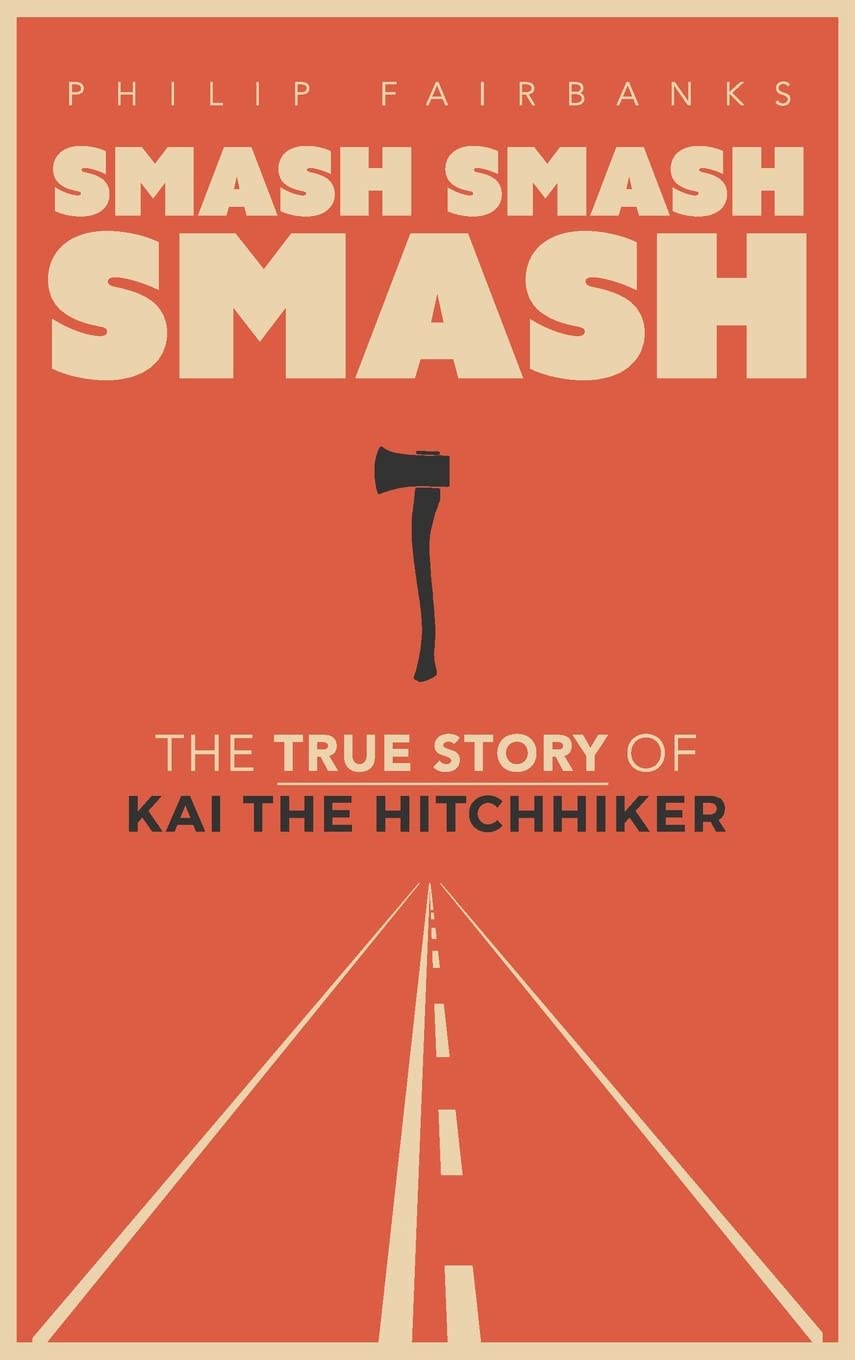
    Virtual Book Tour & Giveaway: Smash, Smash, Smash: The True Story of Kai the Hitchhiker by Philip Fairbanks

    Smash, Smash, Smash: The True Story of Kai the Hitchhiker by Philip Fairbanks Banner

    Smash, Smash, Smash:

    The True Story of Kai the Hitchhiker

    by Philip Fairbanks

    August 7 - September 1, 2023 Virtual Book Tour

    Synopsis:

    Smash, Smash, Smash: The True Story of Kai the Hitchhiker by Philip Fairbanks

    "That woman was in danger, so I ran up behind him with a hatchet... Smash, smash, SUH-MASH!!!"

    Millions of people heard these words and shared the viral video with their friends. This mysterious surfing hitchhiker then vanished as quickly as he appeared, only to reappear on many late night talk shows and fan videos. But 3 months later, he was arrested and charged with killing a prominent New Jersey lawyer... in self defense against a sex assault.

    Who is this mysterious hitchhiker? What was with that lawyer who drugged and assaulted him? Why would the investigators destroy evidence, tamper with witnesses, and shut the public out of the trial?

    For almost a decade, the public was kept in the dark: until investigative journalist Philip Fairbanks searched for the truth in mountains of government records, witness statements, and hard evidence. At long last, he found the answers to these burning, aching questions...

    And they will surprise you.

    Praise for Smash, Smash, Smash: The True Story of Kai the Hitchhiker:

    "Phil is not the kind of journalist who files a story and gets on with his life. That passion and integrity shine through in this book, and generally in the way Phil makes you care about the people he’s covering….

    When I read this book, as with so many things Phil has written, I feel that I am in good hands, being carefully guided to the truth."
    ~ Alissa Fleck
    (Newsweek, SF Gate, Houston Chronicle)

    "In his latest book, Philip Fairbanks wields a wealth of laboriously earned evidence and detail, the product of five years of research, to tell a harrowing and heartbreaking tale nobody (until him) deemed worthy of telling, and some would rather remain untold….

    In his characteristically engaging style and with a dexterous balance of compassion, curiosity, and analysis, the author walks the reader through a hellish nightmare; one that Kai was born into and in which he continues to exist."
    ~ Wendy Painting, PhD
    (Author, Aberration in the Heartland of the Real: The Secret Lives of Timothy McVeigh)

    Book Details:

    Genre: True Crime
    Published by: Is It Wet Yet Press
    Publication Date: February 2023
    Number of Pages: 456
    ISBN: 9781959947998 (ISBN10: 1959947990)
    Book Links: Amazon | Barnes & Noble | BookShop.org | Goodreads

    Read an excerpt:

    AUTHOR’S NOTE

    It’s been about five years since my first article about Caleb McGillivary was published in The Inquisitr. Not long after that, I conducted a series of telephone interviews. I was taken aback by how implausible the inherent corruption was: evident in multiple conflicts of interest; and an apparent cover-up during the investigation, that was allowed to go practically unchallenged from the prosecutor’s mouth to the media. All that ugliness nakedly on display surely should have attracted a frenzy of media interest.

    Over the years, a sickening realization came to mind. As far as reporters covering the case, I seem to be one of the “experts” if not “an authority.” Certainly, one of the few, if not only, journalists who took the time to check Kai’s claims and allegations against the evidence at hand. It might be kind of nice being a leading authority on some benign subject. Rare arthropods, maybe? I could dig being a foremost authority on some obscure Flemish Renaissance-era painter’s oeuvre, for sure. The gravity of the situation can be almost overwhelming, though, when your expertise is on a subject about which a human life hangs in the balance.

    So, you can imagine my mixed feelings when a production company known for prestige projects approached me with the idea of using some of my work in a film for one of the “Big 3” streaming companies.

    I was flattered, of course. Probably the first in a wave of emotions to come up. The thought that Kai’s words, from calls I’d recorded, might achieve a bit of immortality. Even better, the prospect that the film could make a difference. Something like The Thin Blue Line, one of the most important and influential works in the entirety of the corpus of “True Crime.” Like Truman Capote’s In Cold Blood, it is a work that somehow manages to both define and transcend the boundaries of “True Crime.”

    After a few rounds of emails, a call was set up. Everyone I had dealt with was pleasant and nice, but I couldn’t shake the feeling I was being purposefully put at ease. For what reasons I couldn’t tell. Hell, I couldn’t even tell if I was just being paranoid because of my close connection to the story. Admittedly compounded by the investment of time, work, and emotional energy I’d put into it for some years. They understood that I might be quite attached to the story (specifically to the “materials” they wished me to license for their use). And of course, the more I thought about it, the more worried I was about the misrepresentation of my work or Kai himself and the case.

    And to be honest, attached is not the right word for this case, or for another case I’ve been working on for the past few years. The second involved a decades- long running fraud ring connected to multiple murders. I finally managed to get some interest from journalist Alissa Fleck (Newsweek, SF Gate, Houston Chronicle, Huffington Post, Adweek, and others). Apart from her, I’d struggled to get any other reporters or outlets to even take a look. That or being ghosted after some initial interest is shown. The situation is similar to the work of Justine Barron, another noteworthy journalist who pursues cases wherever they lead. Whether or not the major papers are interested in doing due diligence themselves. For whatever reason, there are incredibly important stories that are suppressed, sometimes for years. Just look at how Harvey Weinstein, Jeffrey Epstein, Peter Nygard, and others managed to float along all those years.

    With Kai’s case and that of the Texas-based Ponzi ring, I’ve spent years researching and tracking down the truth. In the hopes of holding it to the light. I also got to know the living, breathing humans that exist at the other end of the story. Many of my biggest stories are the smallest ones. For me, success is exposing some injustice or imbalance. Some wrong to be righted. For instance, the honor student nearly expelled over doctor-recommended CBD oil being mistaken for THC oil by an ignorant school administration. The case of a young man selling the herbal plant medicine kratom in Tennessee. A story I covered that would be a turning point in the war for kratom legality in the state. Shortly after the case, the attorney general expressed a formal opinion that the plant was not included in a blanket synthetic drug ban. The couple arrested with kratom in their car. Initially charged with distributing heroin. Their life and small business thrown into disarray as a result. These are stories no one else was telling, or at least not in totality.

    In each of those above cases, an eventual positive outcome would be achieved. Even if the only thing I was able to do was to provide some hope to victims of outrageous fortune. To make sure their stories were heard. The result was something I could—and do— take seriously. Something I take pride in. It’s rewarding to have achieved success (by Emerson’s standards anyway) by having made someone breathe a little easier, having made their life a little less hard for the day.

    In Kai’s case, the stakes are too high. Not to mention the evidence of corruption is so ample and readily available to just leave it be.

    So yes, I suppose that at the very least you could say I was a little “attached” to the story. In my first email back to the production company, I pointed out that I was the sole, or nearly only, source of several salient points of information about the case. That these claims were backed up by evidence released in discovery: crime scene photos, investigative notes, and interviews. They too had read the entirety of the available transcripts, they told me. However, they warned me, that they wouldn’t be “focusing” on the trial or the investigation.

    That would be a totally different documentary, they said. My dream of an Errol Morris-style hit film freeing an innocent man were, if not dashed at this point, precariously hanging by a thread like a loose tooth spinning, barely affixed to the gum. So here it was. My Catch-22. My very own Faustian bargain. And though it has been quite a while since I’ve read Goethe, I almost certainly recall there being no section on freeing one’s soul from the grips of Mephistopheles come in the guise of a documentary materials release form. I knew I had no place to tell them what should or should not be in the documentary. That would be, not only in bad taste but a violation of journalistic ethics on my part. That said, I made it clear I would gladly sign over usage rights if they could make sure to include at least a handful of those major facts that point to the cover-up and, dare I say it, yes, a conspiracy that had taken place. It was then made plain and simple to me. The best possible way to get that information, Kai’s side of the story, on the books for them would be to let him speak. Kai had declined involvement with the documentary before they spoke to me, however, and they only used people “directly related” to stories in their documentaries which counted me out.

    As it turns out, my fears of potentially making a deal with the devil were unfounded. A producer at the company informed me just as they were going into post-production that they were using other material “to lay out Kai’s defense.” Despite my precautions and concerns, I would be lying if I said I wasn’t disappointed after hoping that a tangential connection to a major documentary and my name in the credits might help me get this story the attention it deserves.

    No worries, though. The interviews that were licensed for and would have appeared in the documentary were transcribed and will be available online. Links to the recordings on YouTube will be there as well as links to all relevant files, court documents, crime scene photos, and more both in cloud storage and at bit.ly/kaidocs and philfairbanks.com.

    Kai is at the center of the book, but at the same time the book is about how his case is just one of many examples. That’s the scary part. If his case was some crazy exception that’d be awful still; but what’s so chilling is we know about this case only because he was mistaken for someone who wasn’t well known. Galfy wanted a vagrant, somebody who could be used and discarded, someone with no ties; he chose wrong but even so, they were able to do this.

    Now imagine if you don’t have worldwide press coverage of your story.

    TWO FATEFUL RIDES

    It was a chilly but humid day in Fresno, February 1st, 2013.1 Between the time the frigid, overcast skies broke with sunlight until the day would turn to cold, foggy night several lives would be forever changed. It was the day that Jett Simmons McBride picked up a young “home free” hitchhiker. It was the day that Rayshawn Neely would be nearly crippled. And it was the day that Caleb McGillivary, better known as “Kai the Hatchet-Wielding Hitchhiker” would become a folk hero to millions across the world. Kai earned his “hatchet-wielding hitchhiker” moniker during that first ride that brought him to the attention of the internet at large. Kai had been picked up by Jett Simmons McBride, a 6-foot-4, nearly 300-pound, 54-yearold man who boasted to Kai about raping a 14-year-old girl in the Virgin Islands just before the chaos he would unleash on that fateful Fresno day. McBride also loudly bragged that he was, in fact, Jesus Christ reincarnated.

    * Kai’s legal name is Caleb McGillivary, but some court documents and newspaper stories have his name improperly listed as “McGillvary.”

    As a result, he reasoned, he could do anything he wanted. As if to prove his point, he took a sharp turn towards some Pacific Gas & Electric employees doing roadwork outside.

    “He’s like, well I’ve come to realize I’m Jesus Christ and I can get away with anything I want to. Watch this, and there’s a whole crew of construction people in front of me and most of them jumped aside and one pinned underneath,” Kai explained in the interview that initially made him a star. “He said ‘I am God. I am Jesus. I was sent here to take all the [racial slurs] to heaven,’” Nick Starkey, one of the PG&E workers on the scene claimed. Neely said he never heard the racial slurs, but something about being the victim of attempted vehicular homicide tends to do a number on one’s memory and focus.

    McBride pinned Rayshawn Neely against a vehicle at which point, Kai jumped out to help. McBride also attacked a woman on the scene. Kai shared in his memorable interview how he feared McBride might seriously harm her if he didn’t spring into action. The woman on the scene confirmed that Kai had indeed saved her. As Kai put it, without his fortunate appearance at the scene there would have been “hella lot more bodies.” With Rayshawn dangerously pinned by McBride’s vehicle, Tanya Baker, who was at the scene attempted to help him. At this point, McBride turned on her as well.8

    “Like a guy that big can snap a woman’s neck like a pencil stick,” Kai explained why he sprung into action. “So I fucking ran up behind him with a hatchet—smash, smash, suh-mash!”

    The interview with Jessob Reisbeck made an instant star out of Kai. Something about the heroic encounter, Kai’s character, and his message of redemption resonated within the public consciousness. “Before I say anything else, I want to say no matter what you’ve done, you deserve respect, even if you make mistakes. You’re lovable and it doesn’t matter your looks, skills, or age, or size or anything. You’re worthwhile... no one can take that away from you.”

    February 7, 2013, Jessob Reisbeck caught back up with who he described as a “world-class hero.” Reisbeck, who continues to keep in touch with Kai “found him after 5 or 6 days” to conduct a follow-up interview. Kai’s cheeky humor shined through with portions sounding like an Abbott and Costello bit: “What have you been up to since?” “About 6 foot,” Kai replied. He also admitted he didn’t like the idea of a “stereotypical normal life.” That meant, in part, no 9 to 5 job or smartphone to weigh him down. “Are you aware what you’ve become?” Reisbeck asked. “I’ve seen it.” As for his thoughts on the outpouring of support from all over the country even worldwide, Kai’s response was simply: “Shock and awe.” Asked if he was happy about the exciting new world he’d accidentally entered, his reply was simply, “I’d prefer if I was American, but yeah.”

    Jessob asked if there was anything else Kai would like to say to “all of your fans right now, because you do have them around the world.” Kai spurned the hero worship. Instead, he offered another simple, heartfelt message to the many who idolized him since the selfless act. “I do not own you, I do not have you, please do not be obsessed. Thank you, love, respect, I value you.” Within 48 hours of the KMPH interview being released and subsequently going viral, Kai was a household name earning accolades and mentions in media worldwide. Philadelphia magazine called Kai “the hero millennials need” in a February 8th article from 2013.

    In the next few days, his star would continue to rise as he was featured in Autotune the News. Kai also released a cover of the song “Wagon Wheel.” An IndieGogo page was also set up to get him a new surfboard. The Philly magazine piece marks Kai as emblematic of the millennial generation, especially following the economic upheaval of the 2008 housing bubble which resulted in severe inflation, higher cost of living, and a recession we still haven’t truly escaped.

    Just under three weeks out, Kai had his first day in court, perhaps foreshadowing what was to come in just about three months. He had just appeared on “Jimmy Kimmel Live” and would now be stealing the show during the preliminary hearing against Jett McBride. Despite some of the urban myths surrounding this story, Kai did not kill McBride. McBride had told his wife that Kai was the “coolest son-of-a-bitch” he had ever met. Even expressing a desire to “adopt” the home free hitchhiker. And spurious claims that Kai may have made up the story of underage rape in the Virgin Islands were refuted by McBride himself admitting the act to police on the scene. Kai’s court appearance inspired laughter and spawned headlines further cementing his place as a beloved character to so many. But by the time Jett Simmons McBride was tried in California, Kai was unable to appear. The lack of one of the primary witnesses in attendance likely altered the disposition of the case according to Scott Baly, McBride’s defense attorney. By January 2014, McBride was found guilty on some, but not all charges. The most serious charges, that of attempted murder, would not go through and even the charges he was found guilty of only resulted in psychiatric confinement for a maximum of 9 years. He was sent up to the famous Atascadero State Hospital rather than prison. Atascadero had been home for a time to the likes of serial killers like Tex Watson, Ed Kemper, and Roy Norris among others.

    “I won’t say whether it hurt or helped, it affected everything,” Baly told the press. Admitting that he had hoped for acquittal on all charges. “I think there’s mixed emotions for all of us. I mean certainly, I think the moment not guilty on count one was read there was relief; it was followed shortly by a guilty reading on count two and count three so there’s a different feeling on those charges.”

    What we can tell for certain, however, is that if not stopped McBride would have almost certainly wreaked far more havoc. According to the case text of the McBride court proceedings, Jett Simmons McBride was laboring under the delusion that he had uncovered a secret terrorist plot that would target the Super Bowl.

    At this point, Jett McBride packed his bags to head down to New Orleans for the Super Bowl where he was convinced a bombing would occur. McBride destroyed his phone and tossed the broken remnants of it in a parking lot and some bushes to evade being tracked by the CIA, FBI, and Department of Defense who he was convinced were following his every step.

    Before reaching his destination, McBride started noticing that he was being passed by white utility trucks. These were no ordinary trucks, McBride was convinced. They were, to his mind, evidence of the Illuminati following him, on his trail. Intent on killing him. Quite disturbed mentally at this point, McBride stopped in Bakersfield staying the night at the illustrious Vagabond Inn, a motel where he watched television and had some Scotch to wind down. The next day he got back on the road, then picked up a soon-to-be-famous hitchhiker he saw near the on-ramp to northbound State Route 99 not far from the Vagabond.

    The hitchhiker introduced himself as Kai and asked McBride if he was heading as far as Fresno. McBride told him that he would be heading through the area on his way to Tacoma. While staying in Bakersfield, he had received messages from his nephew and Donna, his wife, who he was supposed to pick up at the airport. This unexpected intrusion from reality slightly changed his unhinged “attempt at heroism” at the Super Bowl in New Orleans.

    It was once they made it into Fresno’s Tower District that Kai offered to pick up some cannabis. Jett McBride handed him $40 after which Kai disappeared into a convenience store, shortly after emerging with a bag of weed and some rolling papers. Kai rolled the joint as McBride, who was unfamiliar with Fresno, began to drive. McBride describes having a “deep” conversation with Kai and eventually extended his hand to the young hitchhiker, leaning over to hug him. “Depressed and distraught” is how he’s described in the court transcript.

    The grown man also began crying over his wife. From this point on, it becomes obvious that the story has been doctored somewhat to make McBride look better. Even though it was admitted that McBride began believing that white utility trucks were agents of the Illuminati, it was McGillivary who supposedly said the electrical workers were planting bombs. Of course, it’s quite likely that this was a narrative cooked up by McBride’s attorney, Scott Baly. Considering Kai wouldn’t be able to defend himself or offer his eye-witness testimony, it was possible to try and pin more blame on him to alleviate the well-earned scorn directed at the alleged rapist with his racist slurs and dangerously unhinged conspiracy theories. Despite the reported flurry of racial slurs aimed toward Neely and other minorities at the scene, McBride’s defense claimed that he was “trying to heal Neely.” The defense claims, contrary to what witnesses on the scene have claimed, that McBride “at no time” made any racial statements or used “racial epithets.”

    Neely’s reported response to McBride attempting to “heal” the serious and potentially life-threatening injury he was responsible for was something to the tune of, “Get this fucker off of me.” This, once again, ripped straight from McBride’s trial transcript.

    The big bear of a man described the flurry of activity, the desperate attempt to put his rampage to a halt. He “thought he was dying” as he felt a knee on his back, someone grabbing his neck, someone pushing him to the ground, a boot in his face. All he claims to recall is saying, “Get off of me.” Around this time, for whatever reason, McBride began to disrobe. He was now convinced he was not only “filled with the Holy Spirit” and an incarnation of Jesus Christ. He was also playing the role of “witness to the end times” (as per Revelations, the two witnesses who would be killed, stripped, and left in the streets for three and a half days).

    If the people attacking him, or rather, attempting to slow or stop his assault, in the real world, were to kill him then “they were going to have to drag his body through the street, naked.” Now McBride has decided he’s not just a witness to the end times, Jesus, and filled with the Holy Spirit. He’s also the prophet Enoch. A direct ancestor of Jesus Christ.

    McBride, once he had conferred with defense to set the stories straight for the trial, would have little positive to say about Kai. This despite the fact he had earlier referred to him as the “coolest son-of-a-bitch” he had ever met. He had gone from telling his wife Donna that he wanted to adopt Kai to changing his story to Kai being the one jerking the wheel so the vehicle would crush Neely after Donna reported to him how Kai had explained McBride’s stated aim was to “clean all the n****rs out.”

    McBride would eventually admit that it was not Kai who had twisted the wheel to pin Neely but did deny that his attack had anything to do with his race. Neely was, McBride claimed, Illuminati. The disorganized thinking of a schizophrenic or person in the throes of a psychotic break is hard to follow.

    Perhaps the racial element and the delusion regarding white utility vehicles being secret Illuminati spies were conflated in McBride’s muddled head. Chicago’s ABC7 Action News spoke with some of the victims of McBride’s rampage. Most expressed a hope to fully recover from their injuries and put the whole nightmare behind them, though at least one expressed concern, hoping that McBride wouldn’t find himself released without consequences for his brutal actions.

    One popular misconception that has entered Kai the Hitchhiker lore is that Kai killed the deranged, attempted murderer rather than subduing him with the flat end of his hatchet. It probably didn’t help that during the Jimmy Kimmel appearance, the host jokingly thanked Kai for not killing him. Stephen Colbert, currently the host of The Tonight Show, was starring in The Colbert Report on Comedy Central at the time. On the show, Colbert covers the Kai the Hitchhiker story, joking that he has “highway prejudice of my own: against axe-wielding hitchhikers.”

    The story played into an already existing urban myth regarding the mythical ax or hatchet or knife-wielding serial killer hitchhiker. The Union County prosecutor and associate of the alleged rapist Joseph Galfy promoted severely damaging disinformation. That, perhaps, Kai was some nefarious serial killer utilizing the highways as his hunting ground. That same prosecutor, by the way, incidentally or coincidentally stepped down, after 11 years, the same day Kai was arrested. Perfect timing if you’d rather not have your recusal on the record.

    ***

    Excerpt from Smash, Smash, Smash: The True Story of Kai the Hitchhiker by Philip Fairbanks. Copyright 2023 by Philip Fairbanks. Reproduced with permission from Philip Fairbanks. All rights reserved.


    Review:

    5 stars!

    As Paul Harvey might have said, “… the rest of the story.”

    SMASH SMASH SMASH: The True Story of Kai the Hitchhiker is the culmination of years of careful research and investigation by author Philip Fairbanks into the life of Caleb McGillivary, better known to the world as Kai the Hitchhiker. Kai captured the world’s attention in 2013 via the magic (and the curse) of social media when he came to the rescue of a woman being assaulted on the side of a highway, after which he quietly slipped away from the scene. He was soon brought back into the limelight through the well-meaning efforts of a young journalist wanting to follow up on the mysterious cult hero. 

    Fame provided Kai some time in the public eye, but it appears for the most part that he really just wanted to be left to his own devices and lifestyle: living freely on the road, hitchhiking, working on his music, and surfing. He gained thousands of followers on social media but invariably encountered those with their own agendas for Kai’s fame. 

    Later, Kai made headlines again when he was convicted of murdering a prominent attorney in Clark, New Jersey, although he continually maintained it was in self-defense. Journalist Philip Fairbanks, who had been following Kai’s amazing story, began to dig deeper into his claims, and this book is the result of years of research, questioning, and interviews. I was shocked by his findings. 

    Kai’s initial story, his quick and decisive rescue of a stranger, was an Internet sensation. He doesn’t fit the image of the knight in shining armor and, in fact, represents a completely different trope come to life: a hatchet-wielding hitchhiker, which social media and late-night talk show hosts were quick to capitalize on. 

    Kai’s story, presented by Fairbanks, is heartbreaking. From his childhood to his trial, Kai’s life was a complete nightmare. Yet through it all, he seems to have developed a completely unanticipated positive outlook while still clearly seeing and understanding what was being perpetrated against him. 

    Fairbanks does a fantastic job laying the groundwork for how Kai came to be where he is. Additionally, his overview of the history and culture of hitchhiking was interesting and a surprise to me. Better still, his extensive coverage of the political history, its current climate in New Jersey, and how it related to Kai’s conviction was eye-opening and horrifying. 

    The book covers Kai’s emergence as a cult hero and the subsequent media aftermath, but it is brief. The story here is what came later. I recommend SMASH SMASH SMASH: THE TRUE STORY OF KAI THE HITCHHIKER to true crime readers and those who remember this amazing incident but what to know the rest of the story.


    Author Bio:

    Philip Fairbanks

    Philip Fairbanks has been a published writer for over 20 years. Most of his writing has been in the field of entertainment reporting and investigative journalism as well as certain academic subjects. He has appeared multiple times in the CUNY graduate paper The Advocate (who published an article by Fairbanks last June), SUNY art journal Afterimage, Ghettoblaster features, interviews and reviews, UK newspaper The Morning Star, UK lit journal White Chimney, Impose, Delusions of Adequacy, and many more print and online publications have published him.

    His first book covered issues such as the Epstein scandal, the Finders cult, online grooming and exploitation of children, and the UK grooming epidemic. He felt it was important to write a book on institutional pedophilia that dispels some of the wild disinfo related to Qanon and Pizzagate. Philip is also a voice actor and narrated the audiobook for the first book and is in the process of recording the audiobook for Smash, Smash, Smash.

    Catch Up With Philip Fairbanks:
    TrueStoryofKai.com
    Goodreads
    BookBub - @kafkaguy
    Twitter - @kafkaguy
    Facebook - @truestoryofkai


    Tour Participants:

    Visit these other great hosts on this tour for more great reviews, interviews, guest posts, and opportunities to WIN in the giveaway!


    Join In:

    This is a giveaway hosted by Partners in Crime Tours for Philip Fairbanks. See the widget for entry terms and conditions. Void where prohibited.


    Get More Great Reads at Partners In Crime Tours


    Monday, July 17, 2023

    Book Blast & Giveaway: Bad Henry: The Murderous Rampage of 'The Taco Bell Strangler' by Ron Chepesiuk

    BAD HENRY
    THE MURDEROUS RAMPAGE OF
    'THE TACO BELL STRANGLER'
    by
    Ron Chepesiuk

    This post is part of a virtual book tour organized by Goddess Fish Promotions. The author will be awarding a $20 Amazon/BN GC to a randomly drawn winner. Click on the tour banner to see the other stops on the tour.

    True Crime / Non-fiction
    Publisher: WildBlue Press
    Publication Date: July 9, 2023
    Page count: 210 pages

    SCROLL DOWN FOR GIVEAWAY!

    SYNOPSIS:

    Henry Louis Wallace terrorized Charlotte, North Carolina, from May 1992 to March 1994. Wallace preyed on lower economic-class Black women between 17 and 35 years old. He knew most of his victims, some through his job at Taco Bell, and gained their trust with his friendly demeanor and gentle nature-concealing a monster fueled by drug abuse and rage against women.

    CLICK TO PURCHASE!


    READ AN EXCERPT:

    Carolyn Love Murder

    On June 15, 1992, Love left her apartment and went to work. Bojangles was close, so she walked. At work, she asked her manager if she could change ones for quarters, which she planned to use at the laundromat after her shift ended. The manager agreed and Caroline left work, walking home.

    On the way, she ran into her cousin Robert who offered to drive her home. Love accepted. Robert watched as she entered the apartment. Earlier that day, Wallace was at the apartment because his girlfriend, Sadie McKnight, was Love’s girlfriend and roommate. McKnight had cleaned the apartment. She had left her house key on the wall. When McKnight was not looking, Wallace took the key, made a copy, and put it back on the wall without McKnight noticing.

    Later that day, Wallace was driving around when he decided to stop at his girlfriend’s apartment. When Love arrived home, she was surprised to see Wallace in her apartment, but she was not worried. After all, Wallace was her friend, her roommate’s boyfriend. He was harmless, or so she thought. He had let himself into her apartment using the key he had made from the key owned by girlfriend Sadie McKnight. Wallace said he was in the bathroom and would leave as soon as he came out. When Wallace came out of the bathroom, he went into the living room where Caroline was watching television.

    Wallace came up to Love and gave her a kiss on the cheek. Love did not like it. She asked Wallace why he had kissed her. He did not really have a good answer. She told Wallace that if he promised not to do that again, she wouldn’t tell his girlfriend about it. Wallace blew up and attacked Love, violently putting her in a chokehold, which he would later describe to police as the “Boston choke.”


    REVIEW:

    4 stars!

    A horrifically riveting tale of murder and the serial killer who went undetected for far too long.

    Bad Henry: The Murderous Rampage of the ‘Taco Bell Strangler’ is the latest true crime book by veteran author Ron Chepesiuk, and it is a riveting and horrific tale of murder and the serial killer who went undetected for far too long. The details of the murders are graphic and told from the killer’s perspective, his confessions of the crimes, and readers will be shocked by what he admits. 

    The amount of research that went into the writing of this book is readily apparent. The number of reports, interviews, and transcripts the author must have waded through is mind-boggling. Over 100 named individuals (I lost count) are included in the work, all associated with the cases as either a victim, family member, friend, law enforcement, government officials, members of the court, and even public figures, almost all of whom weigh in on one or more of the murders. 

    The events occurred over a couple of years, and there is considerable overlap in the details leading up to each murder as Wallace targets and grooms his prospective victims. Because of this overlap, Wallace’s movements and thoughts were repeated at the time, and I had to pay particular attention to the dates to maintain the chronology of events. Nevertheless, the story was still easy to read, chilling, and incredibly compelling. The story stayed with me when I wasn’t actively reading it, and I couldn’t wait to get back to it to read further. 

    I recommend BAD HENRY: THE MURDEROUS RAMPAGE OF THE ‘TACO BELL STRANGLER’ to readers of true crime or those who remember the case when it happened.


    ABOUT THE AUTHOR:

    Ron Chepesiuk is an optioned screenwriter, documentary producer, and the award-winning author of more than 40 books. He is a former professor and head of the Archives at Winthrop University in South Carolina. He is a two-time Fulbright Scholar to Indonesia and Bangladesh and a former instructor in UCLA's Extension Journalism Department.

    His articles, which number in the thousands, have appeared in such publications as FHM, USA Today, Black Enterprise, Woman's World, Modern Maturity, New York Times Syndicate, Toronto Star, Los Angeles Times Syndicate, Bulletin of Atomic Scientists, among others.

    His documentary on Frank Matthews, legendary drug Kingpin, which he produced and directed, won the Silver Doc award at the Las Vegas International Film Festival. Four of his screenplays are currently in development for feature movies, and four of his books have been optioned for movies. His script Death Fences was the grand winner of the Amsterdam, Holland-based 2019 New Visions International Film Festival.

    As an expert in crime history, he is a consultant to the Gangland TV series and has been interviewed on numerous TV programs, including Discovery, NBC Dateline, History, Biography, ID, Reelz, Black Entertainment Television, Starz, and TV 1. As a journalist, Ron has reported from more than thirty-five countries, including Cuba, Northern Ireland, Colombia, Kenya, Hong Kong, and Nepal, and his 16, 000 plus interviews include such luminaries as Gerry Adams, Yasser Arafat, John Kerry, Evander Holyfield, Jimmy Carter, Andy McDow, Abbie Hoffman, a former president of Nicaragua, and three former presidents and two vice presidents of Colombia, South America.

    Ron is also the radio host of CRIME BEAT Radio Show. The Crime Beat show has been on the air since January 2011 and has listeners in 160-plus countries. Guests have included Robert Kennedy, Jr., Henry Hill, Noam Chomsky, George Jung, Joe Piston (aka Donnie Brasco), F. Lee Bailey, and Chris Kyle, American sniper.