Showing posts with label historical mystery. Show all posts

Friday, August 14, 2026

Virtual Book Tour & Giveaway: The Magdalene Deception (Magdalene Chronicles, #1) by Gary McAvoy

The Magdalene Deception by Gary McAvoy Banner

THE MAGDALENE DECEPTION

by Gary McAvoy

August 3-28, 2026 Virtual Book Tour

Synopsis:
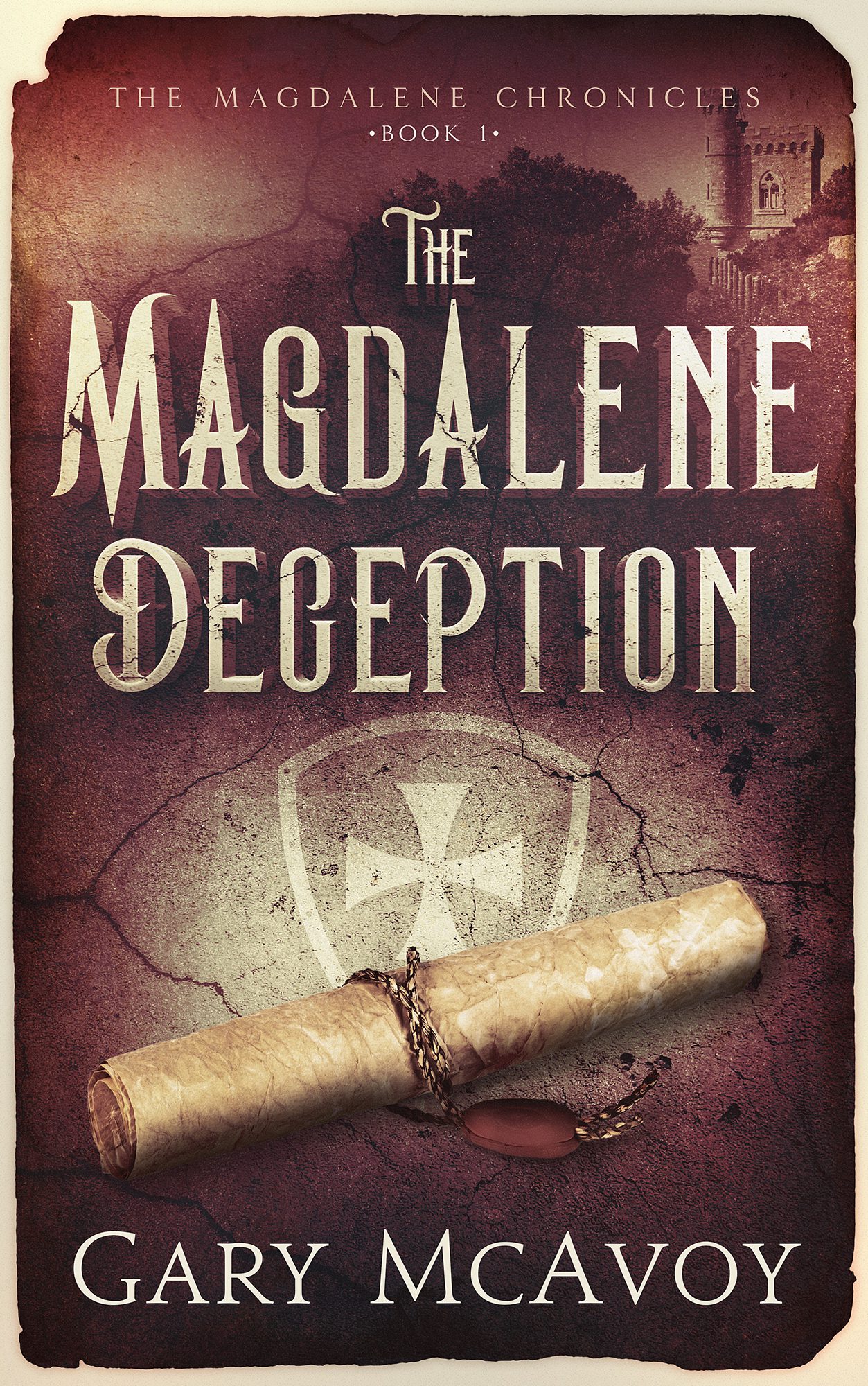
THE MAGDALENE DECEPTION by Gary McAvoy

THE MAGDALENE CHRONICLES

A forbidden secret...
The Church’s fate in the balance…
Will a pair of amateur sleuths expose a truth that could upend the Christian world?

Jesus’ resurrection is a cornerstone of Christian faith. But when a clue surfaces that hints at an alternate account, the ramifications stand to change Christianity forever.

Jesuit priest Michael Dominic’s assignment to the Vatican’s legendary Secret Archives results in his discovery of a hidden papyrus: the unpublished writings of Mary Magdalene — a lost record buried in Rome’s deepest recesses. The forgotten relic’s heretical revelation threatens the Vatican’s very legitimacy, and pits Michael against ruthless and powerful enemies.

Desperate, he reaches out to Hana Sinclair, an investigative reporter with a record of tackling contentious subjects. Together they defy the Church elite, and embark on a search through the shadows of history to unearth the truth. As the pressure builds to silence the pair, will the Vatican resort to the unthinkable in order to safeguard its wealth and power?

Based on historical facts, this international thriller takes readers on a white-knuckle race through the holy sites of Europe. Get your copy of this award-winning tale and discover why Gary McAvoy’s devoted fans say, “I didn’t want this book to end!”

Praise for The Magdalene Deception:

"A great thriller that weaves numerous storylines together effectively. Recommended to those who love a good thriller with historical implications, as well as the reader who enjoys Vatican and Catholic politics… McAvoy creates a wonderful story that never stops building throughout… [He] captures the secrecy and deep-rooted history of the Vatican and its politics throughout this piece, with a strong story and plot that moves in many directions. McAvoy pulls the reader in and keeps them guessing, while also refusing to place a damper on the action. Juggling modern and ancient Church issues, McAvoy does not lose his reader at any point, as his writing is so clear that the attentive reader will likely want more."
~ MATT PECHEY, REEDSY DISCOVERY.

"Exquisitely written and highly entertaining, The Magdalene Deception is an investigative mystery in a very similar vein to The DaVinci Code…The real quality to this book is the author himself – the writing is superb. There is an outstanding attention to detail in McAvoy, and the setpieces he weaves are vivid, colourful and authentic; this author treats his audience as intelligent and attentive, and this is always hugely beneficial to any writer. As well as being an evidently well-educated historian, McAvoy also knows his stuff in terms of modern-day information networking and the technology in present day use alongside ancient practices and customs…"
~ MATT McAVOY BOOK REVIEWS (UK)

The Magdalene Deception Trailer:

Book Details:

Genre: Vatican Historical Thrillers
Published by: Literati Editions
Publication Date: July 1, 2020
Number of Pages: 368
ISBN: 9780990837664 (ISBN10: 0990837661)
Series: The Magdalene Chronicles, #1
Book Links: Amazon | KindleUnlimited | Barnes & Noble | BookShop.org | Goodreads | BookBub

Read an excerpt from The Magdalene Deception:

Prologue

Southern France – March 1244

The relentless siege of the last surviving Cathar fortress, perched strategically on the majestic peak of Montségur in the French Pyrenees, entered its tenth month.

The massive army of crusaders dispatched from Rome, thirty thousand strong, were garbed in distinctive white tunics, their mantles emblazoned with the scarlet Latin cross. Knights commanders led hordes of common foot soldiers, some seeking personal salvation, others simply out for adventure and the promise of plunder. They had already devastated most of the Languedoc region of southern France in the years preceding. Tens of thousands of men, women, and children had been slain, regardless of age, sex or religious belief. Entire villages were burned, rich crops destroyed, and the fertile land which yielded them was poisoned in a cruel, single-minded quest to root out and extinguish a small and peaceful, yet influential mystic order known as the Cathars.

The defeat of the impregnable Montségur remained the ultimate prize for the Church’s troops. Rumors of a vast treasure had reached the ears of every soldier, stirring up the passion with which these feared European mercenaries carried out their holy mission. As was the customary practice during a crusade, whatever pillage remained after the plundering—spolia opima, the richest spoils for supreme achievement—could be claimed by the victor. That temptation, bonded by the personal assurance of the pope that all sins would be forgiven and their paths to heaven assured, was enough to seduce anyone, nobleman or peasant, to take up cudgel, pike, or arrow in the name of God.

In 1209, Pope Innocent III had ordered a Holy Crusade to crush the spirit and, if necessary, the life of each and every dissident in the Languedoc region bordering France and Spain.

This independent principality had distinguished itself by fostering an artistic and intellectual populace well beyond that of most northern European societies at the time. The people of the Languedoc practiced a religious tolerance that encouraged spiritual and secular diversity. Schools teaching Greek, Hebrew and Arabic languages and the customs which accompanied them flourished, as did those espousing the Kabbalah, an occult form of Judaism that dated from the second century.

Most settlers in the Languedoc viewed Christianity with the utmost repugnance; at the very least its practices were perceived as being more materialistic than godly in nature. The irreligious of the region passed over Christianity in large part due to the scandalous corruption exhibited by its local priests and bishops who, unable to influence the heathens within their provinces, came to prefer the rewards of commerce and land ownership over the tending of a meager flock.

Consequently, the authorities in Rome felt compelled to deal with this unforgivable heresy once and for all, in towns such as Toulouse and Albi within the Languedoc area.

Consigning his troops to their commanders, Pope Innocent III invoked a special benediction to all, lauding the divinity of their mission. Asked how they might distinguish their Christian brethren from the heretics, the crusaders were simply told, “Kill them all. God will spare His own.”

And so the Albigensian Crusade began.

The new moon cast no light over Montségur as night fell on the first day of March 1244, obscuring not only the hastened activities of its occupants, but the lingering threat conspiring outside its walls. A dense alpine fog had settled over the mountain, and the castle that straddled its inaccessible peak had withstood nearly a year of unceasing battle.

Weakened by the tenacity of their predators and yielding to the hopelessness of their situation, Raymond de Péreille, Lord of Château du Montségur and leader of the remaining four hundred defenders, commanded his troops to lay down their arms, and descended the mountain to negotiate terms of their capitulation.

Though offered lenient conditions in return for their surrender, de Péreille requested a fourteen-day truce, ostensibly to consider the terms, and handed over hostages as an assurance of good faith. Knowing there was no alternative for their captives—nearly half of whom were priest-knights, or parfaits, sworn to do God’s work—the commanders of the pope’s regiment agreed to the truce.

Over the next two weeks, reprieved from the constant threat of attack they had been enduring for months, the inhabitants of Montségur resolved to fulfill their own destiny before relinquishing their fortress—and their lives—to the Inquisition.

On the last day of the truce, as if guided collectively by a single will on a predestined course, the surviving members of the last Cathar settlement made special preparations for their departure.

Four of the strongest and most loyal of the parfaits were led by Bishop Bertrand Marty, the senior abbé of the fortress, as they descended deep within the mountain down a long, stepped passageway carved into alternating layers of earth and limestone. The end of the passage appeared to be just that, as if the original tunnelers had simply stopped work and retreated without finishing the job. But, while the others held torches, Abbé Marty withdrew a large rusted key-like wedge from beneath his cassock, and thrust it into a hidden cavity near the low ceiling.

The abbé manipulated the key for a few moments. A muffled sound of grating metal from beyond the stone wall echoed through the tunnel, and the seemingly impenetrable granite slid inward slightly, revealing a door.

Aided by the parfaits, the door swung open into a small dank chamber filled with an enormous cache of riches—gold and silver in varied forms, gilded chalices and bejeweled crosses, an abundance of gems and precious stones, overflowing bags of coins from many lands.

And, in a far corner removed from the bulk of the treasure itself, stood a wide granite pedestal on which rested an ornately carved wooden reliquary, crafted to hold the most holy of relics, next to which sat a large book wrapped in brown sackcloth.

Standing before the legendary treasure of the Cathars—glittering and hypnotic in the dim torchlight—would prove seductive for most men. But the Albigensians held little regard for earthly goods, other than as a useful political means to achieve their spiritual destiny. Ignoring the abundant wealth spread before them, the abbé fetched the sackcloth while the other four parfaits hoisted the ancient reliquary to their shoulders, then they left the room and solemnly proceeded back up the granite stairway. In the thousand-year history of the Cathars, these would be the last of the order ever to see the treasure.

But the most sacred relic of the Christian world would never, they vowed, fall into the unholy hands of the Inquisition.

Emerging from the stone passage, Abbé Marty led the parfaits and their venerable cargo through the hundreds of waiting Cathars who had assembled outside, forming a candlelit gauntlet leading to the sanctuary. All were dressed in traditional black tunics, all wearing shoulder-length hair covered by round taqiyah caps as was the custom of the sect.

Once inside, the parfaits lowered the reliquary onto the stone altar. The abbé removed the ancient book from the sackcloth and began the sacred Consolamentum, a ritual of consecration, while the four appointed guardians prepared themselves for their special mission.

Armed with short blades and truncheons, the parfaits carefully secured the reliquary in the safety of a rope sling, then fastened taut harnesses around themselves.

“Go with God, my sons,” Abbé Marty intoned as he gave them his blessing, “and in His name ensure this sacred reliquary be protected for generations to come.”

The four men climbed over the precipice and, assisted by their brothers gripping the ropes tied to their harnesses, gently and silently rappelled hundreds of meters down the escarpment. Sympathizers waiting at the base of the mountain assisted the parfaits in liberating their holy treasure, guiding them away from the danger of other troops and hiding them and the reliquary deep in one of many nearby caves.

Throughout the night, those remaining at Montségur celebrated their brotherhood, their holy calling, and their last hours alive. Descending the mountain the next morning, in a state of pure spiritual release from the material world, Abbé Marty led the last of the Cathars as they willingly marched into the blazing pyres awaiting them, martyrs to their cause.

The holy reliquary of the Cathars has never since been found.

Chapter 1

Present Day

Rounding the northern wall of the Colosseum with a measured stride, a tall young man with longish black hair glanced at the Tag Heuer chronometer strapped to his left wrist. Noting the elapsed time of his eighth mile, he wiped away the sweat that was now stinging his eyes.

Damn this Roman heat. Not even sunrise, and it’s already a scorcher.

Approaching the wide crosswalks flanking the west side of the immense Colosseum, he wondered if this was the morning he would meet God. Dodging the murderous, unrestrained traffic circling the stadium became a daily act of supreme faith, as the blur of steel subcompacts, one after another, careened around the massive structure on their way, no doubt, to some less hostile place. Since his arrival here he had discovered that this was the way with Italian motorists in general, though Roman drivers excelled at the sport. Veteran observers could always tell the difference between natives and visitors: a local would cross the road seemingly ambivalent to the rush of oncoming traffic. Non-Romans, who could as likely be from Milan as from Boston or Paris, approached the threat of each curb-to-curb confrontation with a trepidation bordering on mortal terror.

Crossing the broad Via dei Fori Imperiali, his route took him through the Suburra, the most ancient inhabited area of Rome and off the beaten path of most tourists. As a newcomer to a city whose normal pulse was barely evident beneath the confusing ambiguities of new and old, the runner felt most comfortable here in the Suburra, a semi-industrial working-class neighborhood, much like the one he only recently left in New York. In the summer, people got up early to tend their gardens before the real heat forced them indoors. The early morning air was thick with alternating scents of Chilean jasmine, honeysuckle and petrol fumes.

He ran another ten kilometers, long blooms of sweat accentuating a lean, muscular frame beneath a gauzy white t-shirt as he burst into a sprint up the final few blocks, past the empty trattorias and shuttered shops whose merchants were just beginning their morning rituals.

Slowing to a cool-down pace as he crossed the Sant'Angelo bridge spanning the Tiber River, he turned left up Via della Conciliazione as the massive dome of Saint Peter's Basilica loomed suddenly ahead. Though it could be seen from almost anywhere in Rome, this approach always gave him the impression that the dome seemed to tip backwards, being swallowed up by the grand facade of the church the closer he got to it.

"Buongiorno, padre.” Several female voices, almost in unison, broke the cobblestone pattern of his reverie.

Father Michael Dominic looked up and smiled politely, lifting his hand in a slight wave as he swiftly passed a small cluster of nuns, some of whom he recognized as Vatican employees. The younger women blushed, leaning their hooded heads toward each other in hushed gossip as their eyes followed the handsome priest; the older women simply bobbed a chilly nod to the young cleric, dutifully herding their novitiates into obedient silence on their way to morning Mass.

Though he had only been in Rome a couple of weeks, Michael Dominic's youthful exuberance and keen intellect had become known quickly throughout the cloistered population of Vatican City, setting him apart from the more monastic attitudes prevalent since the Middle Ages.

But despite the fusty parochialism and an atmosphere of suspended time he found within its walls, Dominic still felt the intoxication of privilege at having been assigned to Rome so early in his religious career. It had not been even two years since he lay prostrate at the altar of St. Patrick’s Cathedral in New York City, to be ordained by his family friend and mentor Cardinal Enrico Petrini.

It was no secret to Vatican insiders that the eminent cardinal's influence was chiefly responsible for Dominic's swift rise to the marbled corridors of ecclesiastical power now surrounding him. The young priest’s scholarly achievements as a classical medievalist were essential to the work being done in the Vatican Library. But the progressive cardinal also was grateful for the vitality Dominic brought to his vocation, not to mention the charismatic ways in which he could get things accomplished in an otherwise plodding bureaucracy. Though Dominic could not account for his mentor’s vigorous inducement that he come to Rome—and knowing this particular prince of the Church so well, it was surely more than a familial gesture—he had trusted Enrico Petrini completely, and simply accepted the fact that this powerful man had believed in him strongly enough to give him an opportunity which he most certainly would not have had otherwise.

Pacing slower now, Dominic drew in rhythmic gulps of searing air as he neared the Vatican. A block or so before reaching the gate, he stepped inside the Pergamino Caffè on the Piazza del Risorgimento. Later in the day the cramped room would be filled with tourists seeking postcards and gelato, but mornings found it crowded with locals, most nibbling on small, sticky cakes washed down with a demitasse of thick, sweet coffee.

Across the room Dominic spotted Signora Palazzolo, the ample wife of the proprietor, whose wisps of white hair were already damp with perspiration. Seeing the priest approach, the older woman’s face broke into a broad, gap-toothed smile as she reached beneath the counter and withdrew a neatly folded black cassock that Dominic had dropped off earlier, which she handed to him with deliberate satisfaction.

Buongiorno, padre,” she said. “And will you take caffè this morning?”

Molto grazie, signora,” Dominic said, accepting the cassock graciously. “Not today. I’m already late as it is.”

“Okay this time,” she said with a gently scolding tone, “but it is not healthy for a strong young man to skip his breakfast, especially after making his heart work so hard in this unforgiving heat.” Her hand reached up to wipe away the dampness as she spoke, coifing what little hair she had left in a vain attempt to make herself more attractive.

Heading toward the back of the shop, Dominic slipped into the restroom, quickly washed his face and raked his hair into some semblance of order, then drew the cassock over his head and buttoned it to the starched white collar now encircling his neck. Emerging from the restroom minutes later and making for the door, he glanced back to see the signora waving to him, now with a different look on her face—one beaming with respect for the clergyman he had suddenly become, as if she herself had had a role in the transformation.

Of the three official entrances to the Vatican, Porta Sant’Anna, or Saint Anne’s Gate, is the one generally used by employees, visitors and tradesmen, situated on the east side of the frontier just north of Saint Peter's Square. Although duties of security come first, guards at all gates also are responsible for monitoring the encroachment of dishabille into the city. Dominic learned from an earlier orientation that casual attire of any sort worn by employees or official visitors was not permitted past the border. Jeans and T-shirts were barely tolerated on tourists, but the careless informality of shorts, sweatpants or other lounging attire on anyone else was strictly forbidden. An atmosphere of respect and reverence was to be observed at all times.

Vatican City maintains an actual live-in population of fewer than a thousand souls, but each workday nearly five thousand people report for duty within the diminutive confines of its imposing walls—walls originally built to defend against the invading Saracens a thousand years before—and the Swiss Guards at each gate either recognize or authenticate every person coming or going by face and by name.

One of the Guards whom Dominic had recognized from previous occasions, dressed in the less formal blue and black doublet and beret of the corps, waved him through with a courteous smile as Dominic reached for his ID card.

“It is no longer necessary to present your credentials now that you are recognized at this gate, Father Dominic,” the solidly built young guard said in English. “But it is a good idea to keep it with you just in case.”

Grazie,” Dominic responded, continuing in Italian, “and it would be helpful to me if we could speak the local language. I haven’t used it fluently since I was younger, and I am outnumbered here by those who have an obvious preference. You know, ‘When in Rome….’”

The guard’s smile faded instantly, replaced by a slight but obvious discomfort as he attempted to translate, then respond to Dominic’s rapid Italian.

“Yes, it would be pleasure for me, padre,” the young soldier said in halting Italian, “but only if we speak slowly. German is native tongue of my own home, Zurich, and though I speak good English, my Italian learning have only just started; but I understand much more than I speak.”

Dominic smiled at the younger man’s well-intended phrasing. “It’s a deal then. I’m Michael Dominic,” he said formally, offering a sweaty palm.

“It is an honor meeting you, Father Michael. I am Corporal Dengler. Karl Dengler.” The guard’s face brightened at the unusual respect he was accorded, as he extended his own white-gloved hand in a firm grip. Recently recruited into the prestigious Pontificia Cohors Helvetica, the elite corps of papal security forces more commonly known as the Swiss Guard, Dengler had found that most people in the Vatican—indeed, most Romans—were inclined to keep to themselves. It was never this difficult to make friends in Switzerland, and he welcomed the opportunity to meet new people. He also knew, as did everyone by now, that this particular priest had a powerful ally close to the Holy Father.

“An honor for me as well, Corporal,” Dominic said a bit more slowly, yet not enough to cause the young man further embarrassment. “And my apologies for soiling your glove.”

“No problem,” Dengler said as he smiled. “With this heat it will be dry in no time. And if you ever want a running partner, let me know.”

“I’ll take you up on that!” Michael said with a wave as he passed through the gate.

Already the Vatican grounds were bustling with activity. Throngs of workers, shopkeepers and official visitors with global diversities of purpose made their way along the Via di Belvedere to the myriad offices, shops and museums—any indoor or shaded haven, in fact, that might offer escape from the heat of the rising sun.

Another Swiss Guard stood commandingly in the center of the street—looking remarkably dry and cool, Dominic thought, despite the obvious burden of his red-plumed steel helmet and the traditional billowy gala uniform of orange, red and blue stripes—directing foot and vehicular traffic while smartly saluting the occasional dignitaries passing by.

To any observer, Vatican City appears to be in a state of perpetual reconstruction. Comprising little more than a hundred acres, the ancient city state is in constant need of repair and maintenance. Architectural face-lifts, general structural reinforcement and contained expansion take place at most any time and in various stages, manifested in the skeletal maze of scaffolding surrounding portions of the basilica and adjoining buildings. Sampietrini, the uniquely skilled maintenance workers responsible for the upkeep of Saint Peter's, are ever-present throughout the grottoes, corridors, and courtyards as they practice time-honored skills of the artisans who have gone before them, traditionally their fathers and their fathers’ fathers. It was quite probable, in fact, that a given sampietrino working on, say, a crumbling cornerstone of the basilica itself, could very well be shoring up work that was originally performed by his great-great-grandfather more than a century before him.

Dominic walked to the end of the Belvedere, then turned right up the Stradone dei Giardini and alongside the buildings housing the Vatican Museums, until he reached the northern wall of the city.

A priest learns early that his life will suffer many rituals, and in at least one secular aspect, Michael Dominic’s was no different. Every day he ended his morning run with a meditative walk along the inner walls surrounding the immaculately maintained papal gardens. The fact that many of the same trees that lined the paths have been rooted here for centuries—serving the contemplative needs of whichever pope might be ruling at the time—gave Dominic a more natural feeling of historical connectedness, in subtle contrast to other abundant yet more imposing, reminders of where he now happened to be living and working.

“Ah! Good morning, Miguel.” It was a gentle breeze of a voice, yet Dominic recognized it clearly in the early, warm quiescence of the Vatican gardens.

Buongiorno, Cal!” Dominic said brightly. Brother Calvino Mendoza, prefect of the Vatican Archives and Dominic’s superior, was approaching the entrance to the building. Clad in the characteristic brown robe and leather sandals of his Franciscan order, Mendoza was a round, timorous man in his seventies—quite pleasant to work with, Dominic thought, if a little indiscreet in his obvious affection for men.

“You are up early today,” Mendoza said in heavily-accented English, furtively appraising Dominic’s form beneath the cassock. “But then, defying the wicked heat and traffic of Rome is best done before sunrise, no?”

“It is, yes,” Dominic laughed easily, his damp hair glistening in the sun as he shook his head in amusement, “but in another hour or so I expect the pavement to start buckling.”

Dominic had come to enjoy Mendoza’s fey demeanor and playful flirting. Nearly everyone he had met here seemed overly stern and impassive to be really likable, and Dominic was naturally drawn to people he found more hospitable anyway. This gentle man had a quick mind for humor and was never, Dominic found, lacking for a proverb appropriate to the moment. It was also common for Mendoza to call many on his staff by the Portuguese equivalent of their name, maintaining an affectionate cultural touchstone to his native home of Brazil. As for the subtle intimations, Mendoza grasped early on that Dominic’s vow of chastity was not likely to be compromised, and particularly not by another man.

“You’ll get used to it,” Mendoza nodded, smiling. “It is worse in the mornings, to be sure, but come late afternoon we are blessed by the ponentino, a cool wind off the Tyrrhenian Sea.

“And besides,” he quipped, “’To slip upon a pavement is better than to slip with the tongue—so the fall of the wicked shall come speedily.’” He finished by glancing around the garden with mock suspicion, as if every word were prey to overcurious but unseen ears.

“‘Ecclesiastes,’” Dominic responded. “And thanks for the admonition.”

Pleased that the young priest indulged his occasional whimsy, Mendoza shuffled up the few steps of the entrance to the Archives.

“Now, come Miguel, your days of orientation are over. Let’s get on with the real work,” he said dramatically, his arms nearly flapping as his large body moved up the steps into the Archives. “Today is a very special day.”

“I’ll catch up with you shortly, Cal. I’ve got to take a quick shower first. But why is today so special?”

From the top of the steps, Mendoza turned around to face Dominic and, like a child with a tantalizing secret, whispered with barely contained excitement, “The treasures we are about to exhume have not been seen by any living soul for several hundred years.”

Clearly a man who enjoyed his work, Calvino Mendoza’s eyes gleamed with anticipation as he lifted one heavy eyebrow in an arch, then spun as quickly as his heavy frame would allow and disappeared through the heavy wooden door.

As Dominic walked back to his apartment at the Domus Santa Marta, the resident guesthouse just south of Saint Peter’s Basilica, two men in a golf cart were heading in his direction, both dressed in the familiar black and red garb of cardinals. The cart stopped directly in his path and one of the men stepped out, approaching him.

“Father Dominic, I presume?” The heavyset man had a thick Balkan accent, with an intelligent face bearing an inscrutable mask of expression.

“Yes, Eminence? How can I help you?” Dominic said.

“I am Cardinal Sokolov, prefect of the Congregation for the Doctrine of the Faith. I simply wanted to extend a hand of welcome on behalf of those of us who have been expecting you.”

Dominic recognized the cardinal’s department, better known as the infamous Office of the Holy Inquisition before someone had come up with a less diabolical name.

“Good to meet you, Your Eminence,” he said, surprised by the comment. “I didn’t realize anyone was actually expecting me, though.”

“Oh, yes,” Sokolov said, holding Dominic’s hand in an uncomfortably firm grip as they shook. “Having Cardinal Petrini’s endorsement carries a great deal of influence here. But it also comes with certain expectations. First and foremost, keep to yourself. Do not expect to make many friends here. One is surrounded by vipers masquerading as pious souls.

“Secondly, know that you are being watched at all times. Conduct yourself appropriately and you may survive your time here. There are many who were vying for your job as scrittore in the Secret Archives, and they will seek any opportunity to displace you.

“Lastly,” the cardinal said scowling, his eyebrows a black bar across his fleshy face, “come to me directly if you witness or suspect anyone of illicit or unbecoming activities. Such careful scrutiny will be viewed with admiration by His Holiness, for whom I speak in this regard.”

Dominic was dumbfounded by the audacity of the man’s welcome, hardly the tone he would have imagined and one that shed a darker light on his exhilaration at now working and living in the Vatican.

“I will keep all that in mind, Eminence,” he said, forcibly pulling back his hand from the cardinal’s cloying grasp.

Sokolov stood a moment longer appraising Dominic’s face, then turned and shuffled himself back into the golf cart, which pulled away with a mounting whine as it headed into the papal gardens.

Troubled by the encounter, Dominic returned to his apartment, the fresh burdens expected of him weighing on his mind. What have I gotten myself into? he thought, stepping into the shower.

***

Excerpt from The Magdalene Deception by Gary McAvoy. Copyright 2020 by Gary McAvoy. Reproduced with permission from Gary McAvoy. All rights reserved.


Author Bio:

Gary McAvoy

Gary McAvoy is an American novelist known for internationally bestselling thrillers that blend historical intrigue, religious scholarship, and modern suspense. A lifelong researcher of rare manuscripts and Church history, he draws on extensive archival study to craft narratives rooted in authentic detail. His work includes the Vatican Secret Archive Thrillers, the Magdalene Chronicles, and the Vatican Archaeology Thrillers. Before turning to fiction, McAvoy built a distinguished career as an entrepreneur, technology consultant, and collector of historical documents. He now writes full time from the Pacific Northwest, where he continues to explore the shadowed crossroads of faith, power, and history.

Catch Up With Gary McAvoy:

GaryMcAvoy.com
Amazon Author Profile
Goodreads - @garymcavoy
BookBub - @garymcavoy
Instagram - @gary_mcavoy
X - @GaryMcAvoy
Facebook - @GaryMcAvoyAuthor


Review:

5 stars!

Secrets, old and even older, threaten the very foundation of the Church. 

The Magdalene Deception is the first book of author Gary McAvoy’s exciting and suspense-filled series, The Magdalene Chronicles, and features a young, connected American priest-scholar assigned to the Vatican Museum, specifically its secret archives, and a young and also connected female journalist working to make a name for herself at Le Monde. Jesuit priest Father Michael Dominic has been at the Vatican for only a few weeks when he stumbles across hidden documents secreted at the bottom of a box disguised as a large book. While one of the documents is a cryptic handwritten set of quatrain verses by Nostradamus himself, the other is a letter from a parish priest in Rennes-le-Chateau, France, notorious in the early 20th century for his extravagant spending and unknown source of funds, that appears to be dunning the Vatican for unnamed Church services and sounding suspiciously like a blackmail demand. 

Michael meets journalist Hana Sinclair, the granddaughter of a Swiss baron and banking mogul who has been an advisor to several popes, through her cousin, a recent acquaintance in the Swiss Guard. She is researching for a controversial series of articles about the involvement of the French government, the Vatican, and the Vatican Bank in taking and keeping the assets of Jews stolen during World War II. Together, as they try to unravel the truth behind the mysterious documents, they uncover an ancient secret that would irreparably harm the very foundation of the Catholic Church, and someone else is determined to stop them. 

Michael is the son of a single, unwed mother, a devout Catholic who served as the housekeeper to a now-powerful cardinal when he was a parish priest in New York City. The priest took an interest in the boy, becoming a father figure to him, and later, as his circumstances improved, assisted him in attaining a good education. Michael, although following in his benefactor’s footsteps on his career path, has done so for the love of scholarship rather than a true spiritual vocation, but he hopes that one day that will change and he will feel the deep religious connection that his colleagues do. As for Hana, she is determined to succeed as a journalist on her own merits rather than on the prestige and privilege of her birth and family connections, but there are backdoor machinations at work that may circumvent her best intentions. 

The author gives readers a Vatican City full of intense watchfulness, suspenseful intrigue, and power plays by church leaders at the highest level. It feels like someone is constantly watching and listening, just looking for something they can exploit for their own advantage. As the story progresses, interesting and relevant bits of church history and dirty laundry are presented throughout. 

After introducing the main characters and their backstories, the plot quickly takes off. Some secrets must remain secret, and deadly measures are employed to ensure they do. If you are a history buff as well as a reader of mystery, suspense, or thrillers, THE MAGDALENE DECEPTION is for you.


Tour Participants:

Click through the other tour stops for can’t-miss reviews, insider interviews, exclusive guest posts, and more chances to win!

Click here to view the Tour Schedule


Step Into the Suspense—and a Gift Card Giveaway:

This giveaway is hosted by Partners in Crime Tours for Gary McAvoy. See the widget for entry terms and conditions. Void where prohibited.
THE MAGDALENE DECEPTION by Gary McAvoy | Gift Cards

Can't see the giveaway? Click Here!

Get More Great Reads at Partners In Crime Tours

Sunday, August 02, 2026

Book Review: Murder on the Steel Pier (Tess Mancini Time Travel Mystery, #1) by Rosie Genova

Murder on the Steel PierMurder on the Steel Pier by Rosie Genova
My rating: 5 of 5 stars

A fun and fascinating debut for this Imaginative and unique new mystery series!

Murder on the Steel Pier is the debut novel in author Rose Genova's imaginative, fantastically unique, and definitely nostalgic new Tess Mancini Time Travel Mystery series. After a night out on the town of Atlantic City celebrating her 35th birthday, a female reporter awakes the next morning in someone else's bed with no memory of how she got there. But this formula for a cliched Walk of Shame takes an immediate left turn: the bed is in her Great-Great-Aunt Netta's boardinghouse, everyone there thinks she's her long-deceased Great Aunt Theresa, and it's 1955 instead of 2025!

Teresa "Tess" Mancini has lived in Atlantic City her whole life, surrounded by family. Still, nothing prepares her for what she goes through with her distant relations and the hidden family secrets she uncovers. Life for the 30-year-old Theresa Mancini, a reporter like Tess, is much more restricted and sedate than what Tess is accustomed to in the present. However, Theresa is one smart cookie (don't let Zia Netta hear you say that) as she helps her great-niece navigate 1950s standards of decorum. I really liked that Theresa's thoughts would occasionally slip into Tess's mind while Tess unconsciously retained much of Theresa's knowledge of the times when she took her place in their shared body. Like Theresa, though, there are no flies on Tess either, and she's able to fake her way through her new life, look into the murder of one of the boarding house guests, and help Theresa's brother Val (the man who would be Tess's grandfather) from taking the rap. Val had publicly threatened the man the day before he was shot and left to die at The Steel Pier on the famous Atlantic City Boardwalk.

The plot is one big twist, with Tess trying to avert disaster for herself and her family in the future by changing something in the past. (She's seen the movies, too!) Suspicious boarders, shady characters, and secrets abound and steadily build the suspense in the past as Tess reaches out to one of the greatest minds of the 20th century to help her return to her rightful place in time. Wrap all this up with Val's looming death sentence, and the story kept me on the edge of my seat until the very final resolution.

With its great plot, surprising twists and turns, and engaging characters, I recommend MURDER ON THE STEEL PIER to historical cozy mystery readers, especially those who enjoy a time-travel element in their stories.

I voluntarily reviewed this after receiving an Advanced Review Copy from the author through Great Escapes Virtual Book Tours.


View all my reviews

Monday, July 06, 2026

Virtual Book Blast: Holmes Way From Home (Althea Adler Mystery, #1) by Samantha Larsen


Holmes Away From Home
An Althea Adler Mystery
by
Samantha Larsen

About Holmes Away From Home


Holmes Away From Home (An Althea Adler Mystery)
Historical Cozy Mystery
1st in Series
Setting - London, 1911
Publisher: Severn House
Publication date: October 6, 2026
Hardcover
Print length: 240 pages
ISBN-10: 1448322405 / ISBN-13: 978-1448322404
More Formats will be available.

goodreads badge

Introducing Althea Adler, accomplished thief and daring heroine with a mysterious link to Sherlock Holmes.

A heart-racing game of wits, murder and romance is about to commence . . .

London, 1911. Althea Adler receives a mysterious postcard with just four words, ‘Holmes away from home.’ Surely her mother, notorious thief and opera star Irene Adler, is instructing her to break into Sherlock Holmes’s safe? But when she does, Althea makes a shocking discovery . . .

Still reeling from events at 221b Baker Street, Althea accepts an invitation to a party at Twickenham Towers, the ancestral home of Lord Slough, where a murder throws her into further turmoil―as does handsome fellow guest William, the Marquess of Sheffield, who has been tasked with staking out Slough by the British Government.

Althea and William form an unlikely alliance as they set about catching a killer. But can they trust each other when they both have something to hide?

An addictive new cozy mystery trilogy featuring a super smart, lively heroine, a dashing lord and a fiendishly good whodunnit, perfect for fans of Sherlock Holmes's classic mysteries, Deanna Raybourn's Veronica Speedwell Mysteries, and Netflix's The Residence.

Click to Pre-Order!


About Samantha Larsen


Samantha writes cozy mysteries under Samantha Larsen and historical romances under Samantha Hastings. She met her husband in a turkey sandwich line. They live in Salt Lake City, Utah, where she spends most of her time reading, eating popcorn, having tea parties, and chasing her four kids. She has degrees from Brigham Young University, University of North Texas, and University of Reading (UK). She's the author of: The Last Word, The Invention of Sophie Carter, A Royal Christmas Quandary, The Girl with the Golden Eyes, Jane Austen Trivia, The Duchess Contract, Secret of the Sonnets, The Marquess and the Runaway Lady, A Novel Disguise, Once Upon a Murder, and A Poetic Pox. Learn more at: www.SamanthaHastings.com.

Friday, June 05, 2026

Book Tour & Giveaway: Cain's Chameleon by Mark G. Bearss


Cain's Chameleon
by
Mark G. Bearss

Historical Fiction / Mystery / Thriller
Publisher: Bearss Lair Books
Publication Date: January 26, 2026
Page count: 282 pages

SCROLL DOWN FOR GIVEAWAY!

SYNOPSIS:

If the newspaper reported your death and no one questioned it, would you correct the mistake… or take the lifeline?

Dan Driscoll is consumed by gambling debt, cornered by bookies and loan sharks, forced to bet on one last scheme. When things turn violent and two people are shot, his best friend, Stan Neumann, swallows what he suspects. He can’t risk divulging a closely-held family secret.

Then a body washes up on the Lake Michigan shoreline, and the lake gives Dan what the bookies never would: a way out. Authorities call it an accident and list him as the drowning victim. For Dan, it’s an escape route delivered in black ink.

He becomes a ghost, an imposter, a chameleon. But lies don’t stay buried.

As America is pulled into World War II, Stan enlists, choosing duty on his terms before the draft can rewrite his life. In Pearl Harbor, one chance encounter dredges up a name he thought was long buried.

War changes everything, but it doesn’t erase unfinished business. And when the truth demands to be heard, how long can a stolen life stay buried before the past comes to collect?

CLICK TO PURCHASE!

ABOUT THE AUTHOR: 

While author Mark Bearss was setting the stage for his retirement, concerned co-workers would ask, “What are you going to do when you’re not working?” He found this question rather curious. It should have been posed, “What are you going to do first?” Mark knew that if travel was involved, he had had enough of commercial flights after 28 years of teaching for the medical device industry. Mark yearned for road trips – to visit those places he only saw from 38,000 feet. Little did he know that wish journeyed down an unexpected fork in the road. He would become an author.

While conducting genealogy research, Mark discovered archived de-classified military documents that revealed the name of a U.S. Navy destroyer his father served aboard during WWII. The reason this was a poignant discovery was because, while growing up in Grand Rapids, Michigan, his father made no mention of this. Apart from being a U.S. Naval Reserve flight instructor, he knew his father served aboard the carrier USS ESSEX. But in what capacity? That, too, was not revealed. More discoveries materialized the further he dug. In fact, there was a lot more his father didn’t mention. This wasn’t unusual. Many WWII veterans didn’t talk about what happened back then.

Because of the pandemic, the National Archives in St. Louis was closed and rendered Lt. Bearss’ military records unavailable. Thus began a project that challenged Mark’s research endeavors for over two years and about 5,000 miles on the road. The biographical sketch was sorted from creative Internet search strings, history books, navy publications, and networking with journalists, librarians, archivists, bloggers, aviation enthusiasts, museum and historical society curators, navy veterans, relatives, and more. One online resource that was instrumental in tracking his father’s journey was the weekly newspaper published in the county where his parents grew up: The Oceana Herald. It included a Local News section where family members and organizations could submit a short blurb about a relative’s visit, a social gathering, or – where a son or husband was currently stationed.

This project culminated in 2022 with Mark’s first publication titled, Undisclosed Stories Discovered: Honoring the World War II Military Journey of Lt. Joseph Ward Bearss, USNR. When asked what was one of the highlights surrounding this story, he described the road trips to seek out and discover places where his father lived, trained and was stationed during the war. What prompted him to write this as a biography took place during a meeting with the curator of the World War II Home Front Museum on St. Simons Island, Georgia. St. Simons Naval Air Station was the site for the U.S. Naval Radar Training Station, where Lt. Bearss was trained in shipboard radar operations, enemy interception, and Fighter Direction. While the museum had ample archived materials about the facility, it had very little documented about the servicemembers who trained there.

Only 250 copies were printed. Mark went back on the road in his Class-B motorhome and personally donated those copies to family members, friends and relatives, the librarians, archivists, researchers, museums, curators, historical societies, newspapers, The American Heritage Center, VFW Posts, airport FBOs, and other assorted WWII enthusiasts in 12 states who helped in his endeavors. It was a two-fold reward. Not only did his father’s story finally become told, Mark experienced the pleasure of meeting all these wonderful people who were his resources, advisors, collaborators, and consultants. Up until that point, they were only names in an email contact list.

You’re probably asking, “How is all this relevant to Mark’s new novel, Cain’s Chameleon?” It was the research from The Oceana Herald that planted the seed for this story. While perusing its issues, Mark stumbled on two articles that piqued his curiosity. The first reported an attempted murder in a home close to his family’s summer cottage on Lake Michigan. The second reported a drowning victim that washed up on the beach right where Mark and his friends used to play. Just two more stories never divulged while growing up. He wondered, Were these two events related? Then Mark decided — he would make them related.


GIVEAWAY! GIVEAWAY! GIVEAWAY!


RABT Book Tours & PR

Wednesday, June 03, 2026

Virtual Book Tour & Giveaway: The Old Cranberry Ladies Garden Club series by Bill Cusano

The Old Cranberry Ladies Garden Club by Bill Cusano Banner

THE OLD CRANBERRY LADIES GARDEN CLUB

by Bill Cusano

June 1 - July 10, 2026 Virtual Book Tour


THE GHOST AND THE KEY

With a pitchfork through the man's groin and another through his chest, it is clear that someone had murdered Chester H. Cranberry. It's not something that could have happened accidentally. But that was 192 years ago. As Mildred Cranberry, the current family matriarch, puts it, "We have two women, two keys, two pitchforks, and one dead two-timing man." Who in their right mind would want to dig up that cold case and try to solve it? It's not like the murderer could be prosecuted in 2024, right? But what if a key piece of evidence can be dug up (literally)? And what if a descendant of Chester's illegitimate child can get her hands on it? Mildred will need more than the Old Cranberry Ladies Garden Club members to solve this bizarre case. The spiritual support she needs may not be what she expects when the ghost of Elcira Cranberry, the widow murderess herself, arrives to do what? Tell the truth or protect her reputation?

The Ladies Garden Club of Old Cranberry, Connecticut, has a 200-year history that has remained shrouded in secrecy for so long, it has been lost to history, until now. Elcira Cranberry and freedwoman Deborah Townsend knew the men of the town would have no interest in a garden club, so it was the perfect cover for their secret organization. Now, nearly two centuries later, the current members have no idea what those ladies were up to in the early 1800s, right here in Connecticut. But the secret will soon be out.


THE WIDOW MURDERESS

Connecticut, 1833. A year after Chester Cranberry's unsolved murder, the town that he founded continues to suspect that his wife, Elcira, ended his life. With insufficient evidence to bring her to trial, and little effort to find another suspect, the town gossip labels her "The Widow Murderess." But Elcira has seven children to feed, ranging in age from three to nine, and her nanny, Deborah, a freed slave, is pregnant with her husband's illegitimate child.

All eyes are on these two women, expecting them to fail to keep the farm and the family together. When the general store cuts off Elcira's credit and refuses to sell anything her farm produces, the alliance between Elcira and Deborah grows stronger, and the women set out to do something unthinkable, something that can cause one to be whipped and the other thrown in jail. They opened their home to runaway slaves seeking freedom along a secret route north. Behind the facade of a ladies' garden club, the women run a clandestine school, teaching the formerly enslaved and runaways to read and write-a dangerous act that could destroy everything she's built.

When a mysterious murder during a violent storm brings old secrets to light, the truth about Chester's death threatens to surface. With the town's suspicions mounting and powerful enemies closing in, Elcira must decide how much she's willing to risk to protect those she loves and maintain the underground railroad that runs through her land.

A gripping historical novel about courage, family, and the price of freedom in pre-Civil War New England, The Widow Murderess explores how one woman's determination to survive becomes a beacon of hope for those seeking liberty.


THE SPARROW AND THE CROW

The last time the crows circled the old farmhouse, her husband Chester was found dead and the town named her a murderess. Thirty years later, the truth she buried with him is stirring again, the country is splitting in two, and the family she fought so hard to hold together is being pulled apart by a war that hasn't yet been declared.

Her grandson Auggie wants to fight for the Union. His mother, born to a Virginia plantation family, will do anything to drag him south instead. Millie — the rector's daughter with golden hair and a satchel full of letters — waits at home for a boy who may never come back. And in the chapel behind the lilacs, Elcira and the women of her garden club continue the work no one is supposed to know about: sheltering freedom seekers as slave catchers tighten their grip on the Connecticut coast.

Then a telegram arrives. And another. And the war everyone said would never come has come for the Cranberry's all at once.


Perfect for readers of Kristin Hannah, Marie Benedict, Paulette Jiles, and Charles Frazier's Cold Mountain — a story about what families inherit, what they hide, and what they're willing to risk when the country they believed in begins to come apart.

Book Details:

Genre: Cozy Mystery, Historical Mystery
Published by: 4610 Publishing
Series: The Old Cranberry Ladies Garden Club


Author Bio:

Bill Cusano

Bill Cusano is an author, a retired deacon in the Episcopal Church and a believer that it is the process rather than the outcomes that matter most in our lives. Retired from the corporate world and an eight-year stint running a non-profit feeding program, Bill attacks every project as a ministry, giving it his full commitment. Needing to readjust to life after losing the love of his life to leukemia in April of 2024, Bill returned to writing full-time, resulting in The Old Cranberry Ladies Garden Club series, the motivation and inspiration for which came from his wife’s voracious appetite for reading historical fiction. While this is Bill’s debut novel, he has always been a writer, publishing short stories and poems early on, and then beginning a daily spiritual blog in 2008. You can follow Bill’s Reflections From The Garden Bench along with other writings on his Substack account.

Catch Up With Bill Cusano:

BillCusano.com
Bill's Substack
Amazon Author Profile
Goodreads - @billcusano
Instagram - @billcusano
X - @CusanoBill
Facebook - @bill.cusano


Tour Participants:

Click through the other tour stops for can’t-miss reviews, insider interviews, exclusive guest posts, and more chances to win!

Click here to view the Tour Schedule


When Crows Circle… It’s Time to Enter to Win

This giveaway is hosted by Partners in Crime Tours for Bill Cusano. See the widget for entry terms and conditions. Void where prohibited.
The Old Cranberry Ladies Garden Club by Bill Cusano | Surprise Gift Box w/ Gift Card

Can't see the giveaway? Click Here!

Get More Great Reads at Partners In Crime Tours

Tuesday, May 26, 2026

Virtual Book Tour & Giveaway: The Last Fatal Hour by Jan Matthews

THE LAST FATAL HOUR by Jan Matthews Banner

THE LAST FATAL HOUR

by Jan Matthews

May 4 - 29, 2026 Virtual Book Tour

Synopsis:

The Last Fatal Hour by Jan Matthews

For Leona Gladney, former woman soldier of the Union Army, life goes on despite the echoes of the battlefield in her heart. Now a suffragist and budding socialite in Brooklyn Heights, she yearns for a literary life and family. But her husband’s business partner embezzles their money and disappears.

The society matrons of Brooklyn Heights turn a gimlet eye on Leona after the suspicious death of a wealthy friend. Leona will do anything to find justice for her friend and clear her own name, but she finds only secrets, seances and murder.

Book Details:

Genre: Historical Mystery
Published by: Coffee&ink Press
Publication Date: April 7, 2026
Number of Pages: 320
ISBN: 9798232470982
Book Links: Amazon | Barnes & Noble | BookShop.org | Goodreads

Read an excerpt:

CHAPTER ONE

The blot of ink stuck to her finger, tacky like drying blood. Leona scrubbed at it with her handkerchief as the clock chimed two hours after midnight. She capped the inkwell, and while the ink dried on her most recent entry, she organized the copies with ribbons. Blue for Daphne and red for Ruth. With shaking hands, she slipped the copies into stiff cardboard folios and tied them closed. Sighing, she set them on the desk in front of her.

The flames in the hearth beckoned. This wasn’t the first night she’d yearned for obliteration. It wouldn’t come if she gave in to the urge to throw her labor into the fire. Only paper and ink would vanish, leaving the memories behind.

Pen and ink or back to the laudanum.

A grim thought, the grimmest of all.

The words had clawed their way out tonight. She’d begun the memoir of her time as a Union soldier months ago with the hope her drowning spirits would revive once the words dropped to the page. Yet the foreboding crept through her and tightened around her throat as the little study filled with familiar shadows. This old terror had become a second skin, like the tattered and dirty uniform she’d once worn.

Over the monotonous chatter of the rain, the clock ticked away the seconds until her husband came home. Leona moved to the window, pushed aside the heavy velvet curtains, and looked out at night-shrouded Cranberry Street. A lamp glowed in a window across the street. Homesickness for Boston, for life before the war, for herself before the war, settled on her. The wind threw a heavy splash of rain against the window, and she jumped back, letting go of the curtain.

Pacing the study, her restless thoughts rushed on without fatigue. To keep the memories inside only fed the persistent mental return to the battlefield, and the outpouring of words somewhat tamed her tormented soul. She stopped and touched the folio. Work would save her: work, family, friendship, and love. Maybe she’d write a story about two clocks. A natural clock which kept good time and a mad clock that twisted time out of true.

The street door below opened and closed. At last Gil, home safe. She couldn’t even bring herself to scold him for being so late. Leona listened for his footsteps as she crossed the room to tuck the folios into her desk drawer and locked it. She closed the gaslight apertures in the study and turned up the flame on the wall sconces in the drafty hallway so he could find his way. In the bedroom, she shed her dressing gown, stepped out of her slippers, and kicked them under the bed. Gil made his clumsy climb up the stairs. When he stumbled into the room, she pulled the covers back. He fell into bed fully clothed beside her, mumbling and fretful, the sharp ripe scent of whiskey lacing his breath.

She laid her hand on his shoulder. Beneath the cloth of his shirt, his skin was cold and damp. “Rest now, go to sleep,” she whispered.

***

At first light, Leona had dressed in a blue and cream day gown and made her way downstairs for breakfast. The creeping dread of the night before had waned. She rubbed her gritty eyes and yawned again. Mrs. McCarthy poured coffee from the silver pot, the familiar, civilized table a welcome sight. The scent of bacon made her stomach growl.

“Are you well, m’um?”

Leona glanced into the broad face of their cook and housekeeper, a sturdy and mature woman with a comforting Irish burr. She wore her fading blonde hair in a crown around her head.

“I didn’t sleep much.” Leona yawned again behind her fingers.

Gil’s heavy tread on the stairs made them both jump, and Mrs. McCarthy squeaked.

“I’ll bring more breakfast in a jiffy.” She fled through the side door to the kitchen just as Gil ducked through the hall entrance.

Leona rose and smiled at her husband. He’d made a great effort to come down early after returning so late. She accepted his peck on the cheek, poured him coffee and set it between them, wifely mask in place. He glared with bloodshot eyes at the letter in his hand, and her stomach clenched.

“It’s not all bad news, Gil.” She’d read the contents of the letter before leaving it on his desk in his study, as Grandfather had addressed it to both.

He raised his hazel eyes to her. “You recall Henry has absconded with all our funds?” he asked in a sarcastic tone, squinting at the letter, then back at her.

She no longer knew what to say about Gil’s former business partner, Henry Caldwell-Jones. The police were still looking for him. It put the devil in Gil’s eyes to speak of it, so she tried to let it be, not wanting to distress him even more.

“Of course, I remember, Gil. I—”

“And now your grandfather won’t give me a second loan. I’ll have to go back to the bank and ask them again.”

“He only wants to speak with you face to face about our situation,” she said, in her grandfather’s defense. “He’ll help us, Gil. He did offer to speak at the lyceum on his return from Ohio, to help raise funds. It isn’t as if—” Or was it? “We won’t lose the house, will we?”

The muscles in his lean face twitched as Gil fought to hide his disappointment, and her heart broke a little more to witness it. “Your grandfather does not bring in the interest he once did.”

It was true Leona’s grandfather, poet, abolitionist, and Transcendentalist, didn’t bring in the money he used to at readings in New York and Brooklyn, but he didn’t suffer for it.

Gil raked his fingers through his thick, brown hair and opened his mouth. Mrs. McCarthy entered with his breakfast, apparently stopping what he meant to say next. He reached inside the pocket of his trousers and pulled out a small notebook and pencil. Laying them on the table, his frown deepened.

Once Mrs. McCarthy had bustled out again, Leona said, “I could write to Aunt Louisa.” Who was not truly an aunt, but a friend of her mother’s.

He opened the notebook and touched the tip of his tongue to the pencil. “We cannot afford to feed and house a man of Bronson Alcott’s caliber,” he replied with heaviness. He bent his head to the columns of numbers on the pages.

His confidence and spirits were usually high, and it hurt to see him laid so low. She did mean Louisa Alcott herself, not her father Bronson Alcott, as the speaker for the lyceum to draw a crowd. Her novel, Little Women, published two years before, had become hugely popular.

“I’ll sell the lyceum, that should help,” Gil murmured, eyes downcast.

Leona winced. It was where they’d met nearly a year before. At a loss again, she glanced down at her lapel watch—9 o’clock already. She stood and set cups and plates on the tray.

“Let Mrs. McCarthy do that.” His pencil went on calculating their precarious position.

“I don’t mind. I’m off to see Daphne this morning. I won’t be home until the late afternoon.” Taking a deep breath, she dared to ask, not expecting an answer. “How much do we owe?” She blew out her held breath, apprehension biting at her. “Why won’t you tell me how much Henry has stolen?”

“He’s made me a laughingstock.” His handsome lips formed a tight smile, but he didn’t look at her. “Don’t you worry, Leona, leave it to me. This will all be over by Christmas.”

***

On the street, she began to walk, then turned to observe the window where Gil labored, smoke curling from the chimney. The image stayed with her as she made her way to the newsstand around the corner and waited patiently for her turn to buy a paper. The sunny day, though cold, had driven people outdoors, well wrapped in fur-collared coats and wool scarves. Woodsmoke and the sharp tang of the river mingling with the scent of baking bread drifted on the breeze. She chewed on the frustration that he wouldn’t share their financial details with her. It made her more fearful not to know. Though she kept the memoir and chapter stories a secret from him, this was hardly the same.

Passing the newsstand, an article about the new bridge caught her eye so she bought the latest Brooklyn Eagle. The previous summer, the four of them, Henry, his wife Helen, herself, and Gil, had stood at the end of Noble Street to watch the construction of the giant caissons in the naval yard. Though approval of the bridge was a long-foregone conclusion, the article was typical of the Eagle’s awful anti-consolidation fear mongering. The article repeated the claim linking the boroughs would only bring the dregs of Manhattan’s Lower East Side into Brooklyn’s pure white Heights. The wrongness of such an attitude churned her stomach.

Leona folded the paper and tucked it under her arm with the folio, sighing. Who would save the poor of this world from the hatred of the rich? Her spirits drooped lower.

She breathed deep the November air on familiar, tree-lined Remsen Street, where she’d lived for two years before marrying Gil in August. The red door of the brownstone opened, welcoming her in. Timothy, the butler, took her hat and coat. Before he disappeared with them, his eyes met hers with a familiar blue twinkle.

“I’ll tell her you’re here,” he said.

“Thank you.” She inhaled the sweet smell of hothouse roses set in vases along the long hallway and waited for word of her arrival to reach Daphne and her nurse Audrey.

Audrey approached from the depths of the house. Her eyes, though hooded, were a pure delphinium blue, blonde hair pinned tight to her head. She wore a plain uniform of dark gray with long cuffed sleeves and a white apron.

“Mrs. Van Wyn is in the Lavender Room.” With a curt nod, she turned away.

When they first met, Leona and Audrey had often shared tea and conversation, but of late Leona felt nothing but a wall of smothered animosity between them. They hadn’t argued, as such, though she had an idea where the strained relations came from.

“Is she well?” Leona asked.

For a moment, she didn’t think Audrey would answer, but the woman turned toward her again. “She passed a quiet night. The laudanum helps.”

Leona frowned. Audrey flicked a dismissive hand and went on her way.

The introduction of laudanum in Daphne’s life began not long after Leona moved to Cranberry Street with Gil that summer. The spas and cures Daphne’s grandson Benedict and his wife arranged didn’t seem to help anymore. The family hired Audrey, who administered the laudanum, a common enough panacea. Laudanum’s presence always disturbed Leona, and she had protested to the family, but no one listened. Audrey had become cold after this discussion. Leona believed some of Daphne’s pain came from her daily battle with grief. Leona often feared her own grief and the overuse of laudanum, prescribed by a respected doctor in Boston, had killed the child from her previous marriage to Jack Davenport. Poor dead Jack.

***

Excerpt from The Last Fatal Hour by Jan Matthews. Copyright 2026 by Jan Matthews. Reproduced with permission from Jan Matthews. All rights reserved.


Author Bio:

Jan Matthews

Jan Matthews is an American expat living in the sunshine in Portugal.

She is (finally) retired from HIM and writes historical mysteries from the Middle Ages to World War I. When not writing or drinking coffee and wine in nearby cafes, she knits and crochets for charity and reviews books on her blog.

Catch Up With Jan Matthews:

coffeeandinkbooks.wordpress.com
Amazon Author Profile
Goodreads - @coffeeink
BookBub - @coffeeandink1
Instagram - @coffeeandink197
X - @coffeeandink2
BlueSky - @coffeeandink2.bsky.social


Review:

5 stars!

A newlywed society matron’s secret investigation into the mysterious death of an old friend uncovers more than she ever imagined. 

The Last Fatal Hour is an excellent new historical mystery by author Jan Matthews and follows the efforts of newlywed Leona Gladney to discover what caused the death of her elderly, longtime friend, society matron Daphne Van Wyn, who died suddenly one night under suspicious circumstances, and her jewelry was stolen. Warned away from involving herself in the police investigation by both the lead detective and her husband, Leona is unable to leave it alone when Daphne’s grandson and heir accuses her of taking the jewelry. Shunned by all of Brooklyn society, her determination to find out what happened the night of Daphne’s death is further cemented when the grandson’s wife approaches her with suspicions that her husband is somehow involved in his grandmother’s death. 

Leona Gladney is one of the most intriguing main characters I’ve encountered in forever. The granddaughter of a renowned poet, abolitionist, and Transcendentalist, Leona, at age 17, ran away from her boarding school, disguised herself as a young man, joined the Union Army, and fought alongside regular soldiers until she was discovered after being wounded at Gettysburg. She struggles with what is now called PTSD, suffering moments where she believes she’s back on the battlefield. Her mother’s family comes from the social elite of Boston, who covered for her absence from school and home by claiming she was serving as a nurse for the battlefield wounded. She met, married, and eventually lost her beloved husband, Jack, and their only child. After a period of mourning, she has recently remarried. Her new husband, Brooklyn businessman and widower, Gil Gladney, is charming and quite taken with his wife’s social status. She adds to her household budget by writing essays and reviews for a local paper, but secretly pens a military-adventure series featuring two young soldiers, Ned and Zed, based on boys she served with who come home. She is interested in publishing her wartime memoirs, but anonymously, as she has never revealed that part of her past to her new husband. 

Gil is a traditionalist in their marriage and does not share his burdens with his new wife easily, such as how bad their current financial situation is since his business partner absconded with all their liquid assets. He does not understand Leona’s strengths or determination to uncover the truth behind Daphne’s death, and spends too much time away from home, working in the city. Throughout the book, I wondered what secrets Gil was keeping from Leona, but I enjoyed their early but infrequent cozy evenings at home together.

 Once compelled to take up her own inquiries, Leona makes some major headway in discovering who was behind Daphne’s death, answers seemingly denied to the professional police investigator, Detective Gideon Day. I enjoyed how her friend, Ruth Appelman, insisted on accompanying her on her more questionable forays when she could. But her going alone into the house of the spiritualists had me on the edge of my seat every moment. Major plot twists elevate this historical mystery to a 5-star reading experience for me. 

I recommend THE LAST FATAL HOUR to readers of historical mysteries.


Tour Participants:

Click through the other tour stops for can’t-miss reviews, insider interviews, exclusive guest posts, and more chances to win!

Click here to view the Tour Schedule


Enter Before THE LAST FATAL HOUR Strikes...

This giveaway is hosted by Partners in Crime Tours for Jan Matthews. See the widget for entry terms and conditions. Void where prohibited.
THE LAST FATAL HOUR by Jan Matthews || Gift Cards

Can't see the giveaway? Click Here!

Get More Great Reads at Partners In Crime Tours

Monday, May 25, 2026

Virtual Book Tour & Giveaway: Last Dance Before Dawn by Katharine Schellman

Last Dance Before Dawn by Katharine Schellman Banner

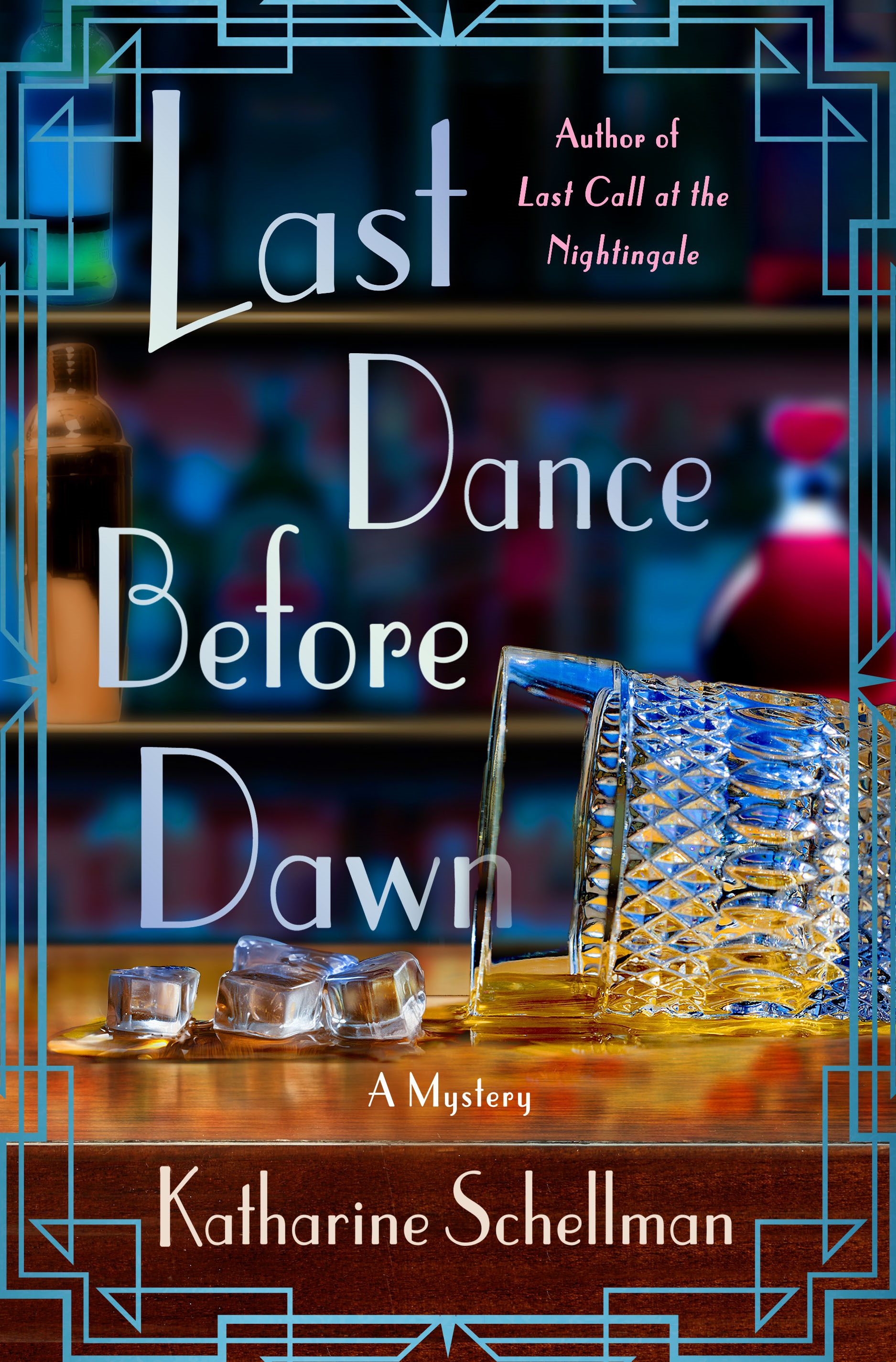
LAST DANCE BEFORE DAWN

by Katharine Schellman

May 25 - June 19, 2026 Virtual Book Tour

Synopsis:

Last Dance Before Dawn by Katharine Schellman

The Nightingale Mysteries


Vivian Kelly has finally created a home and a family at the glamorous speakeasy known as The Nightingale, where no one cares who you are in the daytime. After all, in the underground world of 1920s New York City, everyone has a secret to keep, and they’re on the Nightingale's dance floor to leave those secrets behind. But sometimes it takes more than a dance to escape your past.

When a stranger from Chicago shows up at The Nightingale looking to settle old scores, Vivian and the Nightingale's owner, the mysterious and alluring Honor Huxley, send him packing. They soon discover, though, that the stranger was just a warning. Slowly, the people who have made The Nightingale their home realize that someone is following them. Hunting them. And that someone won’t stop until they unravel a mystery that’s been cold for years: a missing girl, a boy out for revenge, and a truck full of cash that disappeared in a job gone horribly wrong.

Vivian just wants to protect the people she loves, and she's willing to dig into the dirt of the past to make it happen. But some questions are safer left unanswered, and now that Vivian has built a family for herself, she has more to lose than ever before.

Now experience this Edgar Award–nominated historical mystery in paperback!

Praise for Last Dance Before Dawn:

"A lively, sprawling crime story that captures the vibrancy of the Roaring ’20s."
~ Kirkus Reviews

Book Details:

Genre: Historical Mystery
Published by: Minotaur Books
Publication Date: May 26, 2026 | Paperback
Number of Pages: 350
ISBN: 978-1250325822
Series: The Nightingale Mysteries, Book 4 || Amazon, Goodreads, Macmillan Publishers
Book Links: Amazon | Kindle | Barnes & Noble | BookShop.org | Goodreads | BookBub | Macmillan Publishers

Read an excerpt:

Manhattan, 1925

Everyone came to the Nightingale looking for something.

They didn’t have much else in common, the folks who snuck down the alley toward a single electric light that flickered like it had been forgotten for years and could burn out at any moment. You never knew who would whisper the password at the door under the light, who would make their way through the midnight velvet curtains that muffled loud laughter and louder jazz.

Maybe your family could have bought half of Fifth Avenue, or maybe you couldn’t even buy new shoes. More likely, you lived somewhere in between, with work that paid your bills and the hope, one day, of something a little more. At the Nightingale, it didn’t matter who you were in the daytime. If you could hold your booze and let loose on the dance floor and keep a secret for a stranger, you were in.

They came looking for excitement, for the thrill of breaking a law that no one liked anyway. They came to dance and drink and maybe find a new friend, the sort of friend who—¬ after a glass or three of champagne—¬ would meet them in a quiet corner to get a little bit friendlier.

They came because they loved the music, the way it curled through the air and carried them across the floor, the way the singer’s voice filled the room and made their hearts ache.

They came for the party. They came to escape.

If they were lucky, they could pretend that whatever waited for them back at home didn’t exist. They could lose themselves in the music and the arms of someone new. They could feel free, even if it would never last, because in that moment nothing mattered but the next dance, the next drink, the next hour.

If they were lucky, they found what they were looking for, and they left before trouble could find them.

But not everyone was lucky.

***

Vivian recognized the sound of danger before she even realized what she was hearing.

Twilight had settled on the city, humid and heavy and speckled with the glow of streetlamps. She and Beatrice Henry—¬ Beatrice Bluebird, as she was known at the Nightingale, where she sang six nights a week—¬ moved through it with the practiced carefulness of two women who were used to navigating New York’s streets alone. Their steps were quick, but their eyes were quicker, always on the lookout for a man who might be trouble or a cop who might be trailing them.

The Nightingale paid off the police weekly, like any other dance hall or juice joint. But everyone who worked there knew to be wary just the same.

It was that wariness that sent a prickle of warning down Vivian’s back when they were two blocks from the Nightingale’s back entrance.

“Bea—¬ ” Vivian tossed out a hand to stop her friend in the middle of the sidewalk. A few steps ahead of them, a cat yowled as it ran out of a narrow alley. “You hear that?”

For a moment, the only sound out of the ordinary was the distant grumble of thunder. Then Vivian heard it again.

“Look a little closer, pal.” The voice was low and menacing, snaking out of the shadows and clearly not meant to be overheard. “I want to make sure you and me is on the same page.”

“Viv—¬ ” Bea hissed, but Vivian couldn’t help herself; she took a step forward, just enough to peek down the alley.

Halfway down the narrow stretch of filthy brick walls, two men were just visible in the fast-¬ fading light. One had his back against a wall. He was the taller of the two, but he still shrank back from the menacing bulk of the second figure. That one loomed toward him, his wide shoulders cutting off any escape as he shoved some kind of paper toward the nervous man’s face.

“—told you, when I have something, I’ll let you—”

The menacing man shoved him against the wall, the gesture nearly careless enough to hide the violence of it. The voice broke off with a grunt of pain, but it had been enough. Usually, Vivian would have stayed far away from anything that sounded like a beating and wasn’t her business. But she recognized that voice.

“Don’t interrupt,” the menacing man snarled. “My boss don’t take kindly to rude fu—”

“It’s Spence,” Vivian hissed.

Bea tried to pull her away. “It’s not our business. We can tell Silence or Benny,” she whispered, naming two of the bruisers who worked at the Nightingale keeping customers—¬ and anyone else who needed it—¬ in line. “They’ll come handle it.”

“That’ll take too long.” Vivian shook her head, pulling away from Bea’s cautious hand and running down the alley toward trouble. “Hey! Leave him alone!”

The bruiser barely glanced over his shoulder at her, just cocked his fist back and drove it, almost casually, into the nervous man’s stomach. He doubled over, heaving and gasping for air, as his assailant tipped his hat mockingly. “We’ll be seeing you soon, boyo. You can count on it.”

He was gone before Vivian could reach them. She stood, panting and staring at the gap between buildings where he had disappeared. A drizzling rain began to fall, plastering her hair against her cheeks. She wasn’t dumb enough to go after him.

“You okay, Spence?” she asked instead, turning toward the remaining man as he braced his hands on his knees.

“Swell,” croaked the Nightingale’s second bartender, a lanky, mouthy, handsome grump. “What the hell are you doing here?”

“Apparently chasing off the fella who was about to beat you to a pulp,” she said, stung. Spence had been working at the Nightingale all summer and still hadn’t managed to endear himself to any of the other staff. But Vivian had expected at least some gratitude. Instead, he scowled at her like she was the one who had just punched him in the stomach, not the one who had run the attacker off. “But no need to say thanks or anything.”

He hauled himself upright, wincing. “I had it handled, you know,” he said, still sounding resentful. “I didn’t need a rescue.”

“Sure you did, pal,” Bea said, joining them at last. “That was a stupid thing to do, by the way,” she added, glancing at Vivian as she opened her umbrella and held it over both their heads. “Be glad he didn’t have a friend waiting to beat the stuffing out of you too.”

“My stuffing’s doing just fine,” Spence groused, pushing his wet hair off his forehead and straightening his jacket and tie.

“What was that about?” Vivian asked, laying a hand on his arm. “Spence? Are you in trouble?”

***

Excerpt from LAST DANCE BEFORE DAWN by Katharine Schellman. Copyright 2025 by Katharine Schellman. Reproduced with permission from Katharine Schellman. All rights reserved.


Author Bio:

Katharine Schellman

Katharine Schellman is an award-winning author of historical crime fiction, including the Nightingale Mysteries and the Lily Adler Mysteries, whose work has been called “worthy of Rex Stout or Agatha Christie” (Library Journal). Her books have been nominated for an Edgar and a Silver Falchion, and she has won a Zibby Media National Book Award for "Best Book for the History Lover." A former actor, onetime political consultant, and graduate of William & Mary, Katharine lives and writes in the mountains of Virginia.

Catch Up With Katharine Schellman:

www.katharineschellman.com
Amazon Author Profile
Goodreads - @katharineschellman
BookBub - @katharineschellman
Instagram - @katharinewrites
Facebook - @katharineschellman


Tour Participants:

Click through the other tour stops for can’t-miss reviews, insider interviews, exclusive guest posts, and more chances to win!

Click here to view the Tour Schedule


Step Onto The Nightingale’s Shadowy Stage of Rewards

This giveaway is hosted by Partners in Crime Tours for Katharine Schellman. See the widget for entry terms and conditions. Void where prohibited.
LAST DANCE BEFORE DAWN by Katharine Schellman | Gift Card

Can't see the giveaway? Click Here!

Get More Great Reads at Partners In Crime Tours