Showing posts with label historical thriller. Show all posts

Friday, August 21, 2026

Book Blitz - Echoes of Fortune: Knights of the Golden Circle by David R. Leng


ECHOES OF FORTUNE:
Knights of the Golden Circle
by
David R. Leng

Historical Thriller / Conspiracy Thriller / Political Thriller / Action Thriller
Publisher: White Publishing
Publication Date: August 18, 2026
Page count: 462 pages

SYNOPSIS:


What if the Civil War never truly ended, and no one noticed who is now winning?

A standalone thriller. New readers can start right here.

When Professor Jack Sullivan is asked to decode a cipher from the war's final days, he expects a historical curiosity. Instead, he uncovers a threat Jefferson Davis died protecting, a secret never meant to resurface.

Jack, his fiancée Emma Wilson, and former SEAL Steve Johnson are pulled into a hunt more dangerous than any battlefield. From Washington's archives to the back alleys of New Orleans, from the coast of Mexico to the shadowed ridges of Arkansas, every trail leads deeper into the world of the Knights of the Golden Circle, a brotherhood long believed defunct.

But the Knights didn't disappear. They became patient.

For 160 years they studied what force could never win. They embedded themselves in the institutions Americans trust, and waited for the moment when they wouldn't need to seize power. They would be invited to take it.

Now their heirs have risen. A cartel is running weapons north while a cyberattack probes the power grid, and a senator climbs toward power on the fear both create. Jack begins to realize he was never hunting the treasure. He was being led to it.

Joined by Homeland cyber analyst Priya Patel and hunted by enemies he cannot see, Jack has four days to break a design older than anyone imagined before the trap closes around everyone he loves.

 Some secrets don't stay buried. They grow roots.

Great for fans of Steve Berry and Clive Cussler.


Praise for Echoes of Fortune: Knights of the Golden Circle


"The high-stakes, of-the-moment, infiltrated-America suspense simply does not let up." 

~ BookLife by Publishers Weekly

"One part Jack Reacher, one part Indiana Jones... an impressively entertaining action thriller." 

~ Kirkus Reviews ("GET IT")

"Leng lets history press against the present, sometimes like a warning and sometimes like a buried fuse." ~ Literary Titan


CLICK TO PURCHASE!


ABOUT THE AUTHOR:


David R Leng is the award-winning author of the Echoes of Fortune historical conspiracy thriller series, winner of three PenCraft Awards, including Thriller of the Year and back-to-back Best Thriller honors, two Literary Titan Gold Awards, and a Kirkus Reviews "GET IT" selection.

A lifelong resident of Southwestern Pennsylvania, David grew up in the shadow of the same battlefields his characters explore. He spent summers near the Shades of Death wilderness in western Maryland and has kayaked the Youghiogheny River, where a chance encounter with a stranger carrying a metal detector and asking about Braddock's gold planted the seed for the series.

His debut novel, The Search for Braddock's Lost Gold, follows historian Jack Sullivan into the unsolved mystery of General Braddock's vanished army payroll from the 1755 Battle of the Monongahela. The series has since expanded to the sunken Confederate secrets of Shadows Over Cozumel and the shadowed world of the Knights of the Golden Circle.

When he is not unraveling centuries-old conspiracies, David can be found scuba diving, boating, or in his woodshop. He lives in Pennsylvania with his wife and family.


RABT Book Tours & PR

Friday, August 14, 2026

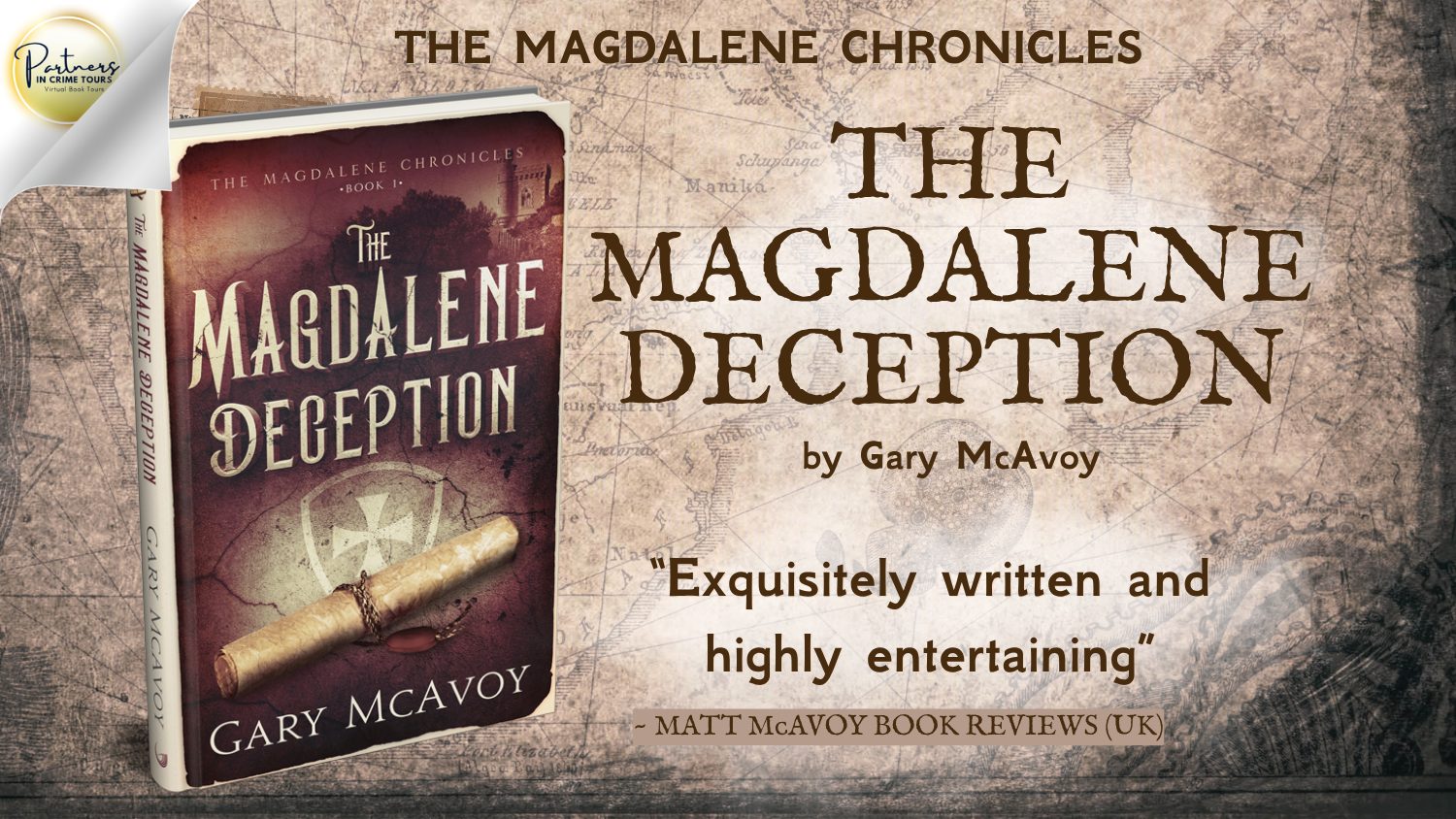
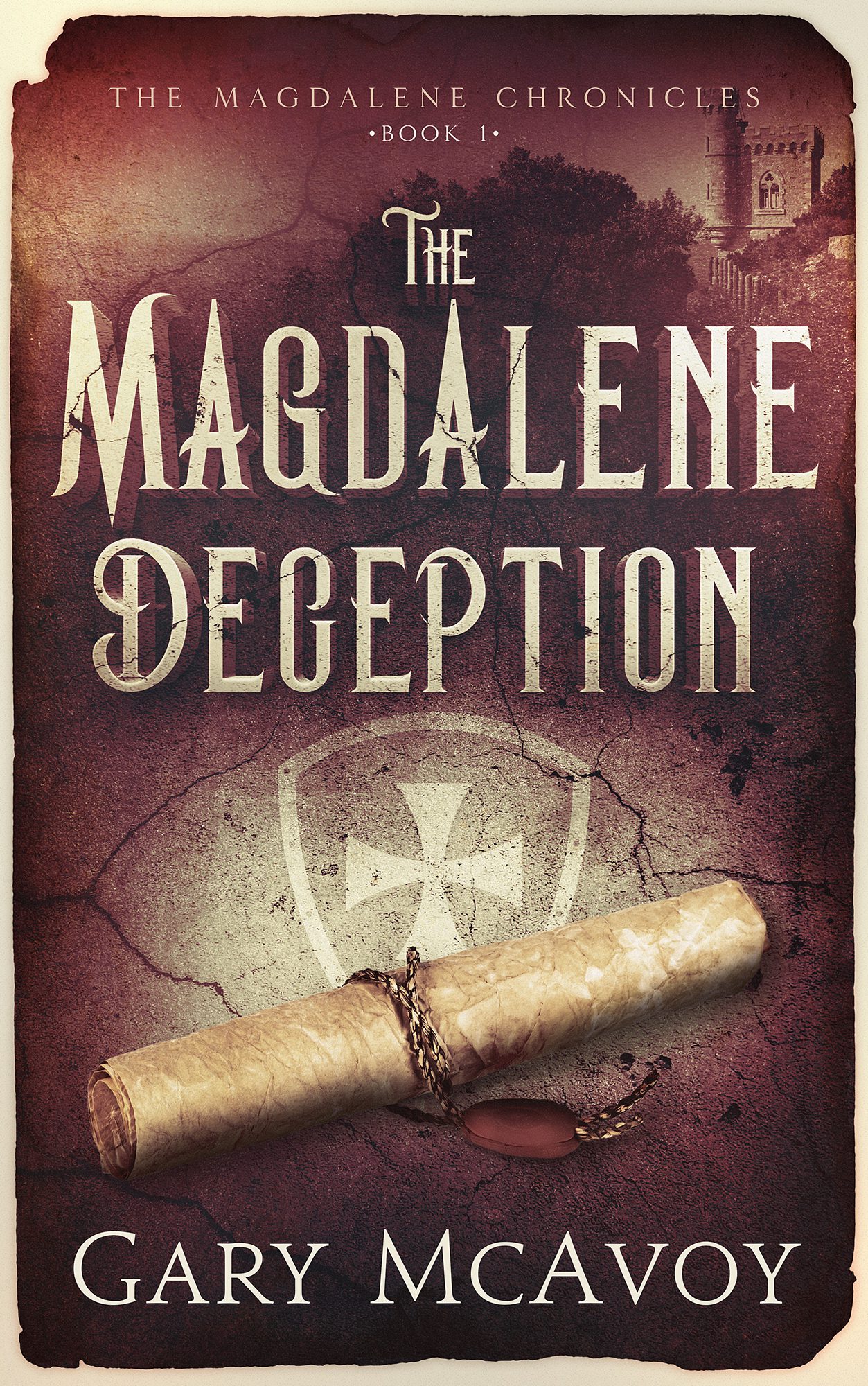
Virtual Book Tour & Giveaway: The Magdalene Deception (Magdalene Chronicles, #1) by Gary McAvoy

The Magdalene Deception by Gary McAvoy Banner

THE MAGDALENE DECEPTION

by Gary McAvoy

August 3-28, 2026 Virtual Book Tour

Synopsis:

THE MAGDALENE DECEPTION by Gary McAvoy

THE MAGDALENE CHRONICLES

A forbidden secret...
The Church’s fate in the balance…
Will a pair of amateur sleuths expose a truth that could upend the Christian world?

Jesus’ resurrection is a cornerstone of Christian faith. But when a clue surfaces that hints at an alternate account, the ramifications stand to change Christianity forever.

Jesuit priest Michael Dominic’s assignment to the Vatican’s legendary Secret Archives results in his discovery of a hidden papyrus: the unpublished writings of Mary Magdalene — a lost record buried in Rome’s deepest recesses. The forgotten relic’s heretical revelation threatens the Vatican’s very legitimacy, and pits Michael against ruthless and powerful enemies.

Desperate, he reaches out to Hana Sinclair, an investigative reporter with a record of tackling contentious subjects. Together they defy the Church elite, and embark on a search through the shadows of history to unearth the truth. As the pressure builds to silence the pair, will the Vatican resort to the unthinkable in order to safeguard its wealth and power?

Based on historical facts, this international thriller takes readers on a white-knuckle race through the holy sites of Europe. Get your copy of this award-winning tale and discover why Gary McAvoy’s devoted fans say, “I didn’t want this book to end!”

Praise for The Magdalene Deception:

"A great thriller that weaves numerous storylines together effectively. Recommended to those who love a good thriller with historical implications, as well as the reader who enjoys Vatican and Catholic politics… McAvoy creates a wonderful story that never stops building throughout… [He] captures the secrecy and deep-rooted history of the Vatican and its politics throughout this piece, with a strong story and plot that moves in many directions. McAvoy pulls the reader in and keeps them guessing, while also refusing to place a damper on the action. Juggling modern and ancient Church issues, McAvoy does not lose his reader at any point, as his writing is so clear that the attentive reader will likely want more."
~ MATT PECHEY, REEDSY DISCOVERY.

"Exquisitely written and highly entertaining, The Magdalene Deception is an investigative mystery in a very similar vein to The DaVinci Code…The real quality to this book is the author himself – the writing is superb. There is an outstanding attention to detail in McAvoy, and the setpieces he weaves are vivid, colourful and authentic; this author treats his audience as intelligent and attentive, and this is always hugely beneficial to any writer. As well as being an evidently well-educated historian, McAvoy also knows his stuff in terms of modern-day information networking and the technology in present day use alongside ancient practices and customs…"
~ MATT McAVOY BOOK REVIEWS (UK)

The Magdalene Deception Trailer:

Book Details:

Genre: Vatican Historical Thrillers
Published by: Literati Editions
Publication Date: July 1, 2020
Number of Pages: 368
ISBN: 9780990837664 (ISBN10: 0990837661)
Series: The Magdalene Chronicles, #1
Book Links: Amazon | KindleUnlimited | Barnes & Noble | BookShop.org | Goodreads | BookBub

Read an excerpt from The Magdalene Deception:

Prologue

Southern France – March 1244

The relentless siege of the last surviving Cathar fortress, perched strategically on the majestic peak of Montségur in the French Pyrenees, entered its tenth month.

The massive army of crusaders dispatched from Rome, thirty thousand strong, were garbed in distinctive white tunics, their mantles emblazoned with the scarlet Latin cross. Knights commanders led hordes of common foot soldiers, some seeking personal salvation, others simply out for adventure and the promise of plunder. They had already devastated most of the Languedoc region of southern France in the years preceding. Tens of thousands of men, women, and children had been slain, regardless of age, sex or religious belief. Entire villages were burned, rich crops destroyed, and the fertile land which yielded them was poisoned in a cruel, single-minded quest to root out and extinguish a small and peaceful, yet influential mystic order known as the Cathars.

The defeat of the impregnable Montségur remained the ultimate prize for the Church’s troops. Rumors of a vast treasure had reached the ears of every soldier, stirring up the passion with which these feared European mercenaries carried out their holy mission. As was the customary practice during a crusade, whatever pillage remained after the plundering—spolia opima, the richest spoils for supreme achievement—could be claimed by the victor. That temptation, bonded by the personal assurance of the pope that all sins would be forgiven and their paths to heaven assured, was enough to seduce anyone, nobleman or peasant, to take up cudgel, pike, or arrow in the name of God.

In 1209, Pope Innocent III had ordered a Holy Crusade to crush the spirit and, if necessary, the life of each and every dissident in the Languedoc region bordering France and Spain.

This independent principality had distinguished itself by fostering an artistic and intellectual populace well beyond that of most northern European societies at the time. The people of the Languedoc practiced a religious tolerance that encouraged spiritual and secular diversity. Schools teaching Greek, Hebrew and Arabic languages and the customs which accompanied them flourished, as did those espousing the Kabbalah, an occult form of Judaism that dated from the second century.

Most settlers in the Languedoc viewed Christianity with the utmost repugnance; at the very least its practices were perceived as being more materialistic than godly in nature. The irreligious of the region passed over Christianity in large part due to the scandalous corruption exhibited by its local priests and bishops who, unable to influence the heathens within their provinces, came to prefer the rewards of commerce and land ownership over the tending of a meager flock.

Consequently, the authorities in Rome felt compelled to deal with this unforgivable heresy once and for all, in towns such as Toulouse and Albi within the Languedoc area.

Consigning his troops to their commanders, Pope Innocent III invoked a special benediction to all, lauding the divinity of their mission. Asked how they might distinguish their Christian brethren from the heretics, the crusaders were simply told, “Kill them all. God will spare His own.”

And so the Albigensian Crusade began.

The new moon cast no light over Montségur as night fell on the first day of March 1244, obscuring not only the hastened activities of its occupants, but the lingering threat conspiring outside its walls. A dense alpine fog had settled over the mountain, and the castle that straddled its inaccessible peak had withstood nearly a year of unceasing battle.

Weakened by the tenacity of their predators and yielding to the hopelessness of their situation, Raymond de Péreille, Lord of Château du Montségur and leader of the remaining four hundred defenders, commanded his troops to lay down their arms, and descended the mountain to negotiate terms of their capitulation.

Though offered lenient conditions in return for their surrender, de Péreille requested a fourteen-day truce, ostensibly to consider the terms, and handed over hostages as an assurance of good faith. Knowing there was no alternative for their captives—nearly half of whom were priest-knights, or parfaits, sworn to do God’s work—the commanders of the pope’s regiment agreed to the truce.

Over the next two weeks, reprieved from the constant threat of attack they had been enduring for months, the inhabitants of Montségur resolved to fulfill their own destiny before relinquishing their fortress—and their lives—to the Inquisition.

On the last day of the truce, as if guided collectively by a single will on a predestined course, the surviving members of the last Cathar settlement made special preparations for their departure.

Four of the strongest and most loyal of the parfaits were led by Bishop Bertrand Marty, the senior abbé of the fortress, as they descended deep within the mountain down a long, stepped passageway carved into alternating layers of earth and limestone. The end of the passage appeared to be just that, as if the original tunnelers had simply stopped work and retreated without finishing the job. But, while the others held torches, Abbé Marty withdrew a large rusted key-like wedge from beneath his cassock, and thrust it into a hidden cavity near the low ceiling.

The abbé manipulated the key for a few moments. A muffled sound of grating metal from beyond the stone wall echoed through the tunnel, and the seemingly impenetrable granite slid inward slightly, revealing a door.

Aided by the parfaits, the door swung open into a small dank chamber filled with an enormous cache of riches—gold and silver in varied forms, gilded chalices and bejeweled crosses, an abundance of gems and precious stones, overflowing bags of coins from many lands.

And, in a far corner removed from the bulk of the treasure itself, stood a wide granite pedestal on which rested an ornately carved wooden reliquary, crafted to hold the most holy of relics, next to which sat a large book wrapped in brown sackcloth.

Standing before the legendary treasure of the Cathars—glittering and hypnotic in the dim torchlight—would prove seductive for most men. But the Albigensians held little regard for earthly goods, other than as a useful political means to achieve their spiritual destiny. Ignoring the abundant wealth spread before them, the abbé fetched the sackcloth while the other four parfaits hoisted the ancient reliquary to their shoulders, then they left the room and solemnly proceeded back up the granite stairway. In the thousand-year history of the Cathars, these would be the last of the order ever to see the treasure.

But the most sacred relic of the Christian world would never, they vowed, fall into the unholy hands of the Inquisition.

Emerging from the stone passage, Abbé Marty led the parfaits and their venerable cargo through the hundreds of waiting Cathars who had assembled outside, forming a candlelit gauntlet leading to the sanctuary. All were dressed in traditional black tunics, all wearing shoulder-length hair covered by round taqiyah caps as was the custom of the sect.

Once inside, the parfaits lowered the reliquary onto the stone altar. The abbé removed the ancient book from the sackcloth and began the sacred Consolamentum, a ritual of consecration, while the four appointed guardians prepared themselves for their special mission.

Armed with short blades and truncheons, the parfaits carefully secured the reliquary in the safety of a rope sling, then fastened taut harnesses around themselves.

“Go with God, my sons,” Abbé Marty intoned as he gave them his blessing, “and in His name ensure this sacred reliquary be protected for generations to come.”

The four men climbed over the precipice and, assisted by their brothers gripping the ropes tied to their harnesses, gently and silently rappelled hundreds of meters down the escarpment. Sympathizers waiting at the base of the mountain assisted the parfaits in liberating their holy treasure, guiding them away from the danger of other troops and hiding them and the reliquary deep in one of many nearby caves.

Throughout the night, those remaining at Montségur celebrated their brotherhood, their holy calling, and their last hours alive. Descending the mountain the next morning, in a state of pure spiritual release from the material world, Abbé Marty led the last of the Cathars as they willingly marched into the blazing pyres awaiting them, martyrs to their cause.

The holy reliquary of the Cathars has never since been found.

Chapter 1

Present Day

Rounding the northern wall of the Colosseum with a measured stride, a tall young man with longish black hair glanced at the Tag Heuer chronometer strapped to his left wrist. Noting the elapsed time of his eighth mile, he wiped away the sweat that was now stinging his eyes.

Damn this Roman heat. Not even sunrise, and it’s already a scorcher.

Approaching the wide crosswalks flanking the west side of the immense Colosseum, he wondered if this was the morning he would meet God. Dodging the murderous, unrestrained traffic circling the stadium became a daily act of supreme faith, as the blur of steel subcompacts, one after another, careened around the massive structure on their way, no doubt, to some less hostile place. Since his arrival here he had discovered that this was the way with Italian motorists in general, though Roman drivers excelled at the sport. Veteran observers could always tell the difference between natives and visitors: a local would cross the road seemingly ambivalent to the rush of oncoming traffic. Non-Romans, who could as likely be from Milan as from Boston or Paris, approached the threat of each curb-to-curb confrontation with a trepidation bordering on mortal terror.

Crossing the broad Via dei Fori Imperiali, his route took him through the Suburra, the most ancient inhabited area of Rome and off the beaten path of most tourists. As a newcomer to a city whose normal pulse was barely evident beneath the confusing ambiguities of new and old, the runner felt most comfortable here in the Suburra, a semi-industrial working-class neighborhood, much like the one he only recently left in New York. In the summer, people got up early to tend their gardens before the real heat forced them indoors. The early morning air was thick with alternating scents of Chilean jasmine, honeysuckle and petrol fumes.

He ran another ten kilometers, long blooms of sweat accentuating a lean, muscular frame beneath a gauzy white t-shirt as he burst into a sprint up the final few blocks, past the empty trattorias and shuttered shops whose merchants were just beginning their morning rituals.

Slowing to a cool-down pace as he crossed the Sant'Angelo bridge spanning the Tiber River, he turned left up Via della Conciliazione as the massive dome of Saint Peter's Basilica loomed suddenly ahead. Though it could be seen from almost anywhere in Rome, this approach always gave him the impression that the dome seemed to tip backwards, being swallowed up by the grand facade of the church the closer he got to it.

"Buongiorno, padre.” Several female voices, almost in unison, broke the cobblestone pattern of his reverie.

Father Michael Dominic looked up and smiled politely, lifting his hand in a slight wave as he swiftly passed a small cluster of nuns, some of whom he recognized as Vatican employees. The younger women blushed, leaning their hooded heads toward each other in hushed gossip as their eyes followed the handsome priest; the older women simply bobbed a chilly nod to the young cleric, dutifully herding their novitiates into obedient silence on their way to morning Mass.

Though he had only been in Rome a couple of weeks, Michael Dominic's youthful exuberance and keen intellect had become known quickly throughout the cloistered population of Vatican City, setting him apart from the more monastic attitudes prevalent since the Middle Ages.

But despite the fusty parochialism and an atmosphere of suspended time he found within its walls, Dominic still felt the intoxication of privilege at having been assigned to Rome so early in his religious career. It had not been even two years since he lay prostrate at the altar of St. Patrick’s Cathedral in New York City, to be ordained by his family friend and mentor Cardinal Enrico Petrini.

It was no secret to Vatican insiders that the eminent cardinal's influence was chiefly responsible for Dominic's swift rise to the marbled corridors of ecclesiastical power now surrounding him. The young priest’s scholarly achievements as a classical medievalist were essential to the work being done in the Vatican Library. But the progressive cardinal also was grateful for the vitality Dominic brought to his vocation, not to mention the charismatic ways in which he could get things accomplished in an otherwise plodding bureaucracy. Though Dominic could not account for his mentor’s vigorous inducement that he come to Rome—and knowing this particular prince of the Church so well, it was surely more than a familial gesture—he had trusted Enrico Petrini completely, and simply accepted the fact that this powerful man had believed in him strongly enough to give him an opportunity which he most certainly would not have had otherwise.

Pacing slower now, Dominic drew in rhythmic gulps of searing air as he neared the Vatican. A block or so before reaching the gate, he stepped inside the Pergamino Caffè on the Piazza del Risorgimento. Later in the day the cramped room would be filled with tourists seeking postcards and gelato, but mornings found it crowded with locals, most nibbling on small, sticky cakes washed down with a demitasse of thick, sweet coffee.

Across the room Dominic spotted Signora Palazzolo, the ample wife of the proprietor, whose wisps of white hair were already damp with perspiration. Seeing the priest approach, the older woman’s face broke into a broad, gap-toothed smile as she reached beneath the counter and withdrew a neatly folded black cassock that Dominic had dropped off earlier, which she handed to him with deliberate satisfaction.

Buongiorno, padre,” she said. “And will you take caffè this morning?”

Molto grazie, signora,” Dominic said, accepting the cassock graciously. “Not today. I’m already late as it is.”

“Okay this time,” she said with a gently scolding tone, “but it is not healthy for a strong young man to skip his breakfast, especially after making his heart work so hard in this unforgiving heat.” Her hand reached up to wipe away the dampness as she spoke, coifing what little hair she had left in a vain attempt to make herself more attractive.

Heading toward the back of the shop, Dominic slipped into the restroom, quickly washed his face and raked his hair into some semblance of order, then drew the cassock over his head and buttoned it to the starched white collar now encircling his neck. Emerging from the restroom minutes later and making for the door, he glanced back to see the signora waving to him, now with a different look on her face—one beaming with respect for the clergyman he had suddenly become, as if she herself had had a role in the transformation.

Of the three official entrances to the Vatican, Porta Sant’Anna, or Saint Anne’s Gate, is the one generally used by employees, visitors and tradesmen, situated on the east side of the frontier just north of Saint Peter's Square. Although duties of security come first, guards at all gates also are responsible for monitoring the encroachment of dishabille into the city. Dominic learned from an earlier orientation that casual attire of any sort worn by employees or official visitors was not permitted past the border. Jeans and T-shirts were barely tolerated on tourists, but the careless informality of shorts, sweatpants or other lounging attire on anyone else was strictly forbidden. An atmosphere of respect and reverence was to be observed at all times.

Vatican City maintains an actual live-in population of fewer than a thousand souls, but each workday nearly five thousand people report for duty within the diminutive confines of its imposing walls—walls originally built to defend against the invading Saracens a thousand years before—and the Swiss Guards at each gate either recognize or authenticate every person coming or going by face and by name.

One of the Guards whom Dominic had recognized from previous occasions, dressed in the less formal blue and black doublet and beret of the corps, waved him through with a courteous smile as Dominic reached for his ID card.

“It is no longer necessary to present your credentials now that you are recognized at this gate, Father Dominic,” the solidly built young guard said in English. “But it is a good idea to keep it with you just in case.”

Grazie,” Dominic responded, continuing in Italian, “and it would be helpful to me if we could speak the local language. I haven’t used it fluently since I was younger, and I am outnumbered here by those who have an obvious preference. You know, ‘When in Rome….’”

The guard’s smile faded instantly, replaced by a slight but obvious discomfort as he attempted to translate, then respond to Dominic’s rapid Italian.

“Yes, it would be pleasure for me, padre,” the young soldier said in halting Italian, “but only if we speak slowly. German is native tongue of my own home, Zurich, and though I speak good English, my Italian learning have only just started; but I understand much more than I speak.”

Dominic smiled at the younger man’s well-intended phrasing. “It’s a deal then. I’m Michael Dominic,” he said formally, offering a sweaty palm.

“It is an honor meeting you, Father Michael. I am Corporal Dengler. Karl Dengler.” The guard’s face brightened at the unusual respect he was accorded, as he extended his own white-gloved hand in a firm grip. Recently recruited into the prestigious Pontificia Cohors Helvetica, the elite corps of papal security forces more commonly known as the Swiss Guard, Dengler had found that most people in the Vatican—indeed, most Romans—were inclined to keep to themselves. It was never this difficult to make friends in Switzerland, and he welcomed the opportunity to meet new people. He also knew, as did everyone by now, that this particular priest had a powerful ally close to the Holy Father.

“An honor for me as well, Corporal,” Dominic said a bit more slowly, yet not enough to cause the young man further embarrassment. “And my apologies for soiling your glove.”

“No problem,” Dengler said as he smiled. “With this heat it will be dry in no time. And if you ever want a running partner, let me know.”

“I’ll take you up on that!” Michael said with a wave as he passed through the gate.

Already the Vatican grounds were bustling with activity. Throngs of workers, shopkeepers and official visitors with global diversities of purpose made their way along the Via di Belvedere to the myriad offices, shops and museums—any indoor or shaded haven, in fact, that might offer escape from the heat of the rising sun.

Another Swiss Guard stood commandingly in the center of the street—looking remarkably dry and cool, Dominic thought, despite the obvious burden of his red-plumed steel helmet and the traditional billowy gala uniform of orange, red and blue stripes—directing foot and vehicular traffic while smartly saluting the occasional dignitaries passing by.

To any observer, Vatican City appears to be in a state of perpetual reconstruction. Comprising little more than a hundred acres, the ancient city state is in constant need of repair and maintenance. Architectural face-lifts, general structural reinforcement and contained expansion take place at most any time and in various stages, manifested in the skeletal maze of scaffolding surrounding portions of the basilica and adjoining buildings. Sampietrini, the uniquely skilled maintenance workers responsible for the upkeep of Saint Peter's, are ever-present throughout the grottoes, corridors, and courtyards as they practice time-honored skills of the artisans who have gone before them, traditionally their fathers and their fathers’ fathers. It was quite probable, in fact, that a given sampietrino working on, say, a crumbling cornerstone of the basilica itself, could very well be shoring up work that was originally performed by his great-great-grandfather more than a century before him.

Dominic walked to the end of the Belvedere, then turned right up the Stradone dei Giardini and alongside the buildings housing the Vatican Museums, until he reached the northern wall of the city.

A priest learns early that his life will suffer many rituals, and in at least one secular aspect, Michael Dominic’s was no different. Every day he ended his morning run with a meditative walk along the inner walls surrounding the immaculately maintained papal gardens. The fact that many of the same trees that lined the paths have been rooted here for centuries—serving the contemplative needs of whichever pope might be ruling at the time—gave Dominic a more natural feeling of historical connectedness, in subtle contrast to other abundant yet more imposing, reminders of where he now happened to be living and working.

“Ah! Good morning, Miguel.” It was a gentle breeze of a voice, yet Dominic recognized it clearly in the early, warm quiescence of the Vatican gardens.

Buongiorno, Cal!” Dominic said brightly. Brother Calvino Mendoza, prefect of the Vatican Archives and Dominic’s superior, was approaching the entrance to the building. Clad in the characteristic brown robe and leather sandals of his Franciscan order, Mendoza was a round, timorous man in his seventies—quite pleasant to work with, Dominic thought, if a little indiscreet in his obvious affection for men.

“You are up early today,” Mendoza said in heavily-accented English, furtively appraising Dominic’s form beneath the cassock. “But then, defying the wicked heat and traffic of Rome is best done before sunrise, no?”

“It is, yes,” Dominic laughed easily, his damp hair glistening in the sun as he shook his head in amusement, “but in another hour or so I expect the pavement to start buckling.”

Dominic had come to enjoy Mendoza’s fey demeanor and playful flirting. Nearly everyone he had met here seemed overly stern and impassive to be really likable, and Dominic was naturally drawn to people he found more hospitable anyway. This gentle man had a quick mind for humor and was never, Dominic found, lacking for a proverb appropriate to the moment. It was also common for Mendoza to call many on his staff by the Portuguese equivalent of their name, maintaining an affectionate cultural touchstone to his native home of Brazil. As for the subtle intimations, Mendoza grasped early on that Dominic’s vow of chastity was not likely to be compromised, and particularly not by another man.

“You’ll get used to it,” Mendoza nodded, smiling. “It is worse in the mornings, to be sure, but come late afternoon we are blessed by the ponentino, a cool wind off the Tyrrhenian Sea.

“And besides,” he quipped, “’To slip upon a pavement is better than to slip with the tongue—so the fall of the wicked shall come speedily.’” He finished by glancing around the garden with mock suspicion, as if every word were prey to overcurious but unseen ears.

“‘Ecclesiastes,’” Dominic responded. “And thanks for the admonition.”

Pleased that the young priest indulged his occasional whimsy, Mendoza shuffled up the few steps of the entrance to the Archives.

“Now, come Miguel, your days of orientation are over. Let’s get on with the real work,” he said dramatically, his arms nearly flapping as his large body moved up the steps into the Archives. “Today is a very special day.”

“I’ll catch up with you shortly, Cal. I’ve got to take a quick shower first. But why is today so special?”

From the top of the steps, Mendoza turned around to face Dominic and, like a child with a tantalizing secret, whispered with barely contained excitement, “The treasures we are about to exhume have not been seen by any living soul for several hundred years.”

Clearly a man who enjoyed his work, Calvino Mendoza’s eyes gleamed with anticipation as he lifted one heavy eyebrow in an arch, then spun as quickly as his heavy frame would allow and disappeared through the heavy wooden door.

As Dominic walked back to his apartment at the Domus Santa Marta, the resident guesthouse just south of Saint Peter’s Basilica, two men in a golf cart were heading in his direction, both dressed in the familiar black and red garb of cardinals. The cart stopped directly in his path and one of the men stepped out, approaching him.

“Father Dominic, I presume?” The heavyset man had a thick Balkan accent, with an intelligent face bearing an inscrutable mask of expression.

“Yes, Eminence? How can I help you?” Dominic said.

“I am Cardinal Sokolov, prefect of the Congregation for the Doctrine of the Faith. I simply wanted to extend a hand of welcome on behalf of those of us who have been expecting you.”

Dominic recognized the cardinal’s department, better known as the infamous Office of the Holy Inquisition before someone had come up with a less diabolical name.

“Good to meet you, Your Eminence,” he said, surprised by the comment. “I didn’t realize anyone was actually expecting me, though.”

“Oh, yes,” Sokolov said, holding Dominic’s hand in an uncomfortably firm grip as they shook. “Having Cardinal Petrini’s endorsement carries a great deal of influence here. But it also comes with certain expectations. First and foremost, keep to yourself. Do not expect to make many friends here. One is surrounded by vipers masquerading as pious souls.

“Secondly, know that you are being watched at all times. Conduct yourself appropriately and you may survive your time here. There are many who were vying for your job as scrittore in the Secret Archives, and they will seek any opportunity to displace you.

“Lastly,” the cardinal said scowling, his eyebrows a black bar across his fleshy face, “come to me directly if you witness or suspect anyone of illicit or unbecoming activities. Such careful scrutiny will be viewed with admiration by His Holiness, for whom I speak in this regard.”

Dominic was dumbfounded by the audacity of the man’s welcome, hardly the tone he would have imagined and one that shed a darker light on his exhilaration at now working and living in the Vatican.

“I will keep all that in mind, Eminence,” he said, forcibly pulling back his hand from the cardinal’s cloying grasp.

Sokolov stood a moment longer appraising Dominic’s face, then turned and shuffled himself back into the golf cart, which pulled away with a mounting whine as it headed into the papal gardens.

Troubled by the encounter, Dominic returned to his apartment, the fresh burdens expected of him weighing on his mind. What have I gotten myself into? he thought, stepping into the shower.

***

Excerpt from The Magdalene Deception by Gary McAvoy. Copyright 2020 by Gary McAvoy. Reproduced with permission from Gary McAvoy. All rights reserved.


Author Bio:

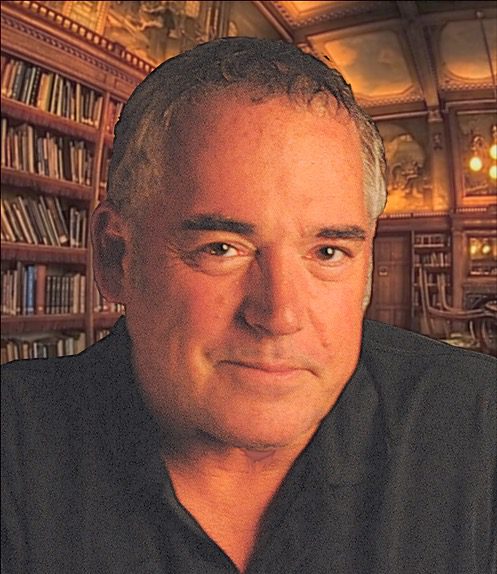
Gary McAvoy

Gary McAvoy is an American novelist known for internationally bestselling thrillers that blend historical intrigue, religious scholarship, and modern suspense. A lifelong researcher of rare manuscripts and Church history, he draws on extensive archival study to craft narratives rooted in authentic detail. His work includes the Vatican Secret Archive Thrillers, the Magdalene Chronicles, and the Vatican Archaeology Thrillers. Before turning to fiction, McAvoy built a distinguished career as an entrepreneur, technology consultant, and collector of historical documents. He now writes full time from the Pacific Northwest, where he continues to explore the shadowed crossroads of faith, power, and history.

Catch Up With Gary McAvoy:

GaryMcAvoy.com
Amazon Author Profile
Goodreads - @garymcavoy
BookBub - @garymcavoy
Instagram - @gary_mcavoy
X - @GaryMcAvoy
Facebook - @GaryMcAvoyAuthor


Review:

5 stars!

Secrets, old and even older, threaten the very foundation of the Church. 

The Magdalene Deception is the first book of author Gary McAvoy’s exciting and suspense-filled series, The Magdalene Chronicles, and features a young, connected American priest-scholar assigned to the Vatican Museum, specifically its secret archives, and a young and also connected female journalist working to make a name for herself at Le Monde. Jesuit priest Father Michael Dominic has been at the Vatican for only a few weeks when he stumbles across hidden documents secreted at the bottom of a box disguised as a large book. While one of the documents is a cryptic handwritten set of quatrain verses by Nostradamus himself, the other is a letter from a parish priest in Rennes-le-Chateau, France, notorious in the early 20th century for his extravagant spending and unknown source of funds, that appears to be dunning the Vatican for unnamed Church services and sounding suspiciously like a blackmail demand. 

Michael meets journalist Hana Sinclair, the granddaughter of a Swiss baron and banking mogul who has been an advisor to several popes, through her cousin, a recent acquaintance in the Swiss Guard. She is researching for a controversial series of articles about the involvement of the French government, the Vatican, and the Vatican Bank in taking and keeping the assets of Jews stolen during World War II. Together, as they try to unravel the truth behind the mysterious documents, they uncover an ancient secret that would irreparably harm the very foundation of the Catholic Church, and someone else is determined to stop them. 

Michael is the son of a single, unwed mother, a devout Catholic who served as the housekeeper to a now-powerful cardinal when he was a parish priest in New York City. The priest took an interest in the boy, becoming a father figure to him, and later, as his circumstances improved, assisted him in attaining a good education. Michael, although following in his benefactor’s footsteps on his career path, has done so for the love of scholarship rather than a true spiritual vocation, but he hopes that one day that will change and he will feel the deep religious connection that his colleagues do. As for Hana, she is determined to succeed as a journalist on her own merits rather than on the prestige and privilege of her birth and family connections, but there are backdoor machinations at work that may circumvent her best intentions. 

The author gives readers a Vatican City full of intense watchfulness, suspenseful intrigue, and power plays by church leaders at the highest level. It feels like someone is constantly watching and listening, just looking for something they can exploit for their own advantage. As the story progresses, interesting and relevant bits of church history and dirty laundry are presented throughout. 

After introducing the main characters and their backstories, the plot quickly takes off. Some secrets must remain secret, and deadly measures are employed to ensure they do. If you are a history buff as well as a reader of mystery, suspense, or thrillers, THE MAGDALENE DECEPTION is for you.


Tour Participants:

Click through the other tour stops for can’t-miss reviews, insider interviews, exclusive guest posts, and more chances to win!

Click here to view the Tour Schedule


Step Into the Suspense—and a Gift Card Giveaway:

This giveaway is hosted by Partners in Crime Tours for Gary McAvoy. See the widget for entry terms and conditions. Void where prohibited.
THE MAGDALENE DECEPTION by Gary McAvoy | Gift Cards

Can't see the giveaway? Click Here!

Get More Great Reads at Partners In Crime Tours

Friday, June 05, 2026

Book Tour & Giveaway: Cain's Chameleon by Mark G. Bearss


Cain's Chameleon
by
Mark G. Bearss

Historical Fiction / Mystery / Thriller
Publisher: Bearss Lair Books
Publication Date: January 26, 2026
Page count: 282 pages

SCROLL DOWN FOR GIVEAWAY!

SYNOPSIS:

If the newspaper reported your death and no one questioned it, would you correct the mistake… or take the lifeline?

Dan Driscoll is consumed by gambling debt, cornered by bookies and loan sharks, forced to bet on one last scheme. When things turn violent and two people are shot, his best friend, Stan Neumann, swallows what he suspects. He can’t risk divulging a closely-held family secret.

Then a body washes up on the Lake Michigan shoreline, and the lake gives Dan what the bookies never would: a way out. Authorities call it an accident and list him as the drowning victim. For Dan, it’s an escape route delivered in black ink.

He becomes a ghost, an imposter, a chameleon. But lies don’t stay buried.

As America is pulled into World War II, Stan enlists, choosing duty on his terms before the draft can rewrite his life. In Pearl Harbor, one chance encounter dredges up a name he thought was long buried.

War changes everything, but it doesn’t erase unfinished business. And when the truth demands to be heard, how long can a stolen life stay buried before the past comes to collect?

CLICK TO PURCHASE!

ABOUT THE AUTHOR: 

While author Mark Bearss was setting the stage for his retirement, concerned co-workers would ask, “What are you going to do when you’re not working?” He found this question rather curious. It should have been posed, “What are you going to do first?” Mark knew that if travel was involved, he had had enough of commercial flights after 28 years of teaching for the medical device industry. Mark yearned for road trips – to visit those places he only saw from 38,000 feet. Little did he know that wish journeyed down an unexpected fork in the road. He would become an author.

While conducting genealogy research, Mark discovered archived de-classified military documents that revealed the name of a U.S. Navy destroyer his father served aboard during WWII. The reason this was a poignant discovery was because, while growing up in Grand Rapids, Michigan, his father made no mention of this. Apart from being a U.S. Naval Reserve flight instructor, he knew his father served aboard the carrier USS ESSEX. But in what capacity? That, too, was not revealed. More discoveries materialized the further he dug. In fact, there was a lot more his father didn’t mention. This wasn’t unusual. Many WWII veterans didn’t talk about what happened back then.

Because of the pandemic, the National Archives in St. Louis was closed and rendered Lt. Bearss’ military records unavailable. Thus began a project that challenged Mark’s research endeavors for over two years and about 5,000 miles on the road. The biographical sketch was sorted from creative Internet search strings, history books, navy publications, and networking with journalists, librarians, archivists, bloggers, aviation enthusiasts, museum and historical society curators, navy veterans, relatives, and more. One online resource that was instrumental in tracking his father’s journey was the weekly newspaper published in the county where his parents grew up: The Oceana Herald. It included a Local News section where family members and organizations could submit a short blurb about a relative’s visit, a social gathering, or – where a son or husband was currently stationed.

This project culminated in 2022 with Mark’s first publication titled, Undisclosed Stories Discovered: Honoring the World War II Military Journey of Lt. Joseph Ward Bearss, USNR. When asked what was one of the highlights surrounding this story, he described the road trips to seek out and discover places where his father lived, trained and was stationed during the war. What prompted him to write this as a biography took place during a meeting with the curator of the World War II Home Front Museum on St. Simons Island, Georgia. St. Simons Naval Air Station was the site for the U.S. Naval Radar Training Station, where Lt. Bearss was trained in shipboard radar operations, enemy interception, and Fighter Direction. While the museum had ample archived materials about the facility, it had very little documented about the servicemembers who trained there.

Only 250 copies were printed. Mark went back on the road in his Class-B motorhome and personally donated those copies to family members, friends and relatives, the librarians, archivists, researchers, museums, curators, historical societies, newspapers, The American Heritage Center, VFW Posts, airport FBOs, and other assorted WWII enthusiasts in 12 states who helped in his endeavors. It was a two-fold reward. Not only did his father’s story finally become told, Mark experienced the pleasure of meeting all these wonderful people who were his resources, advisors, collaborators, and consultants. Up until that point, they were only names in an email contact list.

You’re probably asking, “How is all this relevant to Mark’s new novel, Cain’s Chameleon?” It was the research from The Oceana Herald that planted the seed for this story. While perusing its issues, Mark stumbled on two articles that piqued his curiosity. The first reported an attempted murder in a home close to his family’s summer cottage on Lake Michigan. The second reported a drowning victim that washed up on the beach right where Mark and his friends used to play. Just two more stories never divulged while growing up. He wondered, Were these two events related? Then Mark decided — he would make them related.


GIVEAWAY! GIVEAWAY! GIVEAWAY!


RABT Book Tours & PR

Friday, May 29, 2026

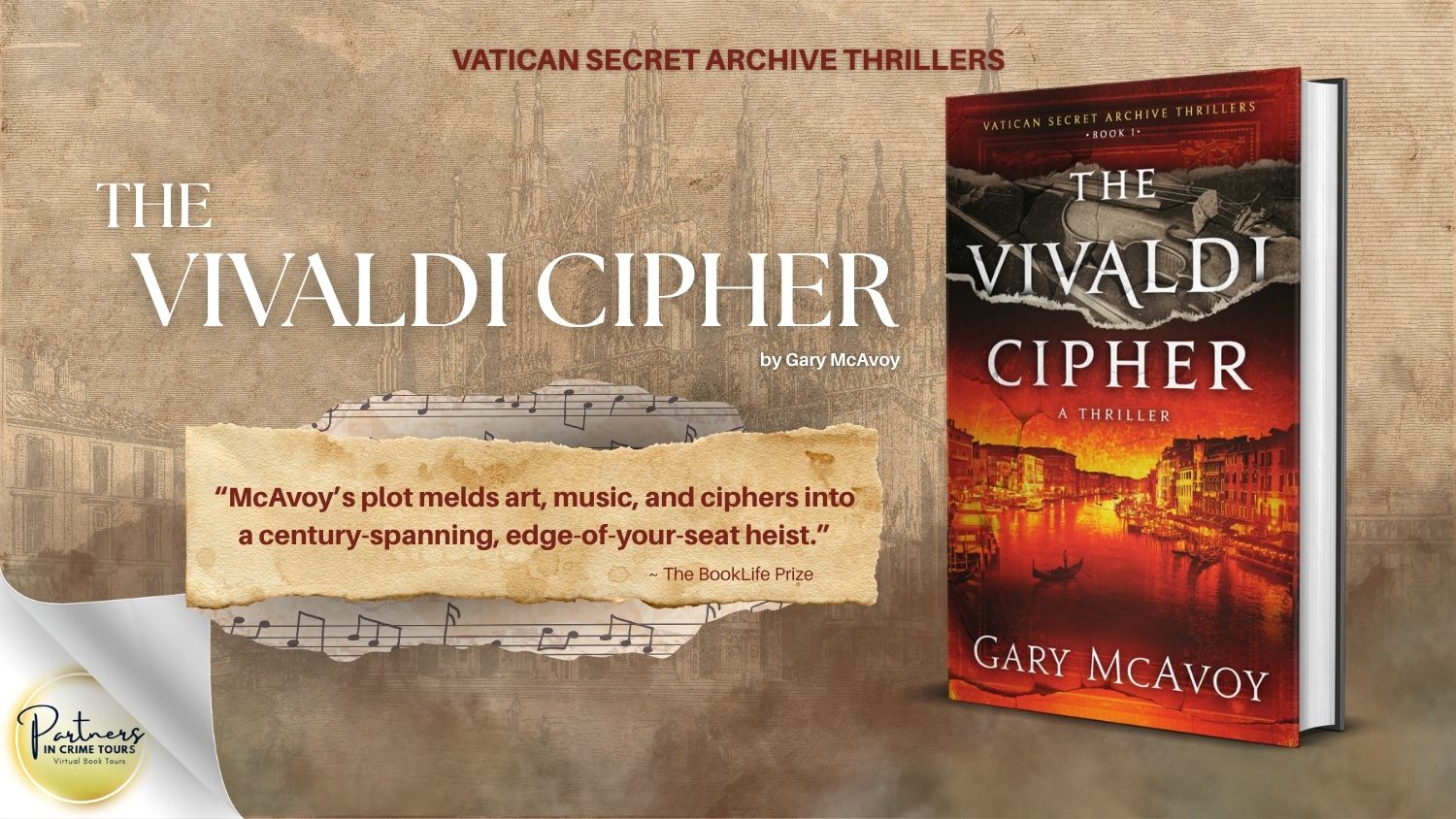
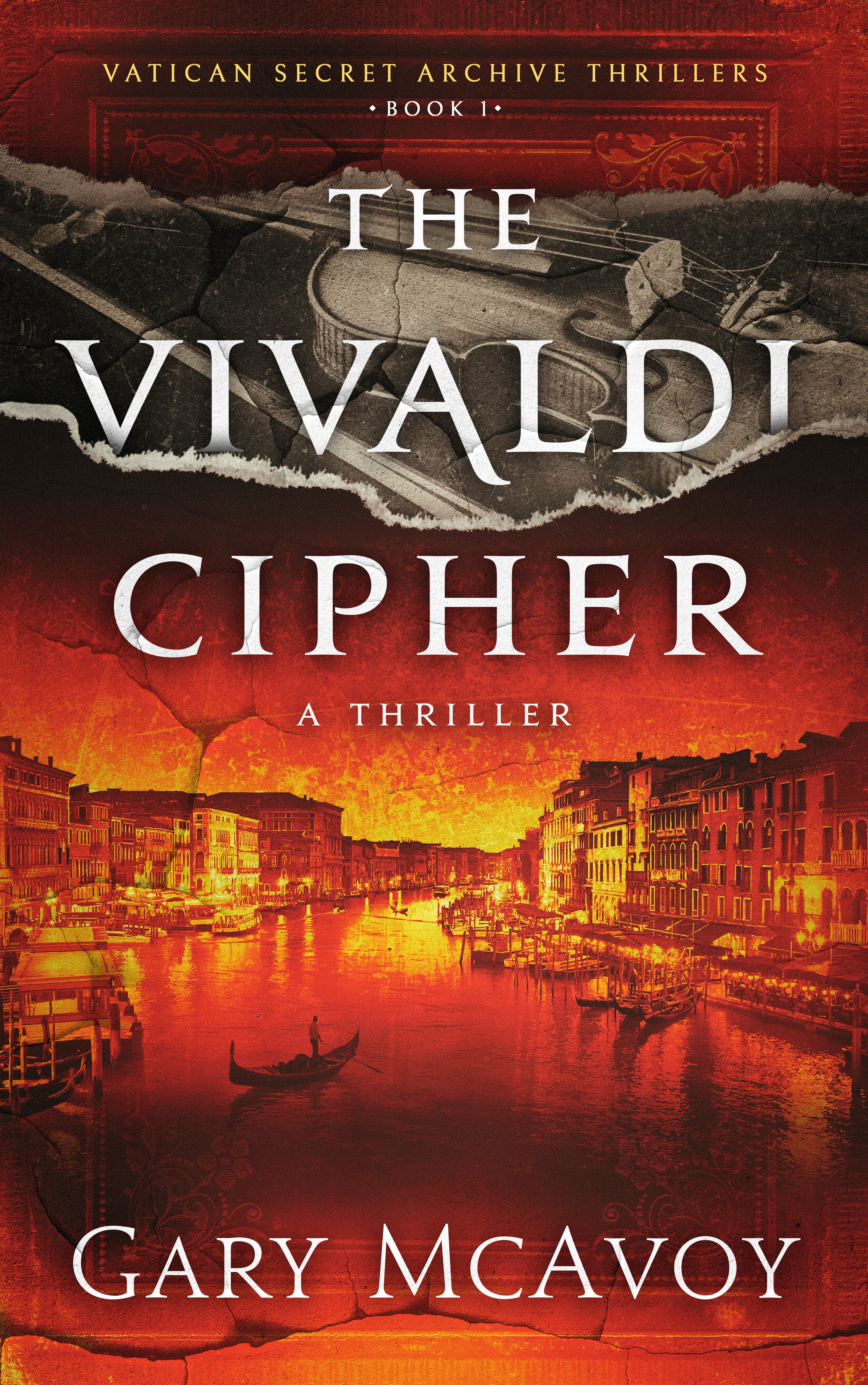
Virtual Book Tour & Giveaway: The Vivaldi Cipher (Vatican Secret Archive Thrillers, #1) by Gary McAvoy

The Vivaldi Cipher by Gary McAvoy Banner

THE VIVALDI CIPHER

by Gary McAvoy

May 4 - 29, 2026 Virtual Book Tour

Synopsis:

The Vivaldi Cipher by Gary McAvoy

VATICAN SECRET ARCHIVE THRILLER SERIES


During the election of a new Pope in the mid-18th century, famed violinist Antonio Vivaldi learns of a ring of art forgers who are replacing the Vatican's priceless treasures with expertly-painted fakes. Desperate, the composer hides a message in a special melody, hoping someone, someday, will take down the culprits . . .

Nearly three hundred years later, the confession of a dying Mafia Don alerts a Venetian priest to a wealth of forged paintings in the Vatican Museum, and the key to their identities lies hidden in a puzzling piece of music. Father Michael Dominic, prefect of the Secret Archives, investigates, and is mystified when he finds a cipher in an old composition from Vivaldi. Desperate to stop this centuries-long conspiracy, he calls on fellow sleuth Hana Sinclair and Dr. Livia Gallo, a music cryptologist, to help him crack the code and learn the truth.

But the Camorra, a centuries-old Italian Mafia clan, won't stand by while some interfering priest ruins their most lucrative operation. Along with a French commando and two valiant Swiss Guards, Dominic explores the dark canals and grand palazzos of Venice to uncover the evidence he needs to stop the sinister plot. Can he unearth it in time, or will the Church's most valuable artworks fall prey to this massive conspiracy?

Praise for The Vivaldi Cipher:

"McAvoy’s plot melds art, music, and ciphers into a century-spanning, edge-of-your-seat heist. Historic and modern clues meld together perfectly, and the complex workings of church and mob hierarchies combined with character relationships elevate the story. McAvoy’s prose is both clear and direct, serving the story well. Clever dialogue and unique character voices make the novel shine even brighter."
~ The BookLife Prize

"...[The Vivaldi Cipher] is gripping and hugely interesting, and the intrigue lies in the intelligent mystery of the cipher hidden in an unusual musical composition by former priest Antonio Vivaldi."
~ MJV Literary UK

"McAvoy concocts a wonderful thriller with a powerful narrative push that is like few books I have seen before. Short chapters and clipped dialogue keep the reader pushing ahead, fueled by a plot that is full of twists at every turn. I could not stop reading and found myself bingeing just to get through this book, more out of addiction to the story than anything else."
~ Matt Pechey, Reedsy Discovery

The Vivaldi Cipher Trailer:

Book Details:

Genre: Suspense, Suspense Thrillers, Historical Thriller
Published by: Literati Editions
Publication Date: August 16, 2021
Number of Pages: 400
ISBN: 9781954123076 (ISBN10: 1954123078)
Series: Vatican Secret Archive Thrillers, Book 1 | Learn More: Amazon | Goodreads
Book Links: Amazon | Kindle | Barnes & Noble | BookShop.org | Goodreads | BookBub | Audible

Read an excerpt from The Vivaldi Cipher:

Prologue

Vatican City, Rome – February 1740

The first symptom of the poisoning began as a fever.

Sitting at one of two long, white-silk-draped tables in the Sistine Chapel, along with sixty-seven of his fellow cardinal-electors, Pietro Ottoboni cast his vote for pope on the eighth day of the conclave to replace the late Pope Clement XII.

Enfeebled by fever, the seventy-three-year-old Ottoboni made his way toward the front of the chapel to a small altar below Michelangelo’s majestic fresco The Last Judgment, dropped his ballot onto a brass saucer, then tipped the saucer, letting the ballot fall into the large brass urn beneath it.

A few moments later, having returned to his seat, the cardinal collapsed onto the table, the high temperature having sapped his energy. Shocked, the other cardinals stood to better see what was happening to their colleague. The master of papal liturgical celebrations suspended the conclave while they moved Ottoboni to his apartment under the care of a Vatican physician.

Long considered favorite among the papabili to succeed Pope Clement, Pietro Ottoboni was born in the Most Serene Republic of Venice to a rich and noble family, whose most distinguished member was his grand-uncle, Pope Alexander VIII. Ottoboni had held every important post in the Vatican during an illustrious career and, as cardinal-bishop to several churches in Italy, his annual salary exceeded fifty thousand gold scudi—the present-day equivalent of six million dollars per year.

Cardinal Ottoboni had been a prolific paramour with a countless number of lovers, many of whom were married to the great patricians of Venice. In fact, the famous masks unique to Venetians were introduced not to ward off the plague, as many later believed, but to officially disguise the wearer’s identity—thus permitting anyone, noble or peasant, to do or say whatever one pleased. With this ingenious permissiveness, affari di cuore—affairs of the heart—were as common as the fleet of gondolas plying the canals of the celebrated city, without legal recourse. Having taken full advantage of this liberal device, Cardinal Ottoboni was known to have produced up to seventy children in his lifetime among his various mistresses.

Though he lived well in Rome’s grand Palazzo della Cancelleria, Ottoboni’s greatest passions were music and art, and he was a generous patron to some of the most renowned masters in both fields: Arcangelo Corelli, Alessandro Scarlatti, Giuseppe Crespi, Tintoretto, Paolo Veronese—and most of all, to his close friend and protégé, the prodigious maestro di violino of Venice, Antonio Vivaldi.

As he lay on his deathbed, Ottoboni summoned Vivaldi to his side. In a low, rasping voice, the cardinal confided to his friend a tale of great importance, a scandalous operation run by the notoriously corrupt Cardinal Niccolò Coscia in league with the feared secret Mafia organization known as the Camorra.

In fact, he added with struggling breath, he was convinced it was Coscia, acting on orders from the Camorra, who had poisoned him to keep him from acting on what he knew. With information gleaned from one of his many spies, Ottoboni had discovered the ongoing scandal days earlier and approached Cardinal Coscia with a warning that he and his Camorra would soon be out of business, at least as far as the Vatican was concerned. Were it not for his required attendance in the papal conclave, he would have put a stop to it sooner, especially if he was elected pope, an elevation to supreme power that was expected by everyone.

The following day, however, Cardinal Ottoboni succumbed to the poison, killed for a secret now known only to Antonio Vivaldi.

Like most Italians, Vivaldi survived cautiously within the Camorra’s Venetian sphere of influence. The secret society’s tentacles reached into everyone’s life, and their strict enforcement of the seal of omertà—the sacred code of silence—ensured clan activities remained discreet and wholly within la familia. The family.

Since the late seventeenth century, the Camorra had carved out its territories, starting in Naples and moving northward into the Lombardy and Veneto regions of Italy, encompassing its most lucrative prizes, Milan and Venice. Competing with La Cosa Nostra in Sicily and the 'Ndrangheta of Calabria, the Camorra’s criminal enterprises included prostitution, gambling, smuggling, kidnapping, and art theft—but also the unusual niche of producing and selling fine art forgeries of the highest order.

During the earlier reign of Pope Benedict XIII, who cared little for managing his vast realm of Papal States, Cardinal Niccolò Coscia oversaw all Vatican government operations, taking advantage of his authority to carry out substantial financial abuses, virtually draining the papal treasury. But his ongoing misdeeds eventually caught up with him. In 1731, he was charged with corruption, tried and convicted to ten years' imprisonment, and excommunicated from the Church.

However, still not without influence, he managed to get his heavy sentence commuted to a mere fine. He was also mysteriously reinstated as a cardinal, allowing him to take part in the papal conclave of 1740—the one during which Cardinal Ottoboni had died.

* * *

With Ottoboni out of the way, Cardinal Niccolò Coscia could now carry out his master plan without hindrance. In his not-so-secret role as capo of the Roman Camorra, Coscia led development of the Veneto branch of the Mafia clan, based in Venice and headquartered in his own newly acquired Palazzo Feudatario on the Grand Canal. Purchased with funds he had discreetly absconded from the Vatican treasury, Feudatario would be a most fitting place to carry out his planned forgery operation of the Vatican’s most profound works of art.

Niccolò Coscia was a meticulous diarist and, owing to all the business he conducted outside the Church, he had created the first book to record the activities of his new organization, naming it Il Giornale Coscia della Camorra Veneta—The Coscia Journal of the Veneto Camorra. In it he would secretly record careful notations of all paintings by artist and title, including each work’s provenance and to whom the forgeries or originals were sold, depending on which he chose to return to the Vatican—for many were prominently displayed in public, while most were simply returned to the Vatican’s vast art storage vaults, unseen by anyone.

The Coscia Journal would be passed down to each capintesta, head of the Veneto Camorra, for generations.

Unfortunately for Coscia, Cardinal Ottoboni’s spies had discovered not only the Camorra’s abhorrent plan for art forgeries, but the very existence of the Coscia Journal for recording such transactions. At that point Ottoboni’s death was preordained, for no one could ever know such proof existed.

* * *

Antonio Vivaldi, who at age twenty-five was ordained a Roman Catholic priest, was now at a crossroads. He feared possessing knowledge of the treacherous secret passed on to him by his esteemed patron in his dying moments. Putting himself at odds with the Camorra was not just an unappealing prospect; it could end up costing him his life, depending on what he did with what he knew.

But Cardinal Ottoboni had one last request of his protégé.

Intent on stopping the sinful and unlawful activities of Cardinal Coscia, Ottoboni had pleaded with Vivaldi to see that Coscia was brought to justice, to pay for his felonious actions. Distressed by letting his friend and mentor die without the satisfaction of such a promise, Vivaldi agreed to do what he could. He would ensure that the authorities were informed, the Coscia Journal would be found, and the matter would be settled.

After the cardinal’s stately funeral, Vivaldi waited for the right moment to fulfill his promise. But as he waited, he became more apprehensive. He was just a lowly priest, after all, and not a very good one at that. The violin was his life, and teaching it was his life’s work. Besides, who would believe him? Where was the proof? And what would the Camorra do to him if he were to expose its business? He had seen the results of their retribution—those who crossed the Mafia were dealt with harshly. Beheadings were not uncommon, and those who weren’t beheaded were drawn and quartered—alive. No, he must find a way to honor his pledge without exposing himself to such horrible consequences.

An idea came to him: he would hide the messages in plain sight, in his musical compositions.

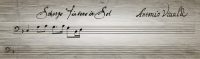
Picking up a sheet of staff lined manuscript paper, Vivaldi began to assemble the first of many, his Scherzo Tiaseno in Sol.

* * *
Venice, Italy—Present Day

Venice, Italy—Present Day

An enormous flight of pigeons, hundreds of them, flocked overhead, diving for potato chips and bits of bread sticks tourists had enthusiastically tossed out for them, as Father Michael Dominic and Hana Sinclair made their way across the Piazza San Marco.

Despite the ban on pigeon-feeding in St. Mark’s Square, little children were oblivious to the law and more amused by the flapping gray-and-white spectacle than frightened by the few gendarmerie patrolling the square, whose policing efforts to stop the feeding were futile. Venetian health experts estimate over 130,000 pigeons had roosted in the historic center—well over optimal concentrations for such a small public space—and efforts to rid the city of the determined birds had failed miserably. The damage to the marble buildings and statuary was considerable, not to mention possible pathogenic health hazards.

Locals knew it was often prudent to cover one’s head with a newspaper or magazine when crossing the vast piazza, lest strollers subject themselves to the inevitable bombardment of bird droppings from above.

An old hand at the practice, Father Dominic had kept pages of the newspaper he had read at breakfast for that very purpose, knowing he and Hana had to cross the piazza in order to get to Venice’s Biblioteca Marciana, the Library of Saint Mark.

The director of the library had requested the Vatican’s help with a planned exhibition of manuscripts held in its stacks, and as Prefect of the Vatican Secret Archives, Michael Dominic had accepted the invitation, while also taking a week’s vacation time in the fabled city. At only thirty-one years old, his access to the Vatican’s vast number of historical manuscripts still humbled him. The Biblioteca Marciana was yet one more repository of ancient wonders that fascinated him.

Lovingly named La Serenissima by Italians devoted to its “most serene” natural and historical wonders, Venice was also Michael Dominic’s favorite city in the world. He loved its vibrancy, its rich history as a major world trading port up to and through the Renaissance period and, of course, the inherent romantic nature of the people and their ancient ways.

“I’m so glad you could join me, Hana,” Dominic said as they walked through the piazza. “Have you ever experienced Carnivale before?”

Holding the newspaper awkwardly over her stylish wide brim straw hat, Hana replied with a contented sigh. “I was here once, years ago, but Carnivale had just ended. I’ve been meaning to be here for the real festivities for some time now, and since my editors wanted a piece on the celebration for Le Monde’s Weekend Section, I volunteered for the assignment.”

She looked up at the priest and smiled. “Thanks for letting me tag along with you, Michael. I don’t mind that you have a little business to attend to. I need some time off myself and can always float around in a gondola and take notes while you’re occupied.”

Dominic laughed as he removed the newspaper from over his head, having passed the worst pigeon zone. He took Hana’s paper and tossed them both in a trash receptacle alongside the library façade. “I can just see you now, laid out on a shiny black gondola, that fetching hat drawing everyone’s eye as you cruise the canals. A fashion photographer’s dream. But let’s have some fun together while we’re here as well.”

“Agreed. I can get some writing done after dinner each night,” she said with a sly grin. “So, what’s in this library that you’ve been asked to weigh in on?”

“I’m meeting with Paolo Manetti, the curator of the Marciana’s Cardinal Bessarion Library, a special wing containing the original founder’s collection of books and precious manuscripts from 1468. The Vatican has an original translation of Homer’s Iliad, a companion version to his Odyssey, but the Marciana has the oldest actual texts of the Iliad. Manetti has asked me to consider lending ours to the Marciana for a temporary exhibition on Homer. They also have the only autograph copy of commentary on the Odyssey from the twelfth century, so it should be a fine showcase.”

Fascinated as she was by Dominic’s explanation, Hana’s eyes glazed as the warm sun took hold of her, her white cotton midi skirt fluttering in the light breeze. They had passed the tall brick Campanile and were now walking through the piazzetta between the Marciana Library and the Doge’s Palace, heading toward the entrance to the Grand Canal. It wasn’t quite noon yet, the appointed time for Dominic’s meeting, so they settled onto a stone bench near the traghetto, the gondola landing overlooking the Church of San Giorgio Maggiore on the island across the lagoon. Vaporetti, gondolas, and sleek mahogany water taxis plied the calm waters as they sat there, each in their own dreamy state of mind, an effect Venice had on every visitor.

As the tower bells of the Campanile struck twelve, Dominic leaned back for a deep stretch to rouse himself, then stood and reached out for Hana’s hand to help her up. With one last glance over the lagoon, they headed toward the library.

Chapter 1

Present Day

The entrance to the Marciana Library Palace—heavy wooden doors flanked by two larger-than-life Greek marble statues—opened into the opulent vestibule, where a two-flight staircase took visitors to the upper loggias.

Looking up as they walked the marble halls, Hana fixated on the ceiling, which featured twenty-one roundels, circular oil paintings by seven notable Renaissance artists commissioned in 1556. They looked as fresh today as at the time they were painted, Hana mused, overwhelmed by their unusual spherical beauty. Reaching one of the reading rooms, sunlight streamed in from the high glass ceiling, bathing the three-story room in a diffused natural light. Surrounding the reading tables on all sides were a series of Doric arches with a handsome frieze on one wall featuring rosy-faced cherubs and garlands of fruit and flowers.

A slim, well-dressed man with long, black hair who looked to be in his fifties was walking toward them, a welcoming smile on his face. Dominic smiled in response as the man approached.

“Padre Michael, welcome back to the Marciana!” he beamed as he extended his hand.

“Paolo! What a great pleasure to see you again. This is my friend and colleague, Hana Sinclair. Hana, this is Paolo Manetti, curator of the Bessarion Library here.”

The three exchanged handshakes and pleasantries. Then Manetti turned, gesturing for them to follow him.

“We’ll be using my private office to view the Iliad. Better to keep tourists from flocking around us. I already have it set up.”

He led them through the upper loggia and down a corridor leading to various offices, entering a corner room that overlooked the piazzetta and the lagoon.

“Not only do you have a stunning library here, Signor Manetti,” Hana remarked, “but you probably have the best office in the building!”

Manetti grinned shyly. “Please, call me Paolo, Miss Sinclair. And yes, I am very fortunate to have such a wondrous place to work. What you see around you is my life. Like our friend Michael here, my love for antiquities of the Old World has no bounds.”

Dominic nodded in agreement, then turned to his companion. “Hana, if you’d like to better explore the library while Paolo and I are working, please feel free. We should only be a half hour or so. Take it all in; it truly is a marvelous old building filled with treasures you won’t find anywhere else.”

“I’ll do that, thanks. Just come find me when you’re ready.” Hana turned and left the office, making her way back to the reading rooms and their glorious artworks and statuary.

A large table in the center of Manetti’s office held several reference books, various implements for examining documents—a digital microscope, magnifying glass, blacklight, leather sandbag weights—and several large parchment manuscripts which had been laid out on it. One in particular was the chief item of interest: the only copy of the commentary on Homer's Odyssey written entirely by the hand of the author.

Putting on a pair of white gloves, Dominic handled the manuscript guardedly, gazing at the beautiful script by the hand of Eustathius of Thessalonica, the Byzantine scholar and rhetorician of the twelfth century.

“This is our finest treasure, Michael, and one of the oldest in the library,” Manetti said. “It will be one of the principal features of our exhibition. But now, look at this.”

With a gentle flourish, he reached across the table and pulled over two comparable manuscripts.

“These are Venetus A and Venetus B, the oldest texts of Homer's Iliad, with centuries of Greek scholia written in the margins.”

As Dominic recalled, since the first century, ancient commentators known as scholiasts would insert grammatical or explanatory notations, even critical commentary, in the margins of the manuscripts of early authors. Over time, centuries in fact, successive copyists or those who owned a particular manuscript altered the scholia, and sometimes the practice expanded so much that there was no longer room for scholia in the margins, so it became necessary to produce them as separate works. No copy machines, just dedicated scribes working with Egyptian reed pens and feather quills to patiently reproduce one-of-a-kind originals.

“These are truly extraordinary, Paolo,” Dominic declared, his hands shaking slightly as he held the ancient parchments. “I can certainly see why you’d want to share these in your exhibition. I can confidently say the Vatican will cooperate in any way we can. I’ll make arrangements for the original translation of Homer’s Iliad to be couriered to you when I return to Rome. I assume you’ll have appropriate security arrangements in place?”

“Of course, Michael. Apart from our own security detail, the federal Carabinieri has offered to provide full protection for us. We are simply the custodians of these masterpieces, but they are part of Italy’s proud heritage and the government takes that responsibility quite seriously.

“And thank you for your generous contribution, Michael,” he continued. “Your Iliad will be in excellent hands, I can assure you.”

“When we spoke last week,” Dominic said, “you mentioned another piece you wanted to discuss?”

Manetti turned somber. “Yes, there is something else I need to show you, and I’d like to get your opinion on it. This came to us recently from a local donor who wishes to remain publicly anonymous, and while its value is undeniable and a welcomed donation to our collection, I am not quite sure what to make of its meaning.”

The curator rummaged about the other manuscripts on the table, his gloved hands repositioning each document carefully, until he found what appeared to be an autograph musical manuscript, with staff lines and bars of musical notations, placed inside a small Mylar protective sleeve. While it was in relatively good condition, given its apparent antiquity, its corners had been chipped and there were many creases across the paper, as if someone had folded it many times at some point. Its size was quite small, a half sheet of standard paper at most.

“Well, this looks interesting, though I must admit I know little about musical manuscripts. Who is it by?” Dominic asked.

As he peered closely at the manuscript, Hana returned from her brief tour of the library and walked up to stand silently next to the two men. She glanced at the object of their attention while Manetti continued.
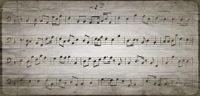
“This, my friend, was penned by the hand of Venice’s own maestro di violino Antonio Vivaldi. He gave it the title Scherzo Tiaseno in Sol, and it appears to be a scherzo in the truest, most literal meaning of that word—a joke! It is a fair enough piece of music, but nowhere near the level one would expect from a Baroque master like Vivaldi. If it is a joke, then the question is, why? And for whom? There must be more than meets the ear.

“This is marked as page two, so there may still exist a page one somewhere. The donor was rather circumspect on the matter, but as Vivaldi was her sixth great-grand-uncle, the provenance is well established.” Manetti looked up at Dominic questioningly and shrugged.

As Hana read the notes, she weighed in. “You’re right, Paolo. This isn’t anything close to what Vivaldi was known to have composed. And scherzos are normally in three, like a waltz, but this has the bar lines in the wrong place. There must be some other meaning to it.”

“You read music?!” Dominic asked her, somewhat taken aback.

“Of course, I studied music for years at St. Stevens School, and I play both the piano and cello,” she replied, a shy smile playing across her face.

“Will wonders never cease with you?” Dominic asked, grinning mischievously.

“Oh, please,” she said modestly. “We all have our secret talents. And I can hardly travel around with a cello.”

Turning to the curator, she asked, “Paolo, may I have a closer look at this?”

“Of course, signorina,” he said encouragingly.

Hana accepted the Mylar sleeve from Dominic and took a seat by one of the windows. Reading the music, she hummed the notes, emitting a series of high, low, and mid-range sounds which produced no tune whatsoever.

“Okay, this is really strange. There is nothing here that might even imply that an artist with Vivaldi’s genius was creating anything good, much less great. But why would he do that? From what I know, he wrote beautiful music feverishly, wasting not a precious second on something like this. But there must be a reason.”

“I completely agree, signorina,” Manetti said, nodding. “But what are we to do with this? We must have some kind of explanation for such an artifact if we are to display it.”

Hana had a thought. “Paolo, can you make a copy of this for me? I have an old friend, Dr. Livia Gallo, my former music teacher at St. Stevens, who is an expert in Vivaldi and other Baroque masters. Maybe she has some idea of what this might represent?”

Manetti was delighted. “Yes! I would be happy to provide you with a copy if it helps to better understand this. You must assure me that you will not share it with anyone else except your colleague, yes? Until we understand it better, I wouldn’t want speculations to be awkward for our donor.”

“Yes, of course, only Dr. Gallo will see it. For that matter, it’s small enough that I can just take a photo of it with my iPhone. Would that be acceptable?”

“Better yet,” Manetti replied. “That way there are no loose copies to get lost. Oh, and please do not use the flash.”

Hana returned the manuscript to the table, removed her phone from her bag, then took a full frame shot of the piece under natural light.

“Paolo,” Dominic asked, “might we get an introduction to your donor, this Vivaldi descendant? Hana and I may be able to get more relevant information from her that can assist Dr. Gallo. Where does she live?”

“Here in Venice, in one of the great palazzos on the Grand Canal. I don’t think the contessa would mind at all, actually. She’s quite the conversationalist.”

“A contessa?!” Hana asked, surprised.

“Oh yes, she comes from a very old noble line herself and married well, besides. Contessa Donatella Vivaldi Durazzo. She must be in her eighties now, a delightful woman, very generous in her philanthropy. She is one of the jewels of Venice, a wonderful patron of the arts, adored by everyone. She lives in Palazzo Grimaldi in the Dorsoduro, not far from the Guggenheim Museum. I would be pleased to make an introduction.”

“Excellent! We’ll be here all week, Paolo, and it would be a treat to see one of the famed palazzos on the Grand Canal,” Dominic said excitedly. “Not to mention meeting Italian nobility.”

Manetti smiled assuringly at his old friend.

“We’re staying at the Ca’ Sagredo, Paolo,” Hana said. “You can reach us there, but here’s my mobile number if you need us at any time.” She wrote down her number on a slip of paper and handed it to Manetti.

Grazie, signorina. I will make the call this evening and let you know when she is available.”

“Where to now?” Hana asked Dominic as they left the building, having said their goodbyes to Manetti.

“I thought we’d have a bite of lunch at Quadri, then saunter over to St. Mark’s Basilica and say hello to a friend of mine from my seminary days. We’ve come all this way, and I’d hate to miss seeing him.”

“Lead the way,” Hana said breezily, placing her wide-brimmed straw hat back on her head. “I’m ready for some fresh seafood, aren’t you?”

“You bet. Just watch out for pigeons, though, as I’ve tossed the newspapers.”

Chapter 2

Among the many fine palazzos lining the Grand Canal is an understated, three-story ocher palace, somewhat more slender than its neighbors but nonetheless impressive. Its more observable features include a grand entrance off the gondola traghetto, with a black, scalloped awning over the brick staircase leading up from the water’s edge; several full-width balconies with ornamental balustrades at each end; heavily draped, arched picture windows overlooking the canal—and a cadre of armed security guards posted around the grounds of Palazzo Feudatario.

As a glossy mahogany water taxi approached the dock, two beefy men appeared from the palazzo’s entrance to greet the sole visitor on board, a priest called to administer last rites to the dying master of the house—a man known to all of Venice as Don Lucio Gambarini, the capintesta, or head-in-chief of the Veneto Camorra.

A stout man in his sixties, Don Gambarini had suffered a paralyzing stroke some weeks prior, and as his health had further declined, his death was not unexpected. In the meantime, the capintriti, heads of the twelve districts under Don Gambarini’s leadership, had assembled in the grand house, set to squabbling as to who would take over as leader of the clan when the great capintesta met his end.

But that was hardly on Gambarini’s mind when Father Carlo Rinaldo entered the formal master bedroom to hear the Don’s confession and administer extreme unction, the final anointing with last rites before death. Rinaldo had never met Gambarini before, though he was aware of the Don’s reputation, one deserving of a robust confession if he were truly repentant.

The large, well-appointed bedroom had many people standing around, vying for the boss’s attention should he wish to suddenly name one of them as his successor. But Gambarini would have none of it yet, demanding the bedroom be cleared except for the priest, who would hear his confession privately.

As everyone ambled out of the room, giving each other dark glances, the door was closed as Rinaldo placed a violet stole around his neck, then reached into his black leather bag and withdrew a small bottle of holy water, a crucifix, and his Bible.

“Don Gambarini, my name is Father Rinaldo, from St. Mark’s. Do you wish to make a confession?”

“Where is my regular priest, Father Viani?”

“I’m afraid he is on sabbatical, signore, and will not return for some time. He entrusted his duties to me in his absence.”

Gambarini looked wide-eyed at the priest for a long while, trembling, gauging his predicament. Rinaldo found terror in the man’s eyes. Not an uncommon occurrence for one so close to death, but there was something more. Some heavy burden the man was struggling with. All the priest could do was wait for his penitent to make the first move.

“Father, I do wish to make a confession,” Gambarini began, “but it is not one you are going to like.”

“I make no judgments at all, signore. I am but the Lord’s servant in this matter. He alone passes judgment. But that depends on how you wish to leave this life, carrying with you the dark burden of your transgressions, or absolved of sin in His light.” Rinaldo gestured upward as he said this.

Gambarini paused, glanced around the room, then looked deep into the priest’s eyes. “Before we begin, Father, I must ask of you an important favor, for my sins are so great, my penance must include some action on your part—but only after I am dead.

“What I am about to tell you involves a serious crime against the Vatican itself, an offense which has been ongoing for centuries, and still takes place to this very day. I fear I will not have God’s full absolution unless this matter is revealed once and for all. And you must be the one to tell it to others, so that it will stop. Is that agreeable?”

Such an unusual request completely mystified Rinaldo. Never had he been asked to play a part in a confessor’s penance. And to do so, he would have to break the sacred seal of the confessional; he was uncertain if having permission to do so by the penitent absolved him of that restraint. He would have to speak with someone about that later.

He walked across the room and picked up a chair. Placing it next to Gambarini’s bed, he took a seat. He paused a moment to consider the situation.

“Let me hear your confession, my son. If it is within my power, I will do my part as you ask.”

***

Excerpt from The Vivaldi Cipher by Gary McAvoy. Copyright 2021 by Gary McAvoy. Reproduced with permission from Gary McAvoy. All rights reserved.


Author Bio:

Gary McAvoy

Gary McAvoy is an American novelist known for internationally bestselling thrillers that blend historical intrigue, religious scholarship, and modern suspense. A lifelong researcher of rare manuscripts and Church history, he draws on extensive archival study to craft narratives rooted in authentic detail. His work includes the Vatican Secret Archive Thrillers, the Magdalene Chronicles, and the Vatican Archaeology Thrillers. Before turning to fiction, McAvoy built a distinguished career as an entrepreneur, technology consultant, and collector of historical documents. He now writes full time from the Pacific Northwest, where he continues to explore the shadowed crossroads of faith, power, and history.

Catch Up With Gary McAvoy:

GaryMcAvoy.com
Amazon Author Profile
Goodreads - @garymcavoy
BookBub - @garymcavoy
Instagram - @gary_mcavoy
X - @GaryMcAvoy
Facebook - @GaryMcAvoyAuthor


Review:

5 stars!

A centuries-old art theft and forgery operation is uncovered at the Vatican. 

The Vivaldi Cipher is the first book in author Gary McAvoy’s riveting new series, the Vatican Secret Archive Thrillers, and reunites two sleuthing partners from his earlier Magdalene Chronicles, Father Michael Dominic and Hana Sinclair. While on a working holiday in Venice with his good friend, investigative reporter Hana Sinclair, Jesuit priest Father Michael Dominic is consulted by his old seminary friend on a tricky matter regarding the sanctity of the confessional and the devastating information he received during a dying man’s last confession. 

Father Carlo Rinaldi had been called to the bedside of the capo of the Veneta Camorra (Venetian Mafia), whose regular confessor was unavailable. With fear in his eyes, he revealed the details of a centuries-old art theft and forgery operation that had been swapping valuable works from the Vatican Museum’s collection for forgeries right under the nose of the Holy See. His last request is that his young confessor put an end to it all. But if the man’s story is true, and how could it not, how could this have been going on undiscovered for so long… without insider help? The answers may come from an unexpected source, hidden within the musical works of the famed Venetian composer and priest, Antonio Vivaldi himself. But as Michael, Hana, and their friends begin to ask questions, they soon discover someone will do anything to keep this operation a secret, including committing murder. 

Father Michael and Hana are both such engaging characters, long-time friends who’ve been through a lot together, and it was interesting watching them navigate their “strictly friends” relationship amid the suspense and danger that ensued. A warning: the author is not afraid to sacrifice high-profile characters for his story, and that really ups the stakes in an already high-stakes affair. 

The plot escalates quickly, and the action keeps going nonstop. The author’s vivid descriptions of the iconic settings around Venice and during Carnival really brought the mental images I constructed to life (while also providing important tips for those considering a visit to the ancient city). As the reader knows from the start what the crime is, who at the Vatican is actually involved in this old, established scam becomes the important question. 

Although this book continues a partnership from an earlier trilogy, it works well as a standalone, and readers new to the characters should be able to read and enjoy this new adventure without having to hunt down the previous books first. However, it sure did make me want to when I was done! 

I recommend THE VIVALDI CIPHER to readers of mysteries and thrillers, especially those who enjoy stories involving the clergy or the Catholic Church.


Tour Participants:

Click through the other tour stops for can’t-miss reviews, insider interviews, exclusive guest posts, and more chances to win!

Click here to view the Tour Schedule


A Fine-Tuned Mystery & More to Win:

This giveaway is hosted by Partners in Crime Tours for Gary McAvoy. See the widget for entry terms and conditions. Void where prohibited.
THE VIVALDI CIPHER by Gary McAvoy | Gift Cards

Can't see the giveaway? Click Here!

Get More Great Reads at Partners In Crime Tours